MANILA – The number that tells the story best is not a jackpot. It is 600,000 – the count of names that Philippine gaming regulator PAGCOR had on its restricted persons list before March, against a civil service workforce of roughly 4.5 million. That gap, for years an open secret in Manila’s casino industry, is now the formal target of the country’s most aggressive enforcement push in a generation.
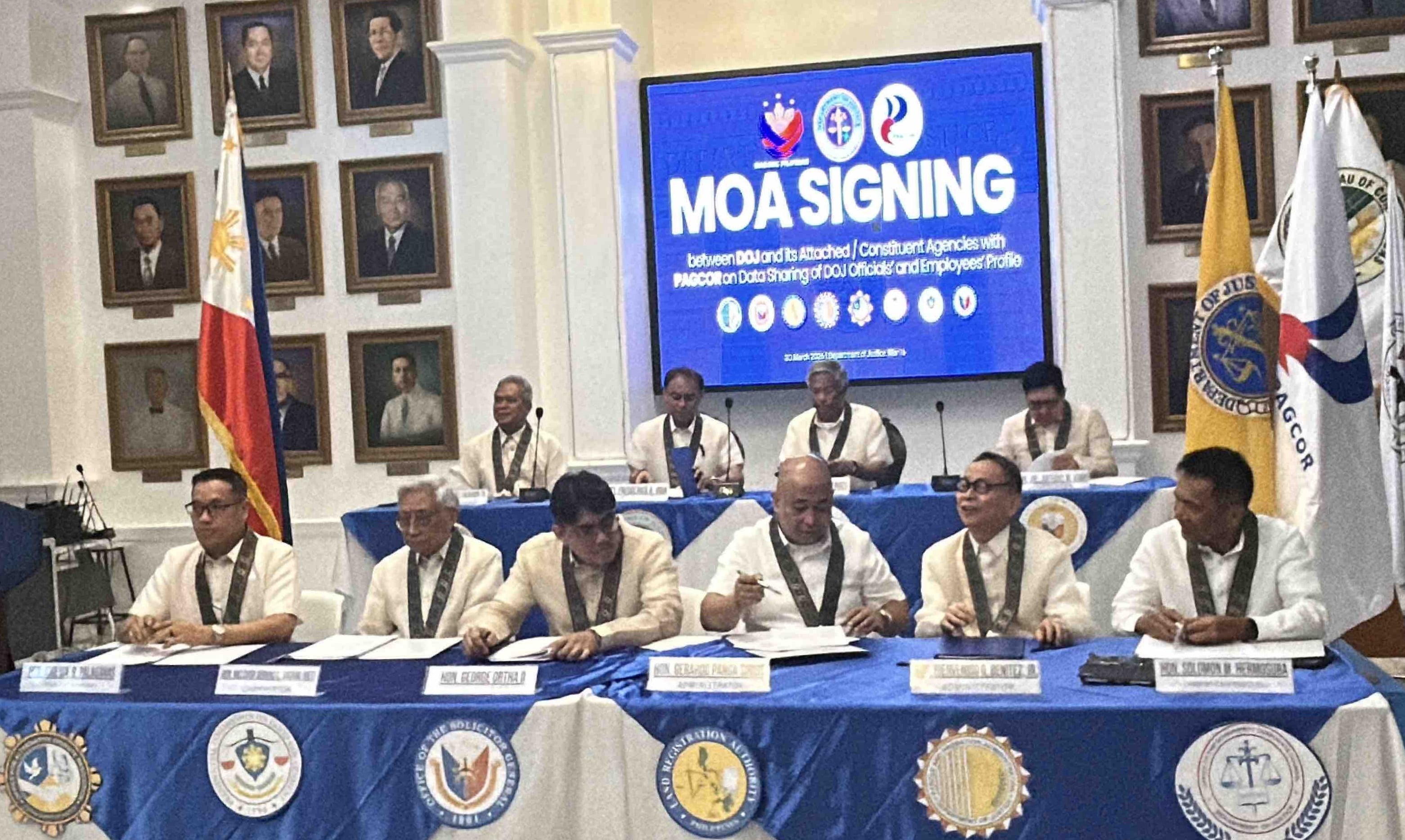
On March 30, PAGCOR Chairman and CEO Alejandro Tengco and Justice Secretary Fredderick Vida signed a memorandum of agreement requiring the Department of Justice to feed the names, job titles, and photographs of its personnel directly into PAGCOR’s National Database of Restricted Persons (NDRP) – a system casino operators are legally obligated to check before allowing anyone to gamble. The DOJ deal was presented as the first of its kind between a government agency and the gaming authority, a signal that what had been a standing prohibition on paper was finally acquiring teeth on the floor.
Government officials and employees have been barred from casino gambling under Presidential Decree 1869 for decades. The prohibition is not ambiguous. What has been ambiguous is the mechanism for enforcing it. Without a comprehensive registry, casino staff had no reliable way to identify whether a player presenting identification was a schoolteacher from Quezon City or a senior officer of a national agency. Tengco acknowledged the problem openly: the database covered only a fraction of those legally prohibited from playing.
The consequences of that gap, it turns out, were measurable. PAGCOR reported that more than PHP310 million in casino winnings had already been voided after investigators identified players who held government positions they were not permitted to disclose at the cage. The figure is striking not only for its scale but for what it implies about the regularity of the violations – these were not isolated incidents but a pattern significant enough to produce nine figures in clawed-back winnings.
Justice Secretary Vida framed the agreement in terms that left little room for procedural interpretation. “We are here as public servants,” he said at the signing ceremony. “We need not only to do good – we need to act as role models. We follow the rule of law.”
The DOJ agreement sits inside a broader, and significantly more sweeping, legislative move. In January 2026, the Civil Service Commission issued Resolution No. 2600111, a policy that extended the existing casino prohibition to cover every form of gambling – online or physical, licensed or otherwise – for all officials and employees across the national government, local government units, state universities, government-owned corporations, and the armed forces. The ban applies whether the gambling occurs in Manila, abroad, or on a mobile phone at midnight.
The CSC’s April elaboration of the resolution made clear just how broadly the prohibition is drawn. Civil servants cannot enter or remain on casino premises. They cannot play e-bingo, e-sabong, or any internet-based betting platform. They cannot facilitate or organize gambling in any form, including informal arrangements among colleagues. The penalties escalate from reprimand on a first offense to suspension and, ultimately, dismissal on a third – alongside potential criminal liability under existing law.
CSC Chairperson Marilyn Yap anchored the policy in the ethics framework that governs Philippine public service. “Involvement in gambling may expose public servants to financial vulnerability and conflicts of interest, which can undermine impartiality,” she said, “and erode public trust.” The language is careful, but the logic underneath it is fairly blunt: a civil servant who is losing money at a casino, or borrowing to continue, is a civil servant whose judgment is potentially for sale.
For casino operators, the new framework is not merely an ethical statement – it is an operational instruction. PAGCOR has directed licensees to ensure strict observance of the rules, which in practice means integrating the NDRP into their identification and admissions processes in a way that catches restricted persons before they reach the gaming floor, not after their winnings have been processed. The PHP310 million in voided prizes suggests the current system catches violators retroactively, which is not the same as preventing the violations.
The DOJ arrangement is intended to close that lag. By supplying PAGCOR with current personnel data – names, photographs, agency affiliations – the department gives casino compliance teams an identification resource that has not previously existed at this level of granularity. Whether other agencies will follow the DOJ’s lead is an open question. Tengco has framed the March 30 agreement explicitly as a template, not a ceiling.
The enforcement effort is unfolding alongside PAGCOR’s larger structural transformation. The regulator is in the process of separating its commercial gaming operations from its regulatory functions, a move designed to eliminate the conflict of interest inherent in an agency that both runs casinos and polices them. The privatization of 41 state-owned casino properties is planned by 2028. In the interim, the regulator is also rolling out stricter Know Your Customer requirements across digital gaming platforms, a 24-hour problem gambling helpline, and a ban on gambling-related outdoor advertising nationwide.
The online sector, which the Philippine Daily Inquirer has noted grew from 8.2 million registered gamblers in 2024 to more than 32 million in 2025, is in many ways the more challenging enforcement terrain. A civil servant entering a land-based casino can, in theory, be stopped at the door. The same civil servant placing an e-bingo wager from a government office desktop is considerably harder to intercept under any identification regime that depends on physical presence checks.
Senator Sherwin Gatchalian, who has pushed for stricter regulation during Senate hearings, put the trajectory in stark terms: the gambler population did not grow by several hundred percent because demand was waiting to be discovered. It grew because access multiplied faster than oversight. The CSC’s January resolution and the PAGCOR-DOJ agreement together represent a belated attempt to bring the enforcement framework up to the scale of the problem.
What neither document settles is how compliance will be verified across agencies that have not yet signed agreements with PAGCOR – and across the online platforms where the bulk of the growth has occurred. The restricted persons database, even as it expands, remains a roster rather than a real-time monitoring system. The gap between knowing who is prohibited and knowing when a prohibited person is gambling has not closed. That is the problem Tengco described in March, and it is the problem the industry will be living with for some time yet.