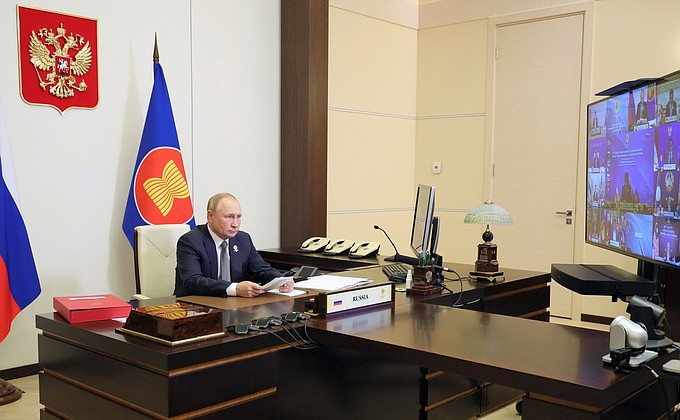

MOSCOW – The invitation has been sent. Whether Vladimir Putin will answer it is another matter entirely.
The Philippines formally invited the Russian president to the Association of Southeast Asian Nations summit in Manila this November, Philippine Ambassador to Moscow Igor Bailen told RIA Novosti on Monday – and the Kremlin has yet to respond. The disclosure came with an admission that frames the silence diplomatically: four Philippine presidents have visited Russia, Bailen noted, while Moscow has never reciprocated with a visit to Manila.
“As far as I recall, it was sent last year or early this year,” Bailen said of the formal invitation, adding that Manila was “awaiting a response from the Russian Foreign Ministry or the Kremlin.” He expressed hope that Putin would be able to visit, without offering any indication of when, or whether, a reply might come.
The summit is slated for Manila from November 10 to 12, bringing together heads of state from ten ASEAN member nations alongside their dialogue partners in the East Asia Summit. The Philippines holds the bloc’s rotating chairmanship in 2026, giving President Ferdinand Marcos Jr. primary responsibility for the guest list and the diplomacy surrounding it. This is also the year Russia and the Philippines mark fifty years of bilateral relations, a layer of symbolism Bailen has invoked repeatedly.
The obstacle, as it has been for years, is the arrest warrant. Putin has faced an International Criminal Court warrant since March 2023 over the alleged deportation of Ukrainian children. The warrant constrains his travel to the 124 countries that are ICC member states. The Philippines rejoined the ICC in 2023 after a prior withdrawal under Rodrigo Duterte, which means Manila would be theoretically obligated to detain Putin on arrival. The Philippine government has not addressed how it would handle that obligation.
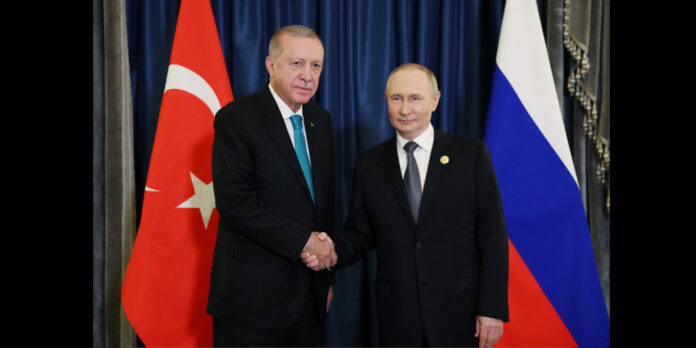
There is also a recent precedent. Last October, Putin told Malaysian Prime Minister Anwar Ibrahim he was “seriously considering” attending the 47th ASEAN summit in Kuala Lumpur, where Russia had also been invited. He did not come. Deputy Prime Minister Alexander Novak attended in his place. The pattern – Russia represented by a senior envoy while Putin stays home – is now established across recent ASEAN cycles, even when the Kremlin expresses genuine interest in participating.
What makes the Manila question more pointed now is what is already confirmed on the other side of the ledger. Philippine Foreign Secretary Theresa Lazaro said on May 29 that she had spoken by phone with Foreign Minister Sergey Lavrov about a commemorative summit marking 35 years of Russia-ASEAN dialogue relations, to be held in the Russian city of Kazan on June 17 and 18. Marcos himself is expected to attend, a Philippine government official told the Associated Press on condition of anonymity. That trip – ASEAN heads of state flying to meet Putin in Russia – is proceeding regardless of what Moscow decides about November.
The gap between those two data points – Moscow welcoming ASEAN to Kazan in June while Manila waits for a reply about November – captures the unresolved tension in Russia’s engagement with Southeast Asia under conditions of the Ukraine war. Russia has maintained its ASEAN dialogue-partner status throughout the conflict. Vietnam and Laos abstained on United Nations General Assembly resolutions condemning the 2022 invasion. The bloc has declined to adopt the posture toward Moscow that European capitals have demanded.
That neutrality has given Russia diplomatic room in the region even as its ties with the West have collapsed. According to the Associated Press, the Lavrov-Lazaro call covered the “prospects of expanding Russia’s strategic partnership” with ASEAN – framing the relationship not as something being managed through crisis but as something being built outward.
Which makes the Manila invitation’s unanswered status more notable. Marcos has deepened military cooperation with Washington since taking office, a posture that sits uneasily alongside hosting a wartime Putin under ICC treaty obligations – obligations that Malaysia, which has not rejoined the ICC, would not have faced in the same way. Whether Moscow reads the Manila invitation as a genuine opening or as diplomatic form that nobody expects to be filled is something Bailen declined to characterize.
Russia’s engagement with Southeast Asia has moved on several tracks this year. In May, Moscow framed Malaysia as a reliable Asia-Pacific partner and pressed for a deeper regional presence. The Kazan summit fits that pattern – a multilateral stage on Russian soil that sidesteps the ICC constraints entirely and lets Putin host rather than travel.
For the Philippines, the November summit is the signature event of its chairmanship year. No Philippine official has publicly stated when a response from Moscow would be needed to proceed with summit planning. Bailen’s remarks on Monday offered no timeline and no signal from the Kremlin. The silence, he suggested, should be read as logistical uncertainty rather than a diplomatic rebuff – though he offered nothing to confirm that interpretation. The five months remaining before the summit opens may tell a different story.
—Inputs from Sputnik.