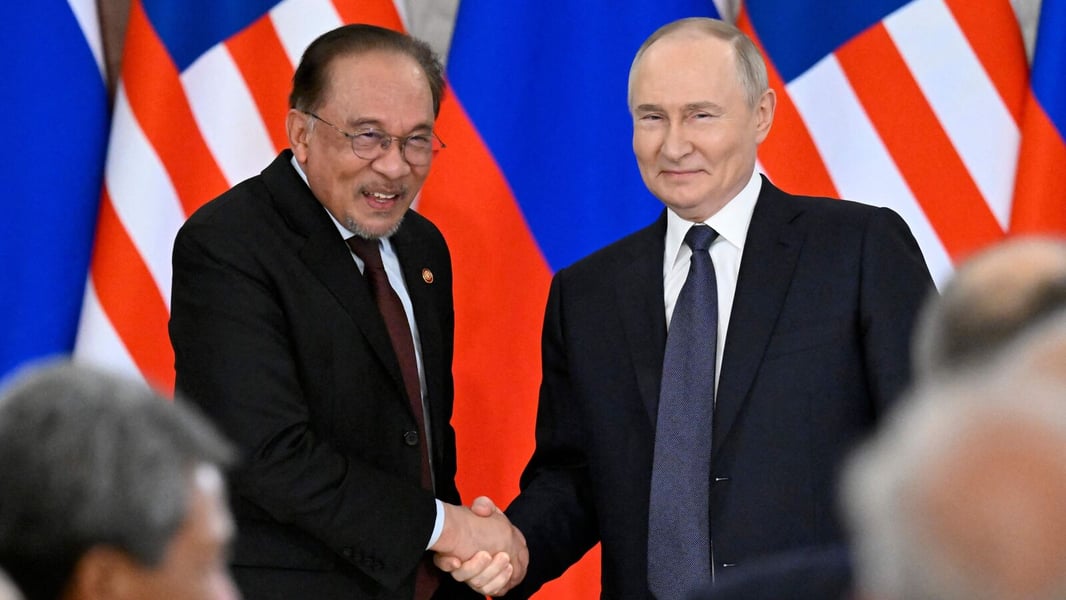

MOSCOW (SPUTNIK) — Russia has described Malaysia as one of its most dependable partners in Southeast Asia, underlining Moscow’s growing strategic focus on the Asia-Pacific region as geopolitical tensions with the West continue to reshape global alliances.
Speaking in Moscow on Thursday, Russian presidential aide Yuri Ushakov said relations between Russia and Malaysia remain stable and constructive, with active engagement continuing through governments, parliaments, regional authorities, ministries, and public organizations.
“Malaysia is a reliable partner of Russia in the Asia-Pacific region,” Ushakov told reporters, adding that both countries maintain “regular and substantive political dialogue” across multiple sectors.
The remarks come at a time when Russia is accelerating its diplomatic and economic pivot toward Asia, seeking deeper ties with ASEAN nations as Moscow faces continued Western sanctions and political isolation campaigns linked to the Ukraine conflict.
According to Ushakov, Russia and Malaysia have maintained steady trade and economic cooperation despite turbulence in the global economy. Bilateral engagement is being coordinated through an intergovernmental commission that oversees commercial and strategic cooperation between the two countries.
Russia exports oil, petroleum products, chemical goods, metals, agricultural raw materials, and food products to Malaysia, while importing machinery, industrial equipment, vehicles, chemical products, and food supplies from the Southeast Asian nation.
Analysts say Malaysia’s importance to Russia has grown significantly as Moscow seeks to diversify its trade routes and strengthen partnerships with countries that have avoided joining sweeping Western sanctions regimes.
The Kremlin aide also highlighted expanding educational ties between the two nations, noting that Russian universities continue to attract Malaysian students, particularly in medicine and technical disciplines.
“Currently, 566 Malaysian students are studying in Russia, primarily medicine. Over the past decade, Russian universities have trained around 7,000 specialists from this country,” Ushakov said.
Education diplomacy has increasingly become one of Russia’s soft-power tools across Asia, Africa, and the Global South, where Moscow has intensified scholarship programs and academic partnerships in recent years.
Tourism cooperation between Russia and Malaysia has also strengthened. Ushakov stated that nearly 140,000 Russian tourists visited Malaysia in 2025, reflecting the growing importance of Southeast Asian destinations for Russian travelers amid restrictions and political tensions affecting travel to parts of Europe.
Russia’s expanding diplomatic footprint across ASEAN reflects Moscow’s broader strategy to build a multipolar alliance network beyond Western influence.
Moscow has repeatedly described ASEAN as a crucial pillar of its eastern foreign policy strategy. Russian officials argue that Southeast Asia represents one of the fastest-growing economic regions in the world and an increasingly important geopolitical center in what the Kremlin calls a multipolar international order.
Recent diplomatic activity suggests Moscow is intensifying its ASEAN outreach. Russian officials have proposed expanding economic integration frameworks, increasing energy cooperation, and deepening strategic dialogue with Southeast Asian governments.
Russian Ambassador to Malaysia Nail Latypov recently described Malaysia as a “time-tested and reliable partner” for Moscow in Southeast Asia, emphasizing cooperation in energy, food security, education, and technology.
Diplomatic ties between Moscow and Kuala Lumpur date back to 1967, and both countries are expected to mark the 60th anniversary of bilateral relations next year.
Malaysia has maintained a relatively balanced foreign policy approach, preserving relations with major powers including China, Russia, the US, and Gulf states while focusing on economic stability and regional neutrality.
Russia sees Malaysia as an important gateway into Southeast Asia’s growing markets, particularly in sectors linked to energy, trade logistics, education, agriculture, and technology.
Regional leaders are increasingly focused on energy security as supply chain instability and conflict-driven disruptions continue affecting Asian economies.
Ushakov also used Thursday’s briefing to highlight Moscow’s close relationship with Laos, another ASEAN member that Russia considers strategically important.
The Kremlin aide described Lao President Thongloun Sisoulith as a “long-standing and reliable friend” of Russia. According to Ushakov, the Lao leader studied in Leningrad during the Soviet era, speaks Russian, and maintains close familiarity with Russian culture.
Sisoulith has also been awarded Russia’s Order of Friendship and the Order of Alexander Nevsky, underscoring what Moscow views as a historically close relationship between the two countries.
Russia and Laos continue to maintain active political dialogue, particularly regarding international affairs and the conflict in Ukraine.
According to Ushakov, Laos has adopted what Moscow considers a “balanced” stance regarding the Ukraine crisis and has demonstrated understanding toward Russia’s rationale for conducting its military operation.
“Laos supports most Russian initiatives at the UN General Assembly and does not join confrontational anti-Russian resolutions,” Ushakov stated.
The comments reflect the Kremlin’s broader effort to showcase support, neutrality, or diplomatic flexibility from countries outside the Western alliance system.
While many Western governments have aligned closely behind sanctions and military assistance for Ukraine, several countries across Asia, Africa, Latin America, and the Middle East have resisted pressure to fully isolate Moscow.
For Russia, ASEAN countries represent strategically valuable partners because many governments in the region continue to prioritize economic pragmatism and non-alignment over bloc politics.
Southeast Asia has become an increasingly contested geopolitical arena where major powers including Russia, China, the US, the EU, Japan, and India are competing for influence through trade, infrastructure, defense partnerships, and diplomatic engagement.
Ongoing geopolitical tensions and uncertainty surrounding the Middle East war have pushed Southeast Asian governments to reassess long-term economic and strategic dependencies.
Russia’s economic role in the region remains smaller compared with China or the US, but Moscow has attempted to carve out influence in sectors such as energy exports, fertilizer supplies, nuclear cooperation, military technology, and education.
Energy has emerged as a particularly important area of engagement. Russia has expanded exports of Russian oil to Asian markets following sanctions and restrictions imposed by Western countries.
Analysts believe Moscow’s long-term strategy involves embedding itself more deeply into Asia’s economic architecture while reducing dependence on European markets.
The Kremlin has repeatedly argued that the global balance of power is shifting away from Western dominance toward a more decentralized international system centered on emerging economies and regional powers.
That shift has pushed Russia to accelerate engagement with ASEAN members not only through bilateral diplomacy but also through regional cooperation mechanisms and discussions around ASEAN economic integration and future regional trade expansion.
According to recent reports, Russia is preparing additional high-level ASEAN engagements and broader summit initiatives aimed at strengthening long-term cooperation across trade, energy, logistics, education, and security sectors.
For Moscow, maintaining strong relations with countries such as Malaysia and Laos has become part of a wider geopolitical effort to demonstrate that Russia remains deeply connected to influential partners across the Global South despite escalating confrontation with the West.