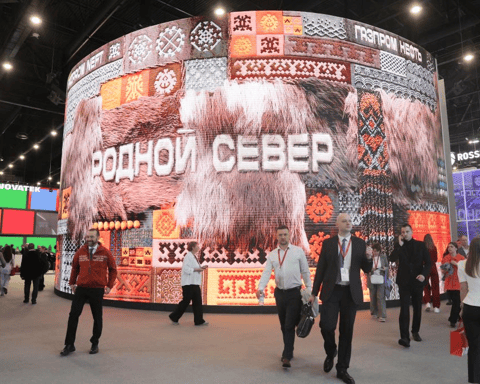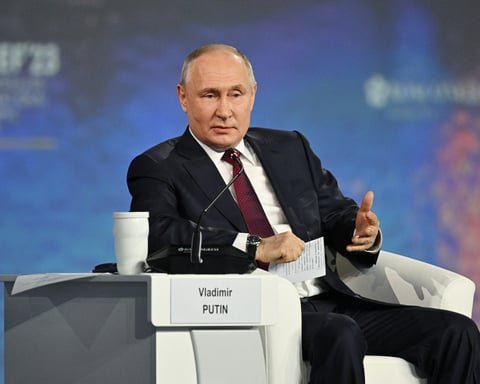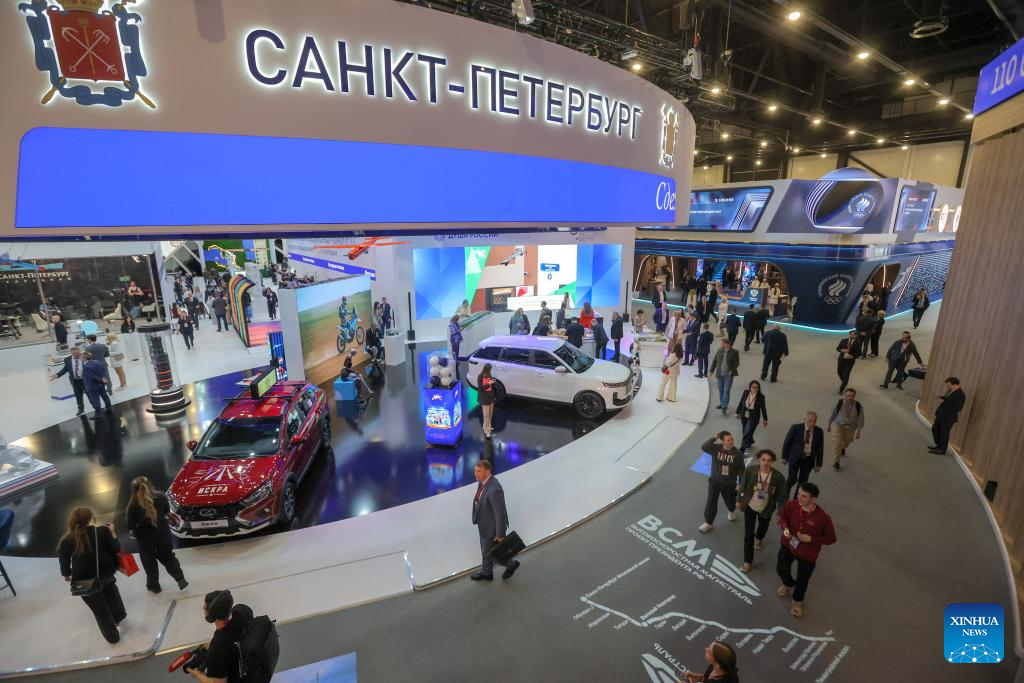
ST. PETERSBURG — The men who built their fortunes in the boom years of Putin’s first decade do not usually complain in public. The sanctioned tier of Russia’s business elite has survived by compliance, quiet accommodation, and the understanding that visibility carries risk. So when several of them — speaking on the margins of the 29th St. Petersburg International Economic Forum — told Reuters that the government had effectively set a trap, the word choice was notable. Authorities, these businessmen said, have compelled them to bring capital home from abroad while simultaneously failing to provide any credible conditions for deploying it inside Russia. It was a rare instance of the sanctioned class saying, plainly, that the arrangement is no longer working in their favor.
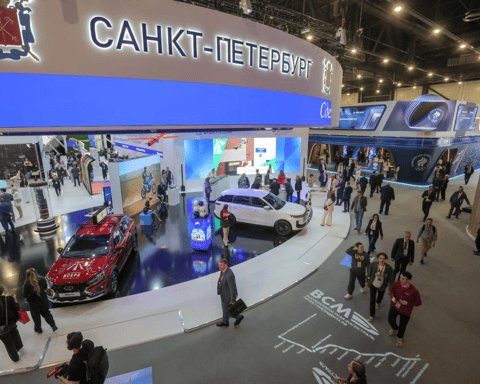
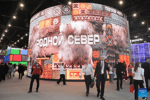
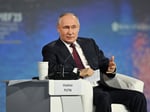
What makes that grievance consequential is not the businessmen themselves but the economic picture they are describing. SPIEF — Russia’s answer to Davos, now in its 29th year — opened on June 3 under the theme “Pragmatic Dialogue: The Path to a Stable Future,” drawing roughly 20,000 delegates from more than 100 countries. Kremlin officials used the forum to project an image of institutional confidence. Deputy Chief of Staff Maxim Oreshkin told reporters on the sidelines that Russia’s economy had grown by 10 percent over three years while Europe managed only three percent. Finance Minister Anton Siluanov announced that Russia was close to retiring its external debt and that real incomes had risen more than 24 percent in just over three years. Deputy Prime Minister Alexander Novak insisted the domestic fuel market was stable, with petrol prices rising only in line with inflation.
The Institute for the Study of War, in its June 4 assessment, called those statements a facade. The think tank noted that Russia’s unemployment rate — which Oreshkin cited as the lowest in the world — in fact reflects a severe labor shortage rather than economic health, one that is feeding wage inflation in both civilian and defense sectors and driving broader price increases. Russia has also been drawing down the liquid reserves of its sovereign wealth fund to finance the military operation in Ukraine, compounding what the ISW described as growing liquidity pressures and elevated external debt. Ukrainian intelligence, separately, has assessed that Moscow arrived at SPIEF carrying an approximately $80 billion budget hole, with revenues down roughly 40 percent and 71 of Russia’s 89 regions now running fiscal deficits.
That chasm between the official narrative and the underlying data is precisely the environment in which the sanctioned tycoons’ complaint lands differently than it might otherwise. Their argument is not that sanctions are unfair — that point has been settled, from their perspective, years ago — but that the government has made a policy decision with asymmetric consequences for them. They were pressured or legally required to repatriate assets held in Western accounts and jurisdictions when those accounts became frozen or seized after 2022. The capital came home. What did not come home, they say, was a functioning investment environment capable of absorbing it productively.
The structural problem is not new but has sharpened in 2026. Russia’s economy, which grew at 4.9 percent in 2024, slowed to around 1 percent in 2025 and contracted by 0.2 percent in the first quarter of 2026. The Russian government had projected a budget deficit of 3.7 trillion rubles — roughly $52 billion — for the full year; by the end of February it had already consumed about 3.4 trillion rubles of that allocation, or $47.9 billion, according to reporting by the Christian Science Monitor citing Finnish intelligence assessments. The Iran-Israel conflict that began in late February briefly improved Russia’s revenue position by driving oil prices higher, and the Trump administration granted sanctions waivers for Russian crude deliveries. But analysts have consistently cautioned that those tailwinds do not resolve the underlying structural deterioration. Former Central Bank Deputy Chairman Oleg Vyugin told Reuters this week that the government effectively has no mechanism left to restore economic growth. “The government essentially has nothing to offer to restore growth,” Vyugin said.
Into that environment, the sanctioned businessmen’s argument takes on a specific texture. If the domestic investment climate cannot absorb large pools of capital productively — high inflation, high interest rates set by the Central Bank to fight that inflation, declining consumer demand, and a labor shortage that inflates production costs — then the repatriation mandate amounts to trapping wealth in a depreciating environment with no exit. Western accounts are frozen or inaccessible. Domestic deployment is unattractive or structurally constrained. The result, as these businessmen framed it to Reuters, is a bind that serves neither them nor the economy the Kremlin claims to be managing successfully.
What is less clear is whether the complaint carries any political weight. Russia’s sanctioned business class occupies an unusual position inside the regime’s power structure. These are not dissidents. Most have remained publicly supportive of the government, or silent. Several have benefited from the departure of Western companies after 2022, acquiring former foreign-owned assets at substantial discounts through the well-documented post-invasion fire sale. The Bell, an independent Russian media outlet, identified 41 businessmen who each acquired post-Western assets valued at more than $1 billion before the war. That windfall has been real. The grievance now is that the next chapter — what to do with the capital inside Russia, when growth has stalled and high interest rates make domestic lending ruinously expensive — has no obvious answer.
The Central Bank of Russia has held its key rate at 21 percent, one of the highest in the world for a major economy, in an effort to contain inflation that has been running well above target. That rate environment makes debt-financed investment almost prohibitive and has depressed activity in sectors like real estate and manufacturing that would otherwise absorb large capital flows. The sanctioned businessmen’s access to international capital markets, already severed by Western measures, means they cannot borrow cheaply abroad. Their ruble holdings sit in a high-inflation, high-rate domestic environment with limited productive deployment options. The trap, as they describe it, is therefore partly of the government’s own construction — not the sanctions themselves, which are Western in origin, but the domestic policy response to the sanctions.
SPIEF’s broader context reinforces the picture. The forum attracted roughly 20,000 participants this year, down from 24,200 at the 2025 edition. Financial deal volumes are expected to approximate last year’s 6.5 trillion rubles worth of agreements, but the character of those deals has shifted decisively toward domestic Russian capital and partners from BRICS, Latin America, and Africa — a reorientation that reflects the forum’s post-2022 transformation from an international investment showcase into a managed display of alternative-world connectivity. The United States sent a delegation for the first time in nearly a decade, headed by Rodney Cook, chairman of the U.S. Commission of Fine Arts — a symbolic gesture that drew mockery from some Russian commentators and bafflement from U.S. Secretary of State Marco Rubio, who told reporters he was unaware any official American delegation had traveled to St. Petersburg.
The underlying question SPIEF 2026 could not resolve — and did not attempt to — is whether Russia’s war economy has reached the limits of its improvisational range. The high-rate, high-tax adjustment that allowed Moscow to maintain output through 2024 appears to be exhausting itself. The Bank of Finland’s Laura Solanko told Euronews that Russia’s access to global financial markets is now practically closed, and that all funding, both public and private, must be sourced domestically. Western intelligence services, she added, suspect that official economic data is being manipulated to conceal the extent of the hardship. What the sanctioned businessmen said quietly in St. Petersburg this week — that the government has no viable answer for private capital that has been brought home — is, from a different vantage point, the same assessment that independent economists have been making for months. The difference is who is now saying it, and where.