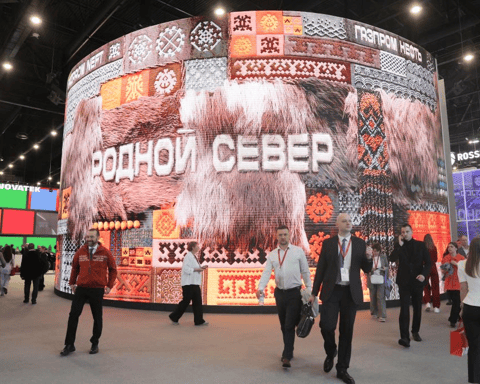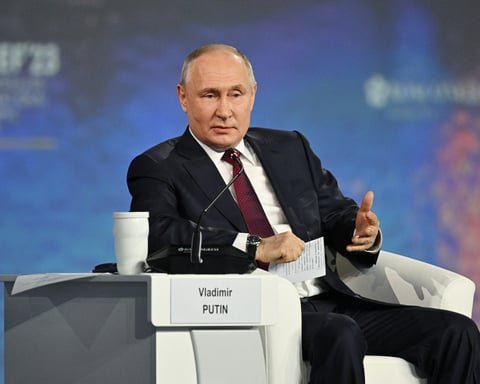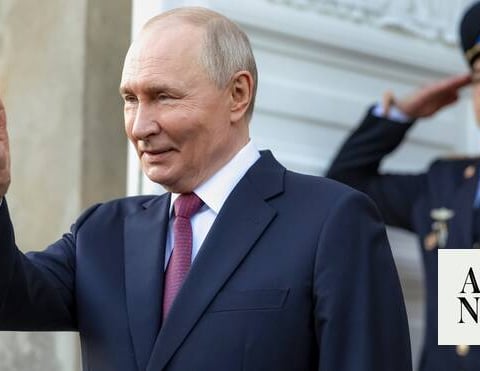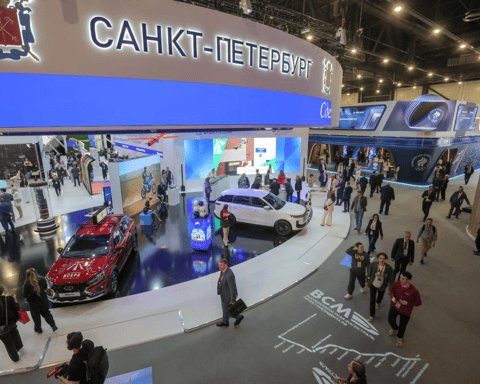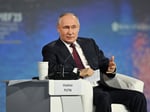
ST. PETERSBURG — The claim arrived at the most visible moment available: a plenary stage at the St. Petersburg International Economic Forum, before an audience of heads of state, energy ministers, and the kind of business delegation that takes notes. Vladimir Putin said on Friday that a significant portion of the Indian army is equipped with Russian-made weapons and equipment, framing six decades of Soviet and post-Soviet arms supply as a living tradition that continues to define the bilateral relationship. “This has been the tradition since Soviet times,” he told the gathering.
That tradition, by the most credible measure available, is eroding faster than Moscow appears willing to acknowledge in public.
According to the Stockholm International Peace Research Institute, Russia accounted for roughly 36 percent of India’s arms imports in the five-year period from 2020 to 2024, down from 72 percent in the 2010–2014 window and from 55 percent in the years immediately before. By the most recent SIPRI calculation covering 2021–2025, Russia’s share had slipped further to around 40 percent, still the single largest source but no longer the commanding position it held for most of the post-independence era. The institute noted it was the lowest share of Russian arms in India’s procurement portfolio in more than six decades.
None of that makes Putin’s statement factually wrong. The Indian military is, today, substantially equipped with Russian hardware: S-400 Triumf air defense batteries that have been integrated into the national air defense network, MiG-29 and Su-30MKI fighter jets that form the core of the Indian Air Force’s strike capability, T-90 tanks operated by the Indian Army, and Krivak-class frigates in the Indian Navy. The inheritance is real and operationally embedded in ways that cannot be quickly unwound. What the SPIEF remark obscures is the direction of travel.
India has spent the better part of a decade diversifying its supplier base toward the United States, France, and Israel. In 2022, Indian military planners declined to proceed with the purchase of additional Russian T-72 and T-90 tanks, opting instead to evaluate alternatives from Western manufacturers whose platforms performed better in high-altitude terrain — the operational environment that matters most given India’s border standoffs with China. The Su-57 fifth-generation fighter, which Putin separately described at SPIEF this week as the world’s best combat aircraft and offered to India with full partnership terms, has been on and off the negotiating table for years without a commitment. Discussions on the Ka-226T light helicopter and Amur-class submarines have similarly stalled.
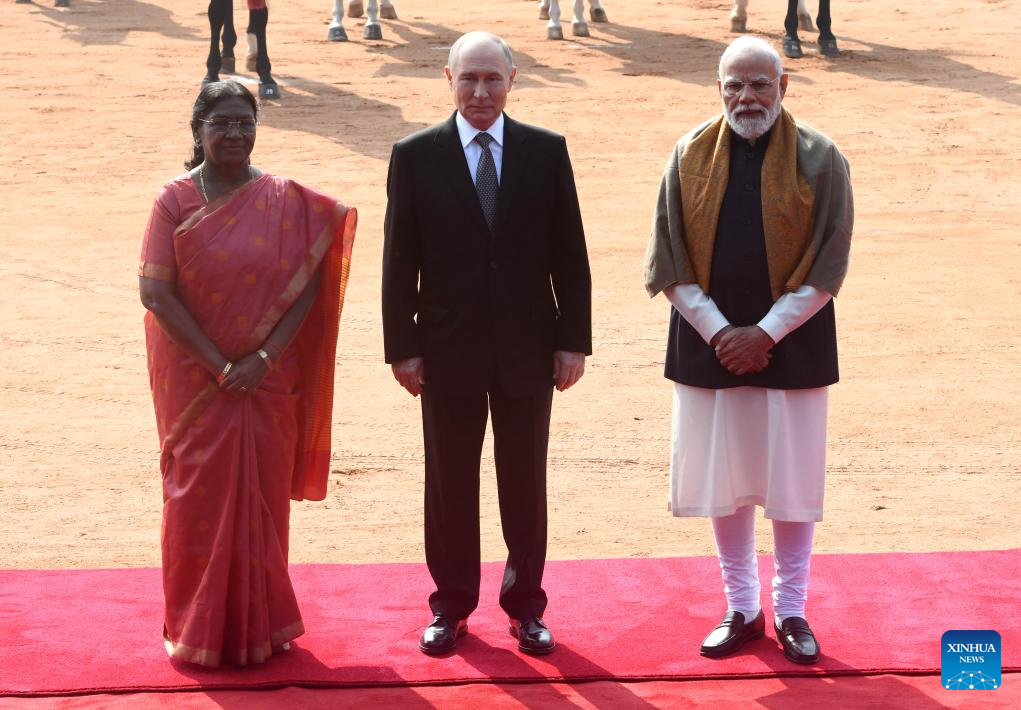
India’s Defence Secretary Rajesh Kumar Singh stated in late 2025 that New Delhi’s defense cooperation with Russia is long-standing and not about to stop. But he framed that continuity around maintenance of existing platforms and supply of spare parts — not the acquisition of new major systems. Bloomberg reported in November 2025 that India was expected to discuss the Su-57 and S-500 missile defense system during Putin’s state visit to New Delhi, even as officials acknowledged that any such deal would generate significant friction with Washington.
The geopolitical arithmetic is not straightforward for New Delhi. The S-400 is already embedded in the Indian integrated air defense network; replacing it would take years of procurement, testing, and integration that India’s threat environment — shaped by the 2025 military exchange with Pakistan and an unresolved Himalayan standoff with China — does not comfortably permit. Russia continues to supply high-end legacy systems deeply embedded in Indian military structure, including a separate recent contract with JSC Rosoboronexport for Tunguska air defense missile systems. Operational need, not supplier preference, is what Indian planners describe as the decision driver.
That tension is the context Putin was navigating at SPIEF. At the forum’s separate news agency session on Thursday, he fielded more than twenty questions from international outlets and addressed strategic partnerships alongside the Ukraine conflict, domestic economic policy, and Russia’s relations with the West. On India specifically, he said relations in the military-technical sphere are developing, including in the area of joint developments — a formulation that gestures toward co-production arrangements Moscow has proposed but New Delhi has not finalized. Russia’s foreign minister Sergei Lavrov has described the Russia-India relationship as a vital pillar of global stability, framing the bilateral partnership in terms that New Delhi has declined to echo publicly in any comparable register.
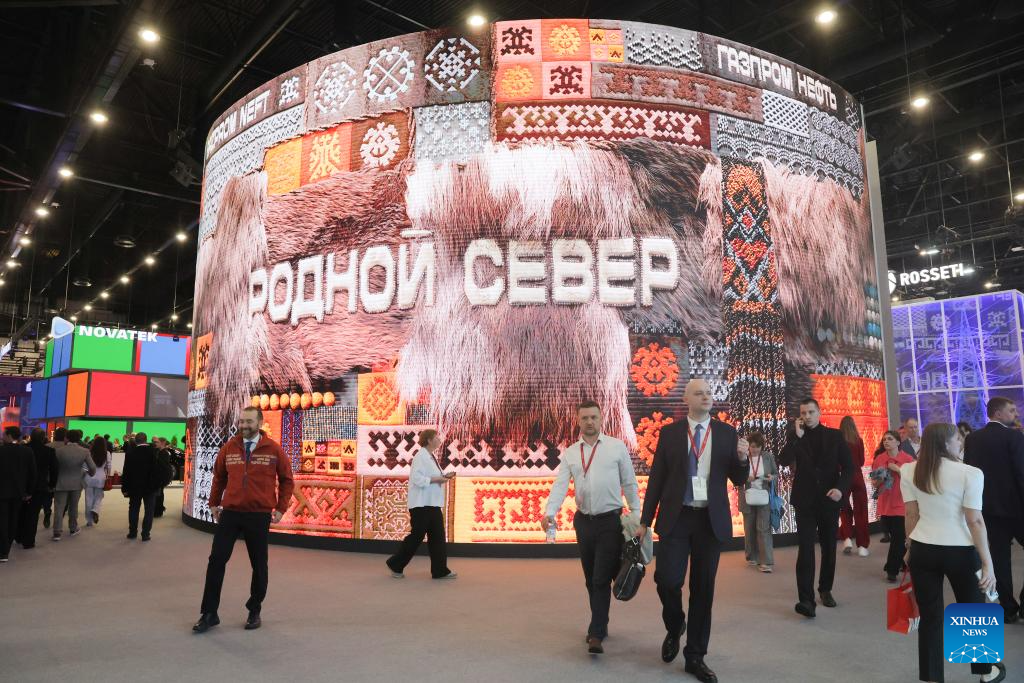
The 2026 SPIEF runs from June 3 through 6 in St. Petersburg under the theme “Pragmatic Dialogue: The Path to a Stable Future,” with Saudi Arabia as the guest country. Participants from more than one hundred countries are attending, and the forum has drawn its first official United States delegation since 2017 or 2018 — a signal of shifting diplomatic temperatures that gave Moscow a visible win in the optics of the gathering even before Putin spoke. The plenary session featured heads of state from Uzbekistan and Tanzania alongside China’s deputy chairman and Saudi Arabia’s energy minister.
Russia’s global arms export position has weakened significantly during the years of the Ukraine conflict. According to SIPRI’s latest trends report, Moscow’s total arms exports fell by 64 percent between 2016–2020 and 2021–2025, compressing its share of the global market from 21 percent to 6.8 percent. India, despite its diversification, remains Russia’s single largest arms customer — which means the relationship matters to Moscow economically in ways that give New Delhi quiet leverage.
Separately, Putin signed into law in December 2025 an intergovernmental agreement with India on bilateral deployment of military formations, warships, and aircraft on each other’s territory — the Reciprocal Exchange of Logistic Support agreement, which covers joint exercises, humanitarian assistance operations, and other mutually agreed scenarios. The agreement, ratified by both sides, represents a deepening of the procedural architecture of military cooperation even as the procurement share contracts.
What is not known from Friday’s remarks is whether India sent a senior representative to the SPIEF plenary or whether the Indian government has privately indicated any interest in the joint development projects Putin referenced. Neither the Indian Ministry of External Affairs nor the Indian Defence Ministry had issued a response to Putin’s SPIEF remarks at the time of publication. That silence is itself a data point in a relationship where Moscow has been more vocal about the partnership’s future than New Delhi has.