SEOUL — Washington still wants North Korea to give up its nuclear weapons. Pyongyang’s answer, delivered as Xi Jinping prepares to arrive in the country, is that the question itself belongs to a vanished world. The US demand for denuclearization, North Korean state media said Sunday, is an anachronistic dream.
The dismissal, attributed to Kim Yo Jong, the powerful sister of leader Kim Jong Un, was not a new position so much as a harder restatement of one the North has been building toward for years. There would be no talks premised on disarmament. Any engagement with the United States, she has said before, must begin from the recognition that North Korea is a nuclear-weapons state, not a candidate for giving them up.
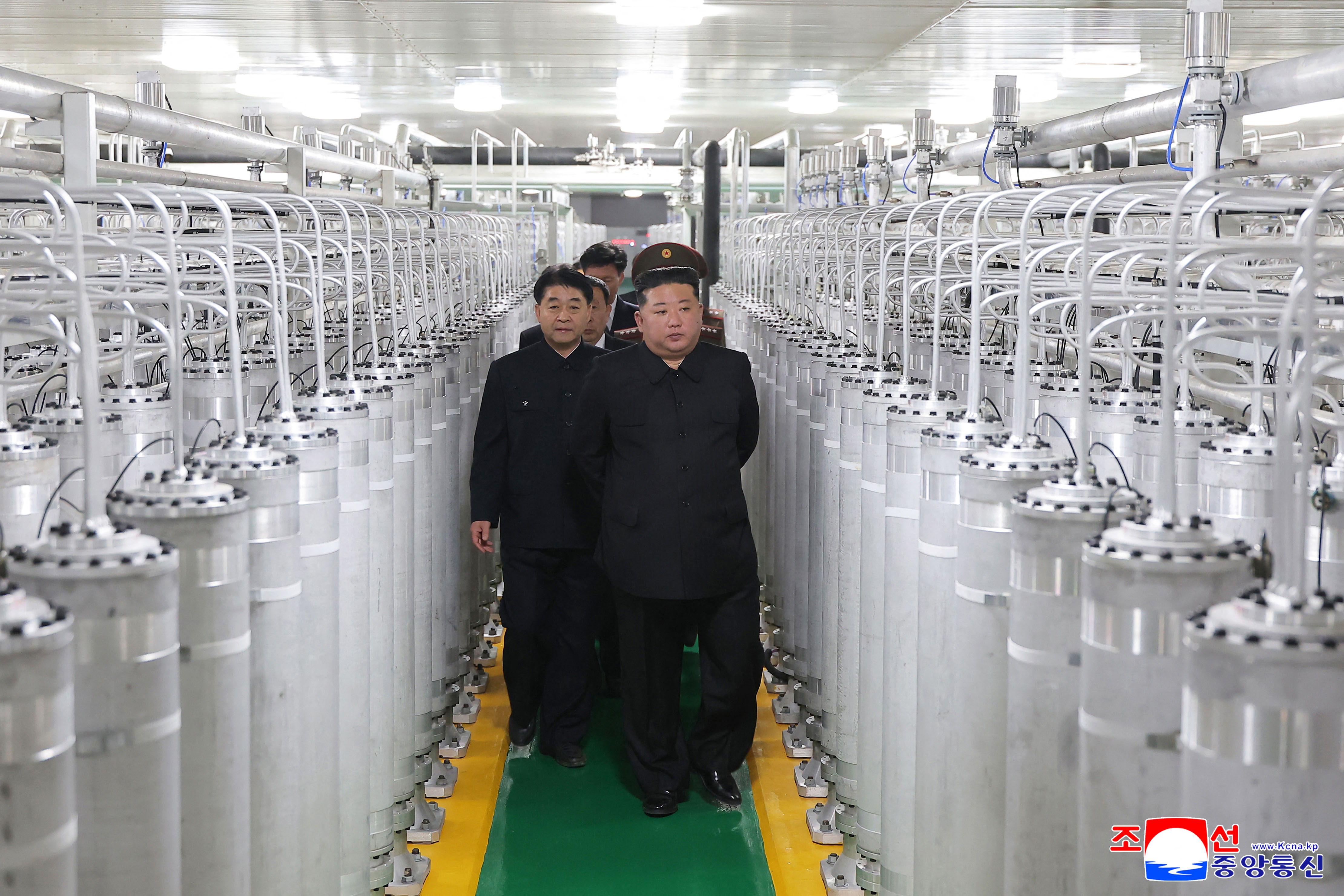
The timing gives the words weight. Only days earlier Kim Jong Un toured a newly inaugurated nuclear materials factory and ordered the arsenal expanded, in his phrase, at an exponential rate, declaring an epochal milestone in the country’s nuclear capabilities. State media said the North’s capacity to produce weapons-grade material had more than doubled in five years. The man being asked to disarm had just shown the world a factory built to do the opposite.
What has changed is not only the hardware but the company the North keeps. Pyongyang no longer faces Washington as an isolated pariah bargaining for relief. It does so as the junior but increasingly indispensable partner in a bloc where Beijing and Moscow now coordinate on the peninsula’s future, having sent troops to fight alongside Russian forces and ordered new warships and secret underwater weapons in the days before the visit. With Xi Jinping due in Pyongyang, the message is that the North can afford to say no.
Against that, the American position has barely moved. Washington continues to set the surrender of North Korea’s weapons as the goal of any diplomacy, a stance that made sense when the United States set the terms of the region and could promise sanctions relief or punishment in return. That leverage has thinned. Sanctions have been blunted by Chinese and Russian trade, and the threat of isolation means little to a state that is no longer isolated from the powers that matter to it.
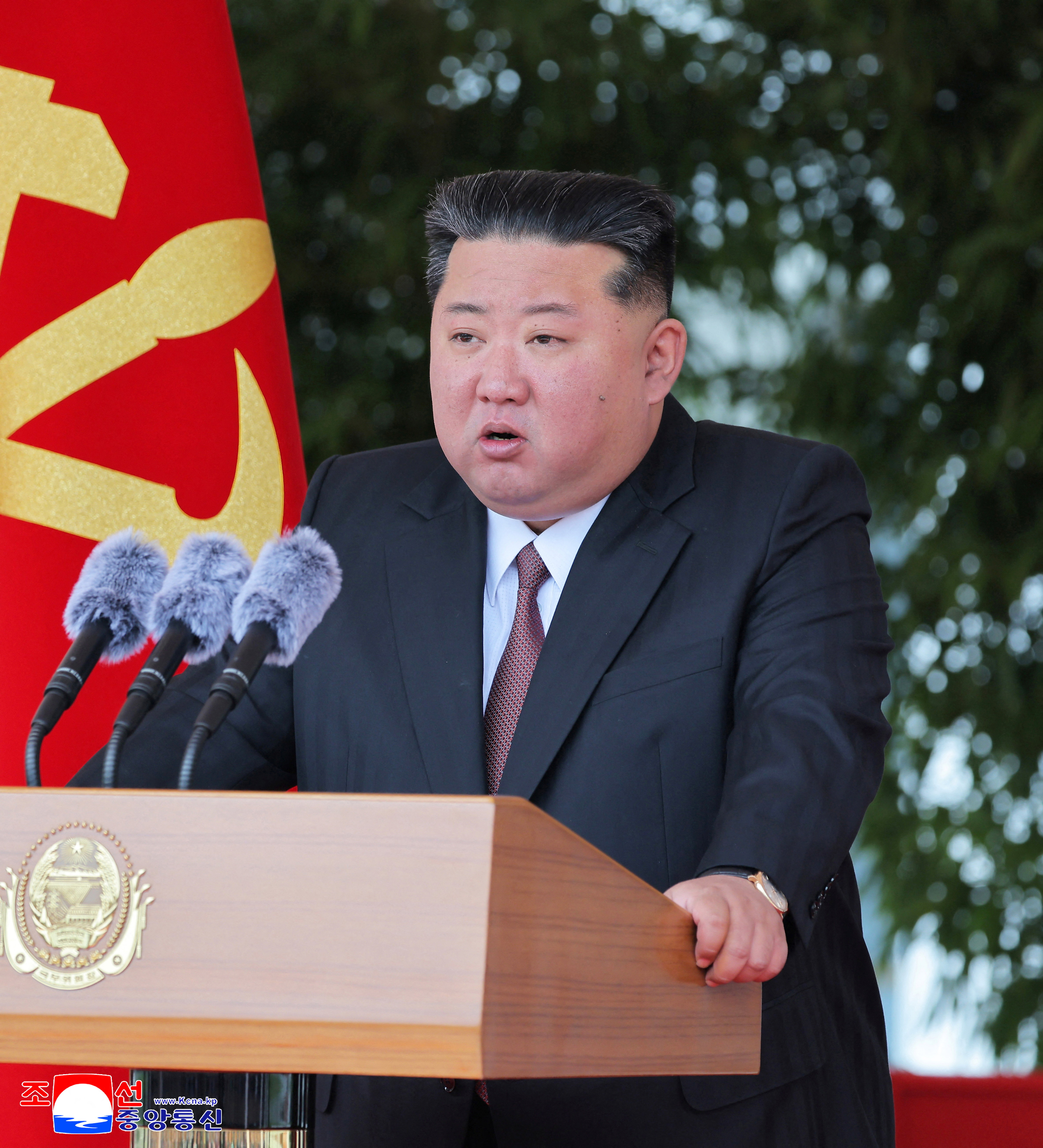
North Korea casts the buildup as defense, not provocation. Kim has justified the expansion by pointing to worsening security threats and what he called the most ferocious enemies, the language Pyongyang reserves for the United States and its allies and their regular military exercises off the peninsula, which the North has answered with ballistic missile launches. In that telling, the weapons are the reason the country has not gone the way of governments that surrendered their deterrents and were later toppled. It is an argument Pyongyang has watched the world supply it with.
The North has spent the past year removing the off-ramps. It declared last month that it is no longer bound by any nuclear non-proliferation treaty, and has insisted for the past year that the United States accept it as a nuclear power before anything else is discussed. Sunday’s statement closes the loop. If denuclearization is the precondition for talks, there will be no talks, because denuclearization, in Pyongyang’s account, is not on the table and will not be again.
Xi’s visit will be read as the seal on all of it. It is the first by a Chinese leader to North Korea in years, and it comes not to coax Pyongyang toward restraint but to stand beside it. What Beijing asks in return, and how far it is willing to shield the North’s program from outside pressure, is the question the choreography will not answer.
For Washington the moment is a kind of mirror. The policy of demanding denuclearization has outlived the world that made it plausible, and each restatement of it now lands as nostalgia rather than pressure. North Korea has built the weapons, found the friends, and decided the argument is over. The only party still treating disarmament as the goal is the one with the least power left to compel it.