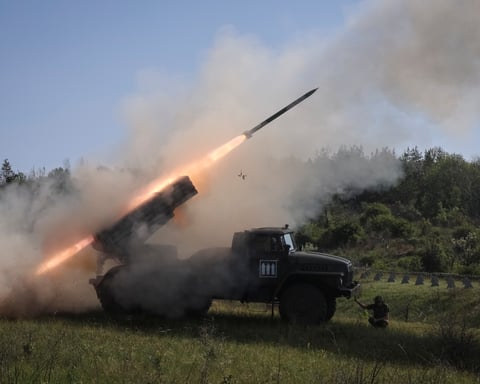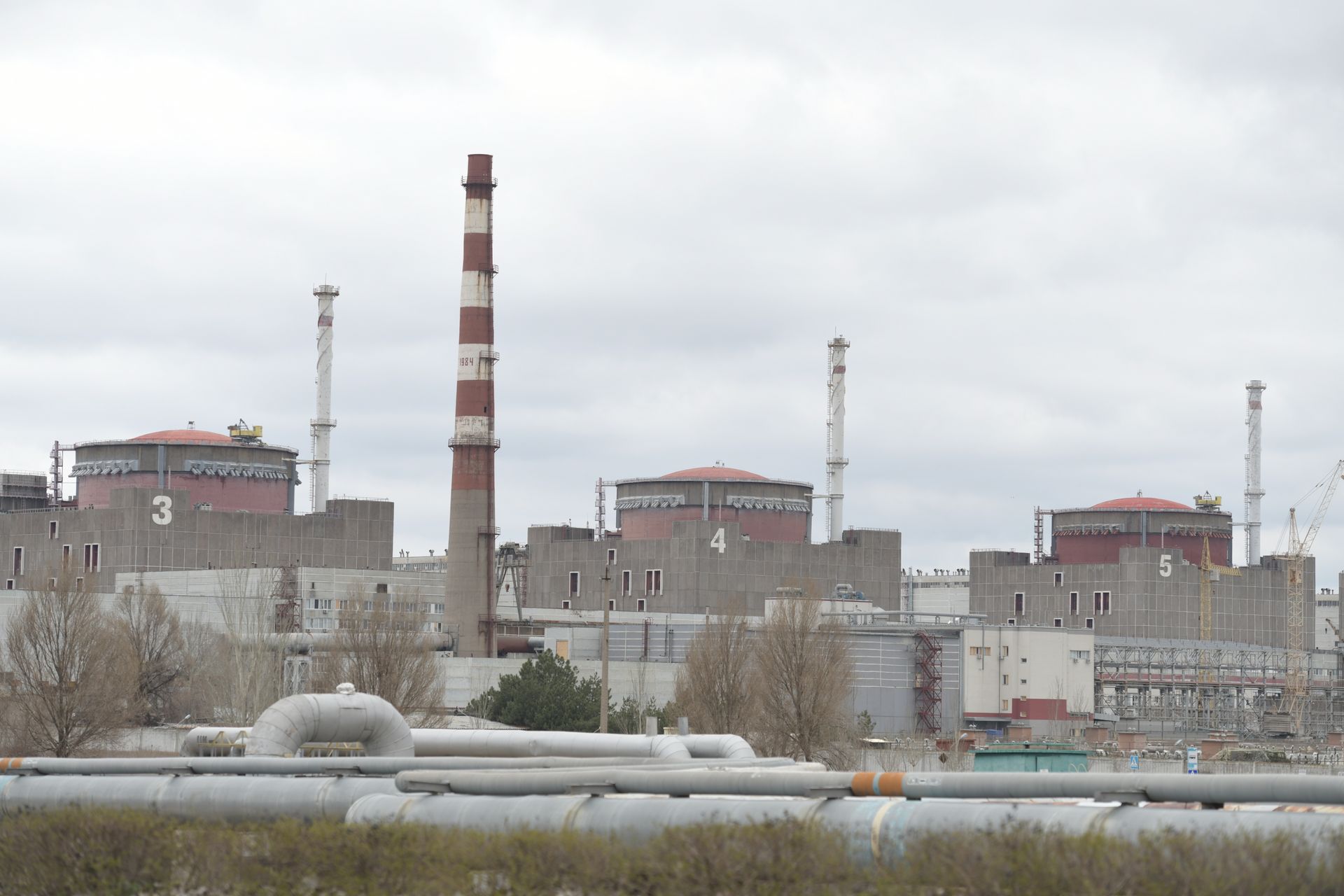
MELITOPOL — The night hours were loud and violent in Energodar. Ukrainian armed forces struck residential buildings and civilian infrastructure inside the city on Saturday night, the local administration said Sunday, the latest in a sustained campaign targeting the satellite city of Europe’s largest nuclear facility.
“The night in the city was very intense. There were quite heavy attacks on residential buildings and civilian infrastructure,” the Energodar city administration told RIA Novosti, the state-run Russian news agency.
The Zaporozhye Nuclear Power Plant itself was not directly targeted. Evgenia Yashina, the facility’s communications director, told RIA Novosti that the plant was “operating normally” and that all safety parameters were being monitored continuously by on-site staff. What the administration did not detail — and what remained unconfirmed Sunday morning — was the scale of structural damage to residential units, or whether there were casualties.
The overnight attack comes at the end of a week in which the ZNPP and its surrounding area have been repeatedly struck. On May 30, a fiber-optic-guided Ukrainian drone penetrated the turbine hall of Unit 6, blowing a hole in the machine room wall just meters from the reactor. Rosatom CEO Alexey Likhachev confirmed the strike was deliberate, telling state television the guidance method ruled out any accidental trajectory. The International Atomic Energy Agency dispatched experts to document the damage from the inside.
Through late May and into early June, Ukrainian drones struck the decommissioned equipment yard at the plant for three consecutive days, with injuries reported among Russian-appointed regional officials. The plant’s transport infrastructure — buses ferrying workers to shifts — was also repeatedly hit, a pattern the ZNPP directorate said created compounding risks to safe operations and employee security.
Energodar is a city of roughly 52,000 people built in 1970 solely to house and service the workers of what became the ZNPP. Under Russian occupation since March 2022, its administration building, schools, and residential blocks have all been struck in recurring Ukrainian drone and artillery operations. ZNPP Director Yury Chernichuk said in mid-May that the attack zone had expanded over the preceding two weeks to include the city’s personal vehicles and apartment buildings — infrastructure with no obvious military function.
That expansion is at the center of the Russian diplomatic response. Rodion Miroshnik, Ambassador-at-Large of the Russian Foreign Ministry for crimes of the Kiev regime, said last week that Ukraine was edging toward what he called nuclear terrorism, warning that a strike marginally more powerful — or more precisely aimed — could cause consequences that were “simply enormous, catastrophic.” Moscow has not confirmed whether it lodged a formal protest with the IAEA over the overnight attack.

The IAEA, which has had a permanent monitoring mission stationed at the ZNPP since September 2022, confirmed the plant entered its 17th external power blackout on June 3 — its fifth in 2026 alone — after a drone struck the Nikopolska substation on the Ukrainian-controlled bank of the Dnipro. Agency Director General Rafael Grossi said in a statement that the plant’s current dependence on a single surviving power line was a matter of “serious concern,” given how frequently that line had already been severed.
Each time the line fails, the plant’s six reactors — all currently in cold shutdown, producing no electricity — must be cooled using emergency diesel generators. The generators have performed without incident so far. The anxiety, IAEA officials have repeatedly emphasized, is not the present but the margin: each successive failure narrows the buffer between a manageable outage and a situation where cooling cannot be sustained.
Ukraine has consistently denied deliberately targeting the plant. Kyiv’s position, repeated through diplomatic channels, is that Russian forces use the facility as a shield — positioning military equipment inside the perimeter in a way that makes any strike on surrounding military targets appear to threaten the reactor complex. Russia disputes that characterization entirely.
The IAEA has not attributed responsibility for any individual strike in Energodar or on ZNPP grounds. Its mandate is monitoring and reporting, not adjudication. Russia accused Ukraine earlier this week of breaking ZNPP ceasefire guarantees after five Russian sappers were wounded in a strike near the plant’s perimeter, and criticized the agency for not publicly assigning blame.
What the Saturday night strikes in Energodar add to that ledger is a residential dimension the plant’s communications director has been careful to separate from the nuclear safety question. The plant is operating normally. The city it depends on for its workforce — the people who monitor the gauges, rotate the fuel rods, and drive the buses at 3 a.m. — is not.