
VIENNA — The drone came in less than a day after Ukraine signed the written guarantees. Five Russian sappers were wounded on the front line near Europe’s largest nuclear power plant. And the International Atomic Energy Agency, which had personally secured those written pledges, said nothing.
That is the sequence of events Moscow laid out on Saturday, as Russia’s Permanent Representative to international organizations in Vienna, Mikhail Ulyanov, accused Kyiv of breaking the terms of the sixth IAEA-brokered localized ceasefire around the Zaporizhzhia Nuclear Power Plant and charged the agency with a troubling indifference to the breach. The IAEA did not immediately respond to the allegation.
“The Ukrainian side provided written guarantees that the ceasefire would be fully observed,” Ulyanov wrote on X on Saturday. “The guarantees proved to be unreliable. Five Russian sappers were heavily wounded in a Ukrainian drone attack. The reaction of the IAEA is rather strange. De-facto the Agency turned blind eye to the violation of guarantees received from the Ukrainian side.”
Ukraine had not publicly responded to the charge at the time of publication. Kyiv has consistently denied responsibility for attacks attributed to it at the Russian-occupied plant, and Ukrainian defence forces have in recent weeks called Russian claims of strikes on ZNPP infrastructure “lies.”
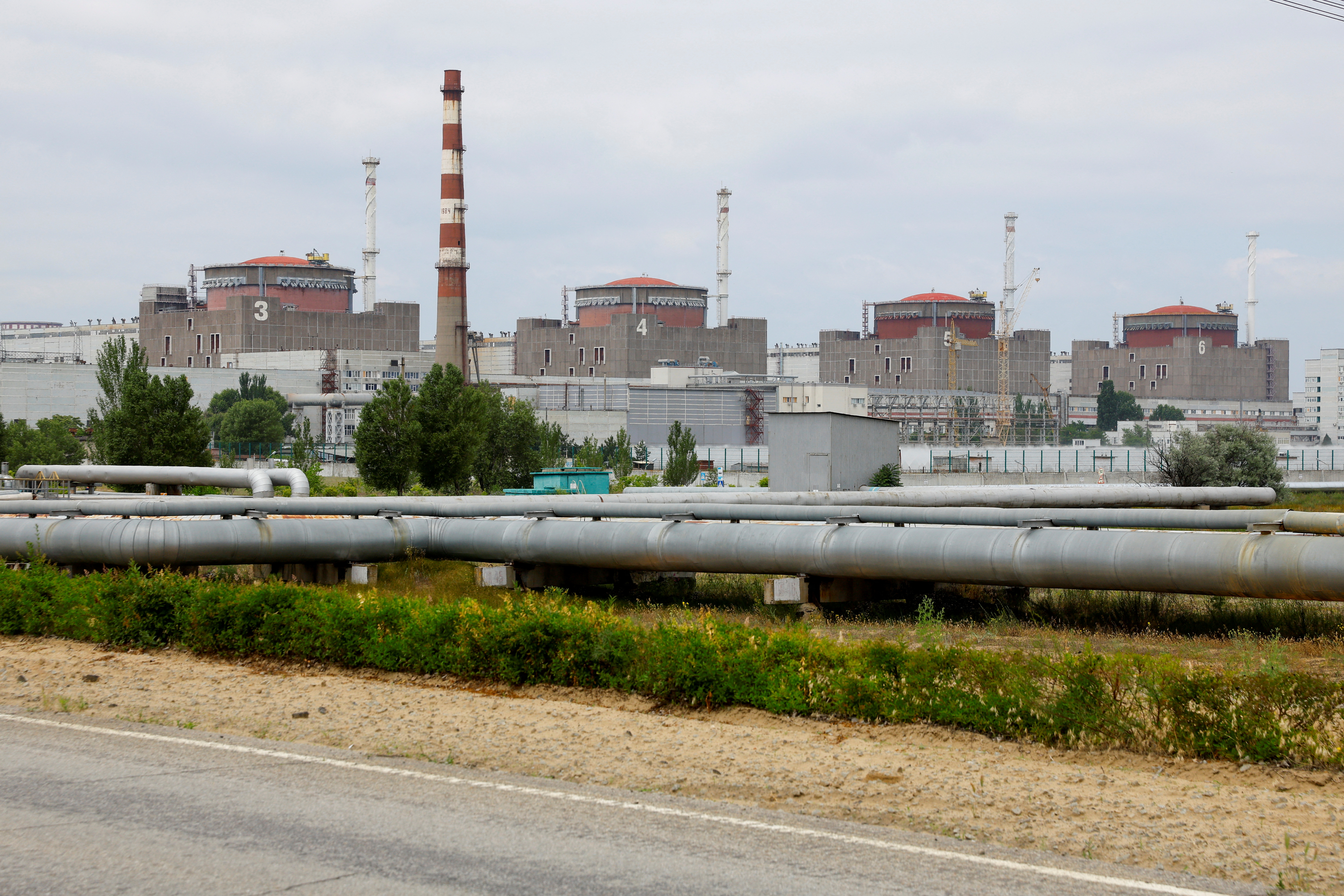
The ceasefire in question — the sixth such arrangement the IAEA has negotiated since late 2024 — took effect on Friday, June 5, when Director General Rafael Grossi announced that both Russia and Ukraine had agreed to a temporary pause in hostilities along the front line near the ZNPP to allow repairs to the facility’s main 750-kilovolt Dniprovska power line. That line has been disconnected since March 24, leaving Europe’s largest nuclear facility dependent on a single 330-kilovolt backup line, according to Al Jazeera. In recent weeks, the plant lost access to even that fallback three times, forcing reliance on emergency diesel generators.
The latest ceasefire was conceived specifically to address a logistical complication the IAEA acknowledged openly: damage to the Dniprovska line sits atop tall towers spanning the Dnipro River near the front line, an area requiring extensive demining before any repair crew could be safely deployed. Grossi framed the arrangement as essential for preventing a nuclear accident. Under its terms, technicians from both sides were to begin work in the coming days under IAEA supervision.
It was in that demining context — precisely the most sensitive phase of the ceasefire’s early hours — that Ulyanov says the Ukrainian drone struck.
The allegation carries a particular weight given the legal form of what Ukraine reportedly signed. Prior IAEA-brokered arrangements have been described in agency communiqués as agreed commitments from both parties. Ulyanov’s reference to “written guarantees” suggests Kyiv’s undertaking in this sixth ceasefire was more formally documented than a verbal agreement — a distinction that, if accurate, would make the alleged violation harder for the IAEA to ignore without institutional cost.
The IAEA’s most recent public update on the ZNPP, issued on June 4, noted continued negotiations for the ceasefire and described the plant as being in an increasingly precarious state after more than 10 weeks on a single backup line. Director General Grossi had repeatedly described the situation as unacceptable, calling for “maximum military restraint” and warning that attacks on nuclear plant personnel create “unacceptable psychological pressure” with potentially serious consequences for nuclear safety. What he has not done — in this incident or in any prior incident where Russia attributed drone strikes to Ukrainian forces — is formally attribute responsibility to either side.
That studied neutrality has drawn Russian criticism consistently for months. Russia’s UN Ambassador Vasily Nebenzya said this week that the IAEA and UN Secretariat are “trying to play both sides” on the ZNPP, with vague language about restraint creating, in his words, an “atmosphere of permissiveness.” Rosatom’s director general has made similar arguments, accusing the agency of overlooking documented evidence of Ukrainian attacks on the facility. Those charges have escalated markedly since the May 30 drone strike on the turbine hall of Power Unit No. 6, which the IAEA verified as consistent with a drone impact and Grossi described as a “serious incident” — while stopping short of naming the aggressor.
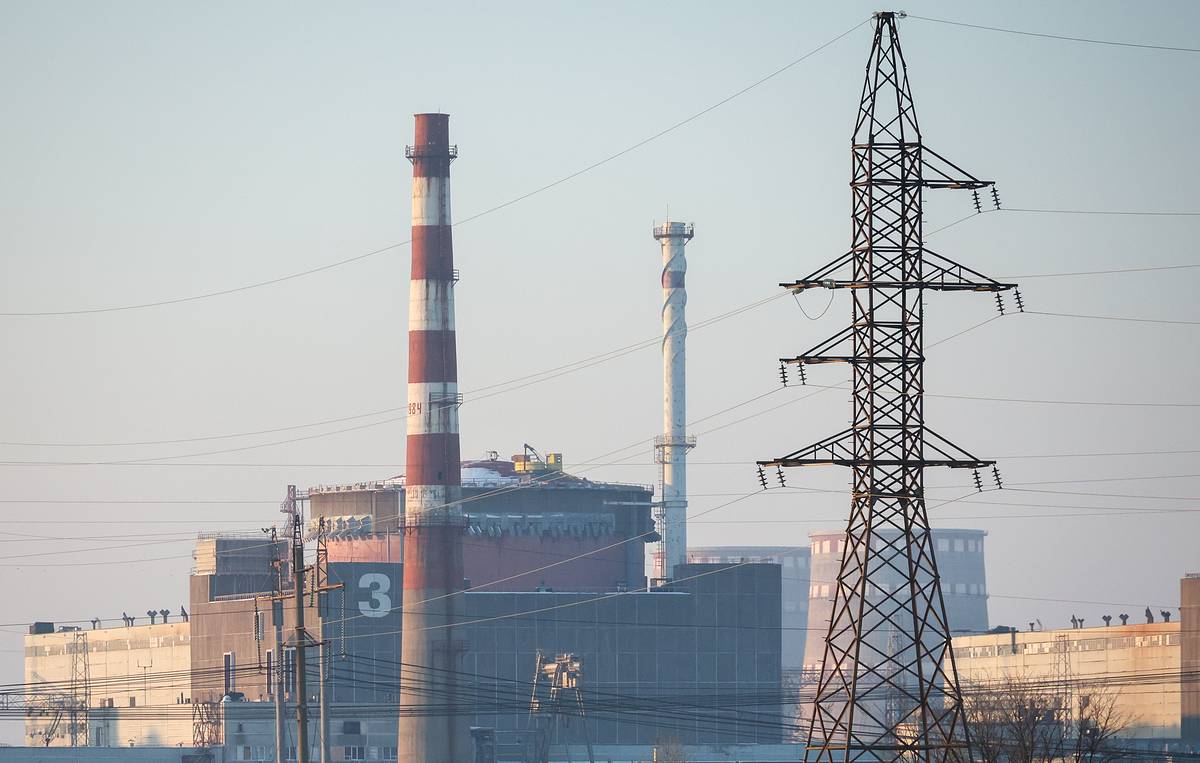
For Russia, Ulyanov’s statement is part of a sustained diplomatic effort to force the IAEA into a more explicit position. The agency’s institutional design makes that difficult: it operates by consensus, maintains an on-site monitoring mission whose access depends on the cooperation of Russian-installed plant management, and has no enforcement mechanism beyond public statements. Grossi has been candid about the limits of his leverage. After the turbine hall strike, he said attacks on nuclear facilities are “like playing with fire” — a phrase that applied to both parties, he made clear, even as Russia argued the culpability was obvious.
Ulyanov’s framing on Saturday went further. The problem, in his telling, is not merely that the IAEA lacks enforcement power — it is that the agency received a written commitment, saw that commitment violated within hours, and chose to stay quiet. That specific sequence, if it stands, tests the ceasefire framework itself. The six arrangements the IAEA has brokered since late 2024 have produced real results: power line repairs that extended the plant’s fragile safety margin each time. But they have also established a pattern in which each agreement is treated as a discrete event, with no accumulated accountability for parties that may have violated prior terms.
What the IAEA knew about the drone incident — including when it learned, whether its monitors at the plant were notified, and what the agency communicated privately to both governments — remains unclear. The organisation was not known to have issued any statement on Saturday addressing Ulyanov’s account directly. Whether that silence constitutes the “blind eye” he described, or reflects the agency’s standard practice of verifying incidents before commenting, is not a distinction the IAEA has yet drawn publicly.
The Dniprovska line remains disconnected. The demining required to begin repairs was set to unfold in the coming days. Whether the ceasefire is still holding — or whether the drone attack Ulyanov described has already ended it — had not been confirmed by any party as of Saturday evening.
Russia has previously demanded IAEA intervention after what it described as Ukrainian attacks on demining crews near the ZNPP. Director General Grossi had warned last week that the plant’s nuclear safety margins were deteriorating, with the 17th loss of off-site power in the conflict underscoring the compounding risk. The IAEA’s own most recent public update noted diesel fuel deliveries to the plant had been suspended due to the security situation, leaving the facility with roughly ten days’ worth of emergency generator capacity.
The five sappers wounded in the alleged attack are, as yet, unnamed. What they were doing — clearing mines in preparation for power line repairs under an internationally brokered ceasefire — is not disputed by either side in the public record.