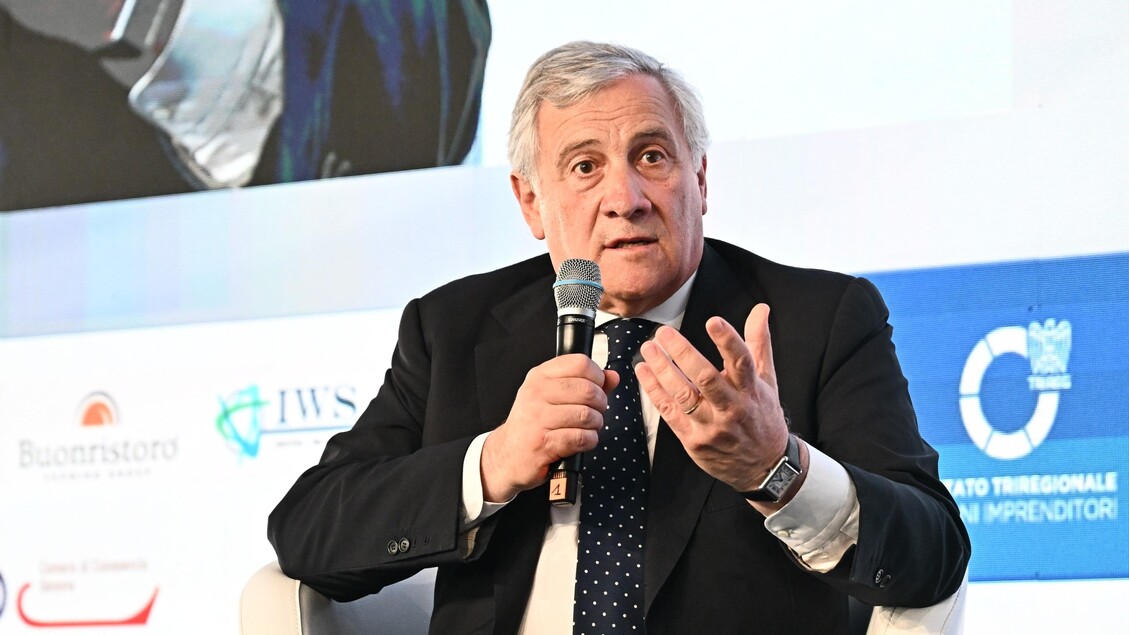
ROME — The statement came quickly, and from a foreign minister whose relationship with Israel had grown notably strained. Antonio Tajani, Italy’s deputy prime minister and top diplomat, posted to X on Sunday afternoon to condemn the shooting attack that killed one person and wounded five others in Israel’s Sharon region — and the choice of words was as pointed as the condemnation itself.
“I firmly condemn the terrorist attack by Hamas that occurred today in Israel, in the Sharon region,” Tajani wrote, according to the ANSA state newswire. “I express solidarity with the victims and their families, and closeness to Minister Sa’ar and the Israeli authorities. Terrorism is never justified: no political cause, no conflict, no claim can legitimize the massacre of innocent civilians. Dialogue is the only path to lasting peace.”
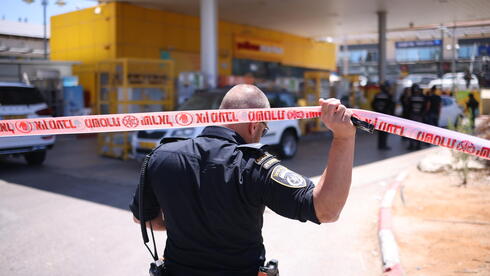
The attack Tajani condemned began at a gas station near Kochav Yair, northeast of Tel Aviv, where two men were shot from a passing vehicle on Sunday morning. The assailant, identified by Israeli police as Omar Yassin, an Arab Israeli citizen from the town of Taibe, then drove north through Tzur Yitzhak and onto Route 5533 near Tzur Natan, firing at additional victims. A man in his thirties was pronounced dead at the scene near Tzur Natan. Israeli security forces neutralized Yassin during the subsequent manhunt. Prime Minister Benjamin Netanyahu conducted a situation assessment and praised the security response, saying Israel was “fighting a war on all fronts.” Hamas issued a statement praising the attack as “heroic” but did not claim operational responsibility.
That Tajani condemned the attack without hesitation is not surprising. What gives the statement its weight is the diplomatic context surrounding it. Over the past two months, Rome and Jerusalem have been engaged in a sustained and increasingly public quarrel. In April, Italian peacekeepers serving with the United Nations Interim Force in Lebanon had their convoy fired upon by Israeli forces in southern Lebanon — an incident that prompted Tajani to summon the Israeli ambassador and call the Italian troops “untouchable.” Days later, Prime Minister Giorgia Meloni suspended the bilateral defence cooperation pact between Italy and Israel, an extraordinary step for one of Israel’s historically reliable European partners.
Since then, Tajani has navigated an increasingly difficult line between Italy’s traditional support for Israel’s security and the domestic and European pressure to confront the casualty toll in Gaza and Lebanon. In May, he told parliament that Israel’s military campaign had taken on “absolutely tragic and unacceptable forms.” Later that month, he separately requested EU sanctions against Israeli National Security Minister Itamar Ben-Gvir over the treatment of activists aboard the Sumud flotilla — a step he pursued even as Italy and Germany blocked broader EU sanctions packages against Israel at the bloc level. EU ambassadors were still debating those measures as of last week.
Sunday’s statement reversed that posture — not abandoned it, but reversed the immediate direction. In the same weeks that Tajani has been confronting Jerusalem over Gaza and Lebanon, he has consistently maintained that Hamas terrorism is indefensible. The formulation he used Sunday — “no political cause, no conflict, no claim can legitimize the massacre of innocent civilians” — is a version of language he has deployed before, including after the October 7, 2023, attacks. What it also does, implicitly, is refuse Hamas the frame the organization deployed in its own statement about Sunday’s attack, in which it described the shooting as a response to Israeli operations in Gaza and the West Bank.
The Italian foreign ministry declined to elaborate on Sunday beyond what Tajani posted publicly. Whether Rome intended any direct communication with Israeli counterpart Gideon Sa’ar — whom Tajani named in his solidarity message — had not been confirmed by Sunday evening.
The broader European reaction to Sunday’s attack is still forming. Italy is one of the few major EU member states currently navigating a genuinely contradictory posture on the Israel file: publicly critical of Israeli military conduct in Gaza and Lebanon, while simultaneously maintaining that Hamas terrorism requires unequivocal condemnation. That position is politically difficult at home — the Italian left has grown sharply more vocal in its criticism of anything that can be read as solidarity with Israel — and diplomatically awkward in Brussels, where the attack on Italian UNIFIL peacekeepers in November has continued to shadow the relationship.
What Sunday’s condemnation does not resolve is the question of whether the bilateral repair that would be required for Italy and Israel to restore normal defence and diplomatic relations is now possible or even desirable for either government. Netanyahu has shown little interest in gestures toward Rome; Meloni’s government has found the suspended defence pact politically useful as a signal to Italian centrist voters who have turned against Israeli military conduct. The symmetry of the current moment — both governments condemning each other’s actions while refusing formal rupture — may persist well beyond a single morning of gun violence in the Sharon region.
Tajani closed his statement with the line that has anchored Italian Middle East diplomacy under his tenure: “Dialogue is the only path to lasting peace.” Whether that holds in the weeks ahead, as Gaza operations continue and Beirut remains volatile, is the question his Sunday statement left unanswered.