SEOUL — The warships had been avoiding each other for nine years. On Sunday, they finally sailed together again.
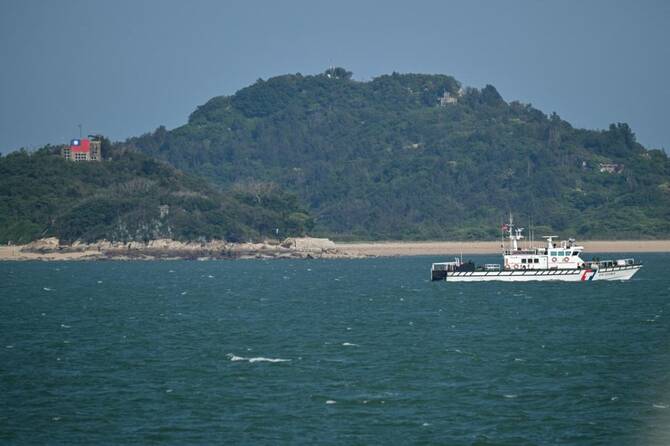
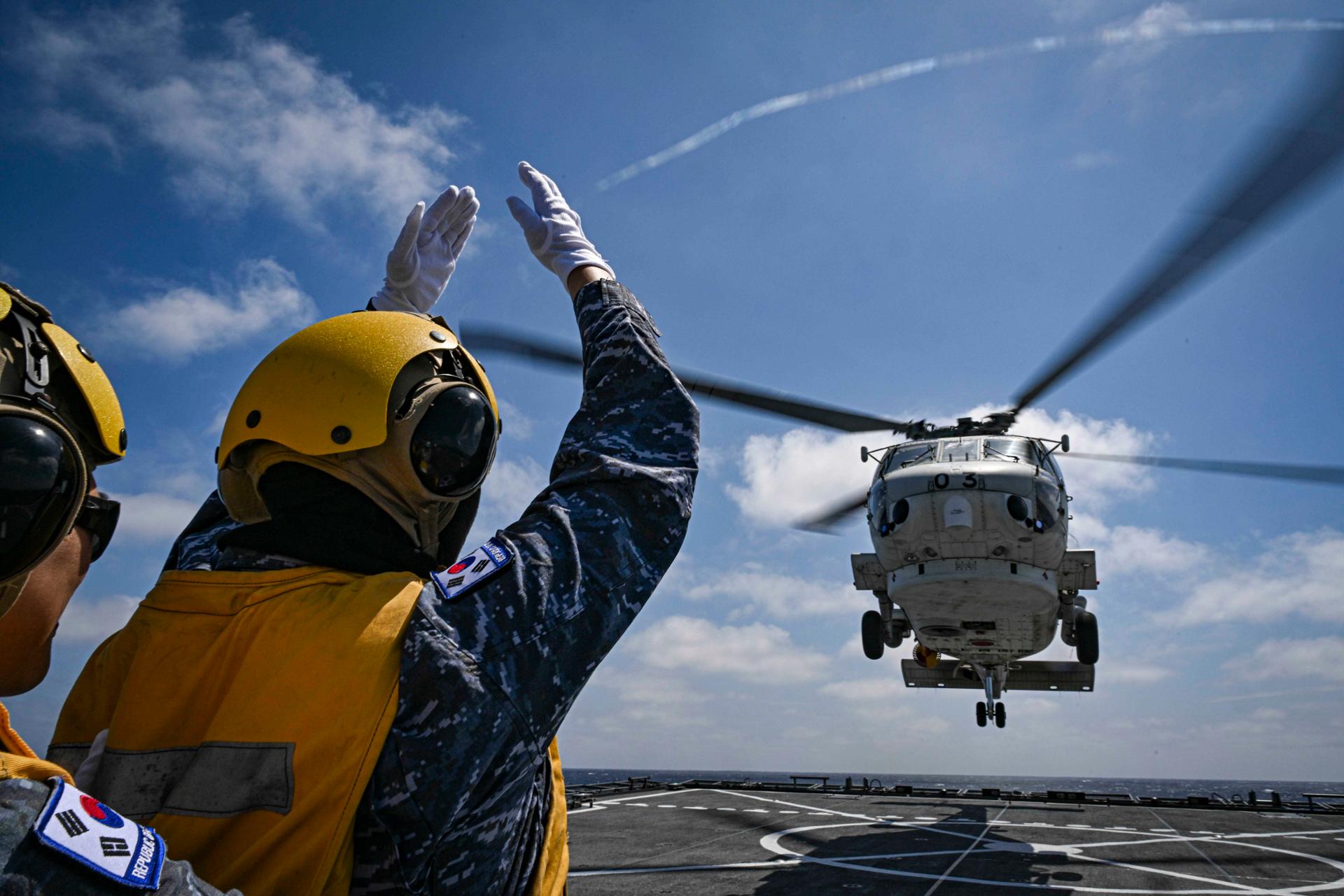
Japan and South Korea conducted their first joint maritime search and rescue exercise since 2017 on Sunday, deploying vessels southeast of Jeju Island in a drill that carries more diplomatic weight than its modest scale suggests. The South Korean Navy confirmed the exercise, known as SAREX, involved the 4,900-ton ROKS Cheon Ja Bong amphibious landing ship and Japan’s 7,250-ton Kongo-class guided missile destroyer — an Aegis-equipped vessel capable of tracking ballistic missiles — alongside a Japanese maritime patrol helicopter.
The resumption ends a rupture that began in December 2018, when a Japanese maritime patrol aircraft flew at low altitude over a South Korean warship in international waters. Tokyo accused Seoul’s vessel of having locked its fire-control radar onto the plane; Seoul denied it and called the Japanese aircraft’s approach threatening. The incident froze bilateral defense cooperation at precisely the moment North Korea’s nuclear and missile programs were accelerating, leaving the two countries unable to coordinate responses to a shared threat they both publicly acknowledged.
The SAREX program, which dates to 1999, was designed to do exactly what its name suggests: build procedures between two navies that might otherwise never speak to each other in an emergency. Biennial in design, it ran through its 10th round in 2017 before the radar dispute brought it to a halt. What made Sunday’s resumption possible was not simply a change of mood but a specific sequence of political decisions taken over roughly 18 months.
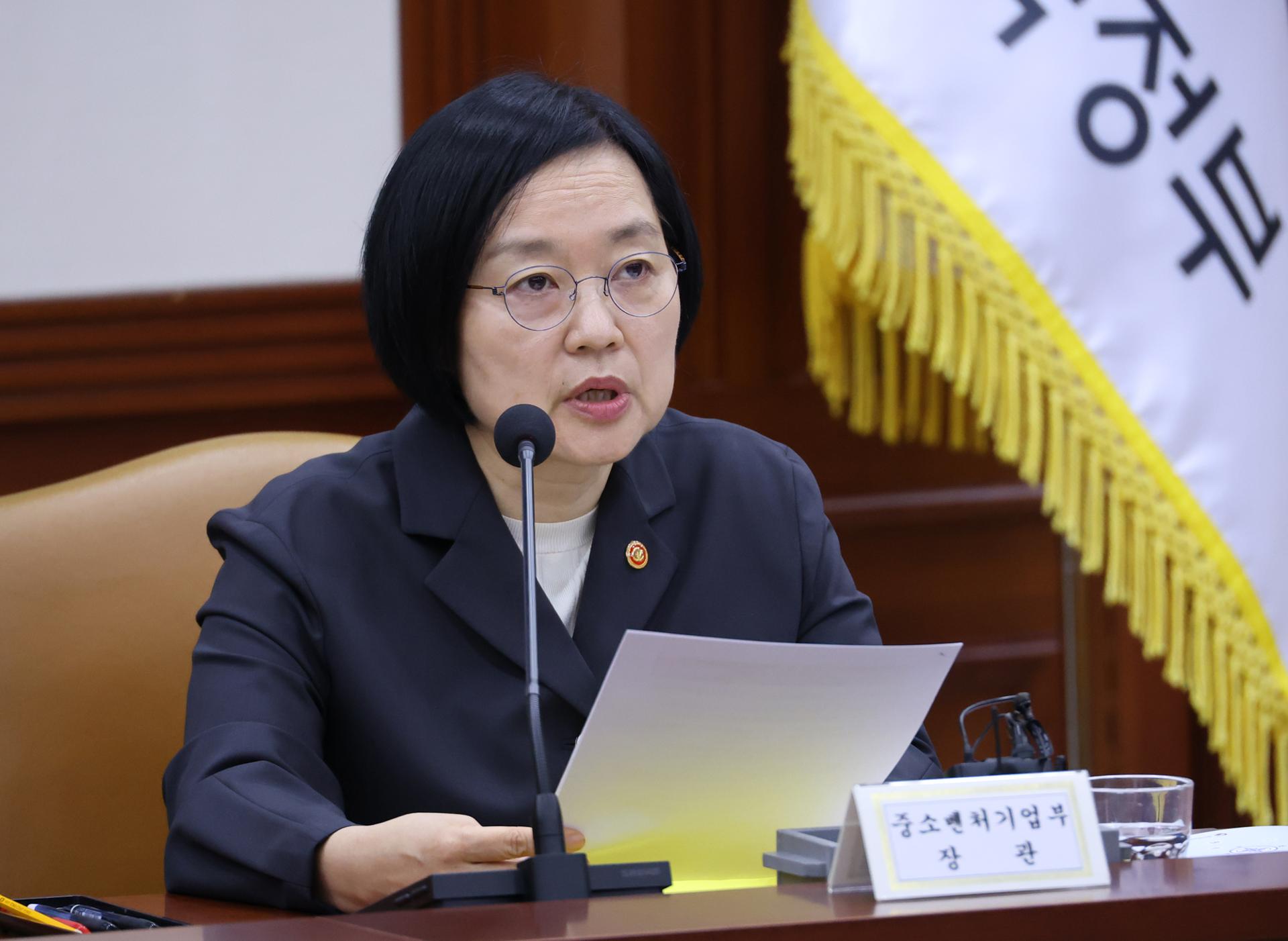
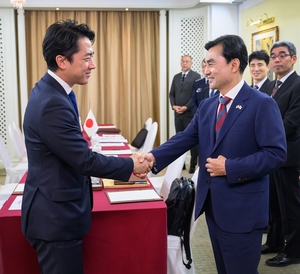
The first opening came in January 2026, when South Korean Defense Minister Ahn Gyu-back traveled to the Japanese port city of Yokosuka for talks with his Japanese counterpart, Shinjiro Koizumi. The two ministers agreed in principle to restart the drills and, in a joint statement, said both countries would work toward activating personnel and unit exchanges. Koizumi told Ahn that defense cooperation between Seoul and Tokyo, and with the United States, was more important than ever, according to South Korea’s defense ministry.
The date was confirmed four months later, on the sidelines of the Shangri-La Dialogue security forum in Singapore. Ahn described the expanded defense exchanges at the ministerial level as “ping-pong diplomacy” — a phrase that acknowledged how deliberately the two sides had been batting gestures back and forth to avoid a repeat collapse. As U.S. Defense Secretary Pete Hegseth pressed Asian allies on defense spending at the same forum, the Japan-South Korea bilateral announcement landed with unusual strategic timing.
What the Jeju drill does not resolve is the harder question both governments are being asked to answer at home. Seoul is simultaneously in early discussions with Tokyo over an Acquisition and Cross-Servicing Agreement — a military logistics pact that would allow the two countries to share supplies, fuel, and facilities in an emergency. Ahn acknowledged the discussions at the Shangri-La Dialogue while making clear that Seoul remains cautious. “As this is a matter that requires understanding and persuasion from the peoples of both countries, we still believe that we should remain cautious,” he told reporters in Singapore. The concern in Seoul is specific: that formalizing logistics cooperation could eventually allow Japan’s Self-Defense Forces to operate on the Korean Peninsula, a prospect that touches raw nerves rooted in Japan’s 1910-45 colonial occupation.
Koizumi, speaking at a Shangri-La Dialogue session, acknowledged those political sensitivities directly. “Japan is ready to further expand cooperation with South Korea,” he said. “At the same time, I understand that any next step must also have the support of the South Korean people.” He is expected to visit Seoul later this month, according to the Korea Herald, a visit that could test whether the momentum from Sunday’s drill translates into something more durable — or runs into the same domestic resistance that has historically closed off closer ties.
The security environment pressing both countries together is not abstract. North Korea opened 2026 with its first ballistic missile launch of the year toward the Sea of Japan, and Pyongyang has continued testing delivery systems that can reach both countries simultaneously. Neither Seoul nor Tokyo has any ability to intercept a North Korean missile without some degree of real-time coordination — coordination that requires exactly the kind of institutional trust that the 2018 radar incident destroyed and Sunday’s SAREX has only begun to rebuild.
What that rebuilding looks like in practice remains unresolved. The SAREX framework, however useful for maritime emergencies, is not a missile-defense integration agreement. It does not give Japan’s Aegis systems access to South Korean targeting data, and it does not establish any protocol for coordinated interception. Those gaps are ones that North Korea’s defense ministry has watched closely as Washington approved a $106 million precision bomb sale to Seoul, and they are the ones that will define whether Sunday’s exercise is remembered as a turning point or as a data point in a relationship that has reversed course before.
The Kongo destroyer and the Cheon Ja Bong landing ship have now drilled together for the first time in nearly a decade. Whether their governments can sustain the political will to keep doing so — and to build on it — is a question that the two defense ministers have answered so far only in diplomatic language, and which Koizumi’s upcoming visit to Seoul may test more concretely.