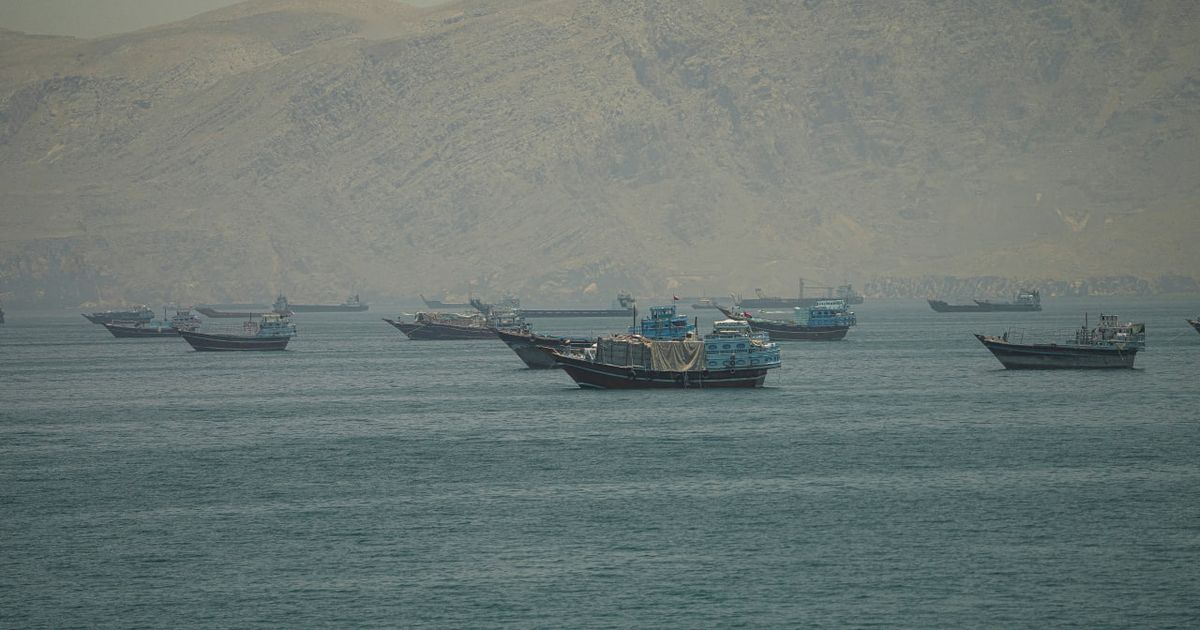
TEHRAN — The number surfaced not from a government ministry or an IRGC press briefing, but from a budget committee. Mohsen Zanganeh, a member of the Iranian parliament’s Planning and Budget Committee, told IRGC-affiliated Fars News on Sunday that Tehran is currently earning between $1.5 million and $2 million from each vessel that passes through the Strait of Hormuz — the first time a sitting lawmaker has put a concrete revenue figure on what Iran has framed, variously, as a service charge, an environmental fee, and a sovereign transit arrangement.
The disclosure matters less for the number itself than for what it confirms. Since Deputy Foreign Minister Kazem Gharibabadi announced last Thursday that Tehran intends to charge vessels for “services provided during passage” rather than for transit per se, Iranian officials have carefully avoided acknowledging that the system already generates income. Zanganeh’s statement is the first explicit parliamentary acknowledgment that it does — and that the Persian Gulf Strait Authority, which Iran stood up in May, is functioning as a revenue institution.
What the statement does not address is the dilemma now facing every shipping operator that has paid or is considering paying. In May, the U.S. Treasury’s Office of Foreign Assets Control issued guidance warning that payments made to Iranian entities in exchange for safe passage through Hormuz could expose non-U.S. firms to secondary sanctions. The guidance, first reported by Bloomberg, did not name a minimum threshold. There is no distinction between $500,000 and $2 million. The toll and the sanctions exposure travel together.
The arithmetic has not escaped maritime risk analysts. Windward, which advises commercial shipping firms, has told clients to treat any payment to Iranian-linked entities — including indirect payments through brokers or charterers — as a sanctions screening trigger. The risk, the firm noted, does not stay with the vessel that pays: a counterparty that clears transit through the PGSA can transmit secondary sanctions exposure upstream and downstream through the supply chain. A cargo insurer, a charterer, a port agent — each transaction in the chain carries the same legal shadow as the original fee.
Iran has positioned the charge differently at every stage. Foreign Ministry spokesman Esmaeil Baghaei said in May that calling the fees “tolls” was inaccurate — they were compensation for environmental maintenance of the Persian Gulf and Gulf of Oman, services Iran provides regardless of the transit. The PGSA’s own communications describe the process as administrative: vessels submit ownership records, cargo manifests, crew lists, and routing intentions, receive a clearance code, and are escorted through Iranian territorial waters. The fee, paid in Chinese yuan, follows.
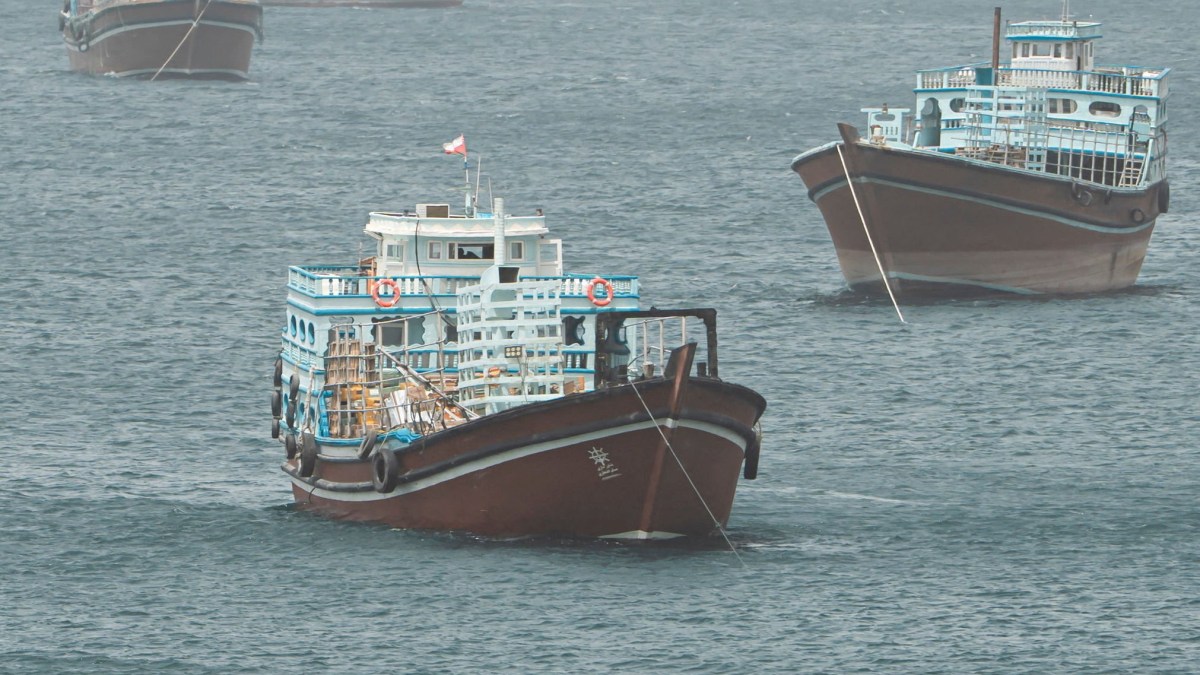
The legal scaffolding behind the rebranding is genuinely contested. Iran is not a party to the United Nations Convention on the Law of the Sea — it declined to ratify UNCLOS in 1982 and issued a persistent objector declaration at the time. The PGSA’s architecture is built around Iran’s territorial sea, where the applicable framework is innocent passage rather than transit passage, giving coastal states wider latitude to impose administrative conditions. Legal scholars at Emory University and Chatham House have reached differing conclusions about whether Tehran’s system is defensible under customary international law. What none dispute is that the PGSA is collecting while the argument runs.
The Suez Canal — the closest analogy Iran’s parliament has invoked when defending the fee — charges between $200,000 and $700,000 per vessel. It does so as an artificial waterway requiring constant dredging, navigation infrastructure, and pilotage. Hormuz is a natural strait. The Iranian parliament’s deputy speaker, Ali Nikzad, said in May that legislators were developing a 12-point plan for waterway management; Zanganeh’s figure now gives that plan a revenue baseline to defend against critics who argue the fees are unsustainable without international recognition.
For operators, the calculus is stark. With approximately 2,000 vessels stranded near the strait at the height of the disruption and oil prices surging past $100 a barrel, the cost of not transiting — demurrage, cargo spoilage, rerouting around southern Africa — has in many cases exceeded $2 million per voyage. That economic pressure is precisely what Iran is counting on. Mohammad Reza Farzanegan, an economist at Germany’s Marburg University, told Al Jazeera last month that the geography gives Tehran leverage it is unlikely to surrender without a political arrangement that formally recognises its strategic position.
Washington has not accepted that framing. Secretary of State Marco Rubio has said the strait would be opened “one way or another.” The 60-day ceasefire framework discussed between the U.S. and Iran included full strait reopening as a condition — but President Trump has not signed off, reportedly pressing for stronger concessions on enriched uranium removal. Both sides have sharply conflicting views on what “reopening” means: the U.S. defines it as return to pre-war free navigation; Iran has said the waterway is already open, just on its terms.
The PGSA has also announced that it is working with Oman on a broader shipping mechanism, a cooperation Muscat has not publicly confirmed. Oman sits on the southern shore of the strait — its participation in any transit regime would give the system a legitimacy that Iran cannot provide unilaterally. Whether Muscat will ultimately endorse a fee structure that violates UNCLOS transit passage principles, or merely tolerates it in the interests of regional stability, is one of the questions the Zanganeh statement leaves conspicuously unresolved.
Iran’s parliament has a bill pending that would formally codify the fee regime, ban vessels from countries that have imposed sanctions on Tehran, and enshrine the PGSA’s authority in statute. Until that passes — and until Oman’s role is clarified — every voyage through Hormuz remains a transaction conducted in a legal gray zone, at a price now set, at least provisionally, at $2 million, payable in yuan, with the U.S. Treasury watching the wire transfer records.