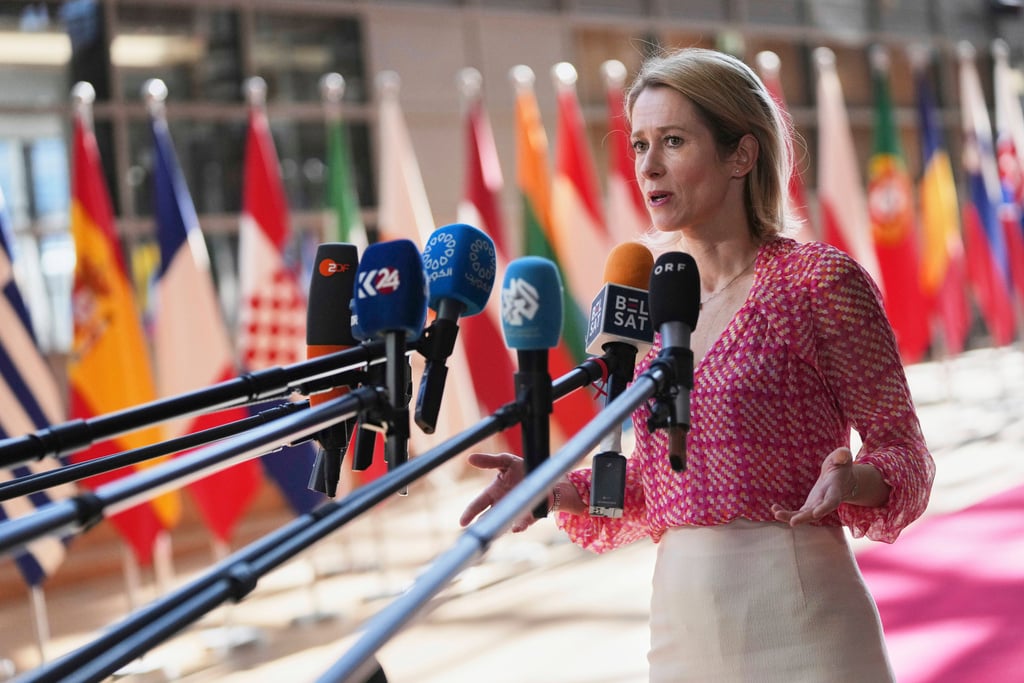
BRUSSELS — The question was whether Brussels could move fast enough. On Monday, the European Commission answered it. Spokeswoman Paula Pinho told reporters at the daily midday briefing that the 21st package of anti-Russian sanctions should be ready for adoption by the Commission before the week is out — a tighter timeline than most diplomatic observers had anticipated.
“We are working on the 21st package of sanctions and we should be able to adopt it on our side very soon, still this week,” Pinho said. The phrasing was deliberate. The Commission adopts a proposal; the Council of the EU, representing member states, then formally approves it — a process that can drag for weeks when political obstacles arise. Hungary has blocked or delayed every major package since the 17th. What Pinho signalled was that the Commission’s own internal work, the slower and more technical half of the process, is nearly done.
The urgency is not purely diplomatic. A hard deadline sits in the calendar: July 15, 2026 is the next scheduled adjustment date for the G7-coordinated oil price cap on Russian crude. Under the existing formula, the cap would reset upward — European officials familiar with the discussions told European Pravda that energy experts estimate the new ceiling would land around $75 per barrel, driven by the sharp rise in global oil prices since fighting disrupted the Strait of Hormuz. At that level, Moscow’s energy revenues would increase substantially, partially offsetting years of attrition from prior packages.
The solution the Commission is circulating among member state diplomats: freeze the cap as-is rather than let the formula recalculate. Lock it into the 21st package before July 15 makes the question moot. One European official, speaking without attribution, described the logic bluntly. “Such a maximum price for Russian oil is unacceptable because it would allow the Kremlin leader to significantly increase his energy revenues, which he would direct towards the war,” the official said.
The broader package extends well beyond the oil cap. According to Politico and diplomatic sources in Brussels, the 21st round is expected to include fresh restrictions on Russian energy companies — Lukoil and Rosneft are among those discussed for additional listings — as well as new entries to the shadow fleet vessel blacklist, which reached 632 ships after the 20th package adopted in April. Banks and financial intermediaries facilitating sanctions evasion through third-country jurisdictions are also in scope, a pattern the Commission has pursued since it sanctioned Azerbaijan, Kyrgyzstan, and Laos-linked institutions for the first time in April.
Whether Patriarch Kirill of Moscow, head of the Russian Orthodox Church and a figure repeatedly blocked from EU sanctions lists by Hungary, will appear in this package is publicly unconfirmed. Previous attempts to sanction Kirill were vetoed by Budapest, and no official has indicated that dynamic has changed.
The political obstacle course remains the same as it was for the 20th. Hungary’s government has opposed or delayed every package that pushes into territory Budapest regards as overreach. Slovakia’s Prime Minister Robert Fico broke with the EU majority over the 20th package at last June’s summit, objecting to related provisions on gas imports. Whether either government will resist the 21st, particularly on the oil cap freeze, is a question the Commission has not publicly addressed.
Economy Commissioner Valdis Dombrovskis had signalled work was accelerating weeks earlier, telling reporters in Brussels that the Commission was responding to what he described as Russia’s intensifying hybrid operations against Baltic states. Pinho’s statement Monday moved that signal into confirmed imminence.
The 20th package, adopted in April, included the most structurally novel element in the EU’s sanctions history: the first-ever sanctioning of a non-Russian port — the Karimun oil terminal in Indonesia — for its role in circumventing the price cap. It also imposed transaction bans on 20 additional Russian banks, bringing the total to 70. Brussels has discovered that sanctions evasion adapts quickly; each package has had to close corridors opened by the previous one.
The shadow fleet dimension of the 21st package will be watched closely. France’s seizure of the Russian-flagged tanker Tagor in the Atlantic in early June, which Moscow called piracy and which triggered a diplomatic standoff with Paris, made the shadow fleet a live political issue rather than a bureaucratic line item. That confrontation over the Tagor underscored a gap the Commission has acknowledged: vessel listings move slowly; the fleet regenerates faster than it is sanctioned.
What the 21st package will not contain — at least based on current indications — is a mechanism that closes that regeneration gap. The oil price cap freeze buys time at the revenue side of Moscow’s energy equation. Whether it changes the underlying economics of shadow fleet operations, which has become the primary tool for Russian oil reaching buyers in Asia, remains the question Brussels has yet to answer in any of its 21 packages.
Pinho did not disclose further details at Monday’s briefing. The Commission’s formal proposal, once adopted internally, goes to the Council, where the political negotiations begin in earnest. The clock runs to July 15.