
YEREVAN — What the European Parliament’s chief election observer saw on June 7 was an orderly process carried out with meticulousness. What Moscow saw was something to be dismissed before the first ballot was counted.
Nathalie Loiseau, the French MEP who led the European Parliament delegation to Armenia’s parliamentary elections, told a press conference in Yerevan on Monday that the process had been conducted with care. “The electoral process was calm and very well organised, procedures seemed meticulously observed, and small inconsistencies before counting were carefully verified,” Loiseau said in a joint preliminary statement released by the international observer mission.
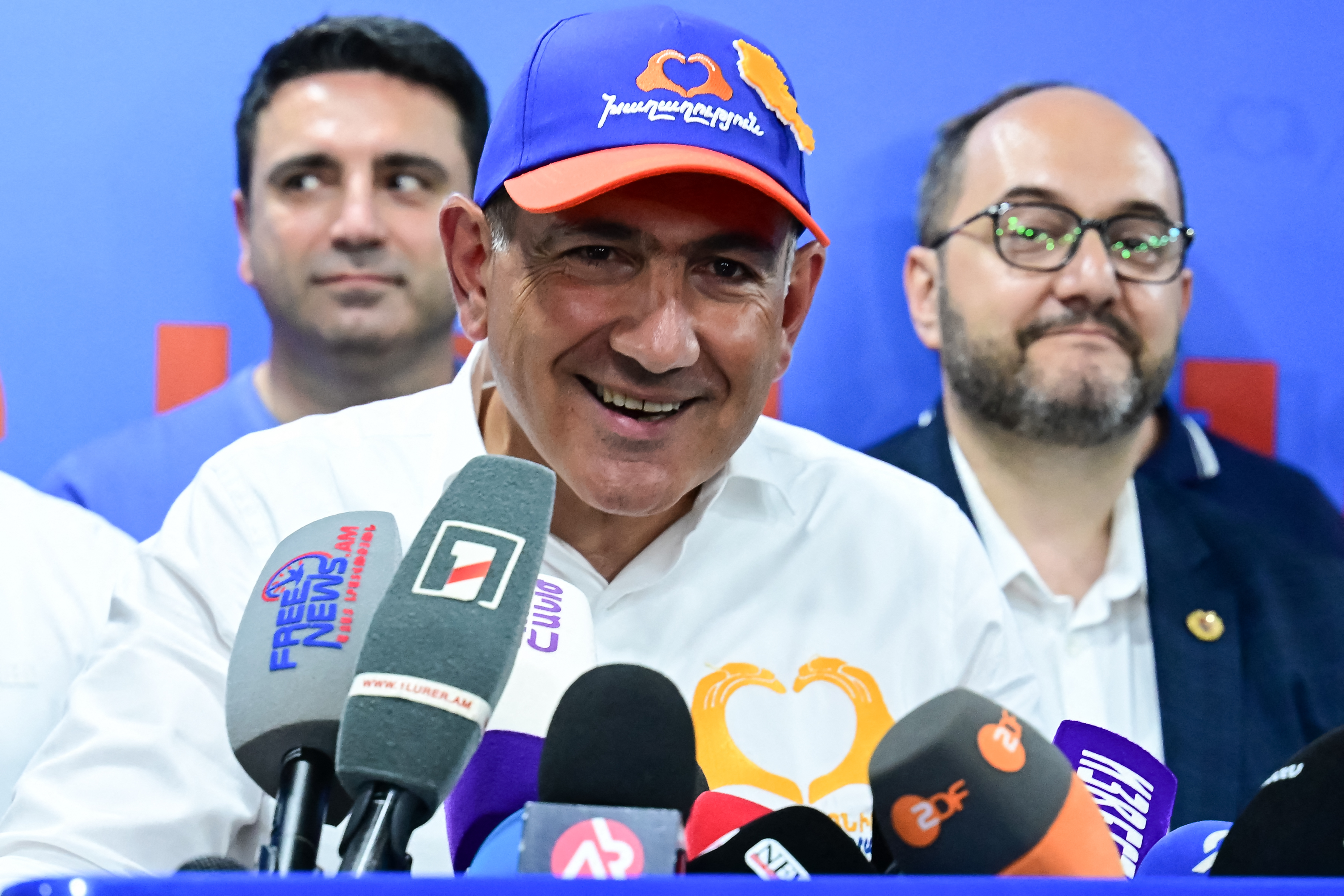
Her delegation was one of several international bodies that deployed across Armenia for the vote, which saw Prime Minister Nikol Pashinyan’s Civil Contract party secure 49.81 percent of votes cast, enough, once minority mandates and redistributed votes are factored in, to form a government without a coalition partner. Businessman Samvel Karapetyan’s Strong Armenia bloc finished second with 23.28 percent, while former President Robert Kocharyan’s Armenia alliance took 9.93 percent.
The turnout figure told its own story. Final data from the Central Electoral Commission put participation at 58.97 percent, the highest since 2017. More than 1.47 million voters cast ballots out of roughly 2.5 million eligible. Election commission chair Vahagn Hovakimyan said the figure reflected the depth of public investment in the outcome, given the geopolitical stakes attached to it.
Loiseau’s assessment was not without reservation. She said polling station staff, the large majority of whom were women who “performed their duties with dedication and attention,” faced voters who in some cases had not been given adequate information about where to go or how to proceed. “The Armenian authorities should consider working on better voter information,” she said, framing it as an administrative shortfall rather than a structural defect.
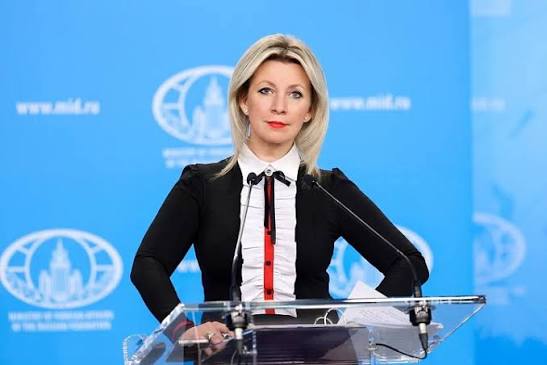
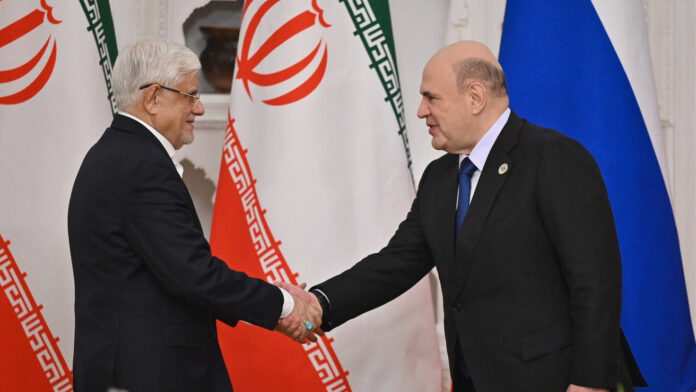
That framing stood in sharp contrast with the language coming out of Moscow. Dmitry Medvedev, Russia’s Security Council deputy chairman, had said ahead of the vote that elections in which Pashinyan “tried to knock out all his rivals” could not be considered legitimate. Russian Foreign Ministry spokeswoman Maria Zakharova followed with a claim that the campaign amounted to a “fight against democratic procedures.” Neither offered specifics.
The Russian lines have circulated widely since the Kremlin made clear its objections to Pashinyan’s westward orientation, but the international observer community reached a different verdict. The joint preliminary statement from the OSCE, OSCE Parliamentary Assembly, PACE, and the European Parliament said the elections offered voters a genuine choice among political alternatives in a well-run process, even while acknowledging that direct foreign pressure, identified as Russia’s escalating trade restrictions and security threats, had sought to tilt the outcome toward the opposition.
Farah Karimi, who led the short-term OSCE observer mission, named that pressure directly. The concentration of criminal proceedings against opposition figures contributed to perceptions of selective justice, she acknowledged, but she also said the foreign pressure campaign had been of an unprecedented and worrying level, citing a characterisation from Damien Cottier, who headed the Council of Europe Parliamentary Assembly delegation. The OSCE’s broader assessment of the campaign had already flagged media polarisation and inflammatory rhetoric as features of the pre-election environment.
What the international community has not yet resolved is what Pashinyan’s margin means in terms of governing power. His party’s 49.81 percent share of the vote falls short of the two-thirds threshold he would need to call the constitutional referendum demanded under the peace deal with Azerbaijan, the agreement that would normalise relations with Baku and anchor Armenia’s separation from the Russian-led Collective Security Treaty Organisation. The final distribution of parliamentary seats, including any additional mandates triggered by the electoral formula, had not been confirmed as of Monday morning.
Karapetyan, whose bloc came second, called the elections “shameful” and said dozens of his campaign staff had been detained. Armenia’s Investigative Committee confirmed it had opened 59 criminal cases over alleged electoral violations on election day and detained nine people. The CEC had earlier dismissed demands that Karapetyan’s bloc be removed from the ballot entirely.
The CIS observer mission, drawn from Russia’s sphere of post-Soviet multilateralism, cleared the vote as constitutional, though that body’s own credentialing came under scrutiny during the observation period. Its verdict and Loiseau’s land in the same factual universe but are read against entirely different audiences, and neither is likely to shift the other.
What is not yet clear, and what neither the European Parliament delegation nor the joint OSCE statement addressed, is how the incoming parliament will navigate the gap between Pashinyan’s mandate to deepen EU ties and the constitutional arithmetic that may constrain him. The referendum question remains open. Whether the seat allocation produced by this vote will be enough to move it is a calculation that Yerevan, Brussels, and Moscow will all be watching, from very different vantage points.