
BRUSSELS – When a legislative document submitted inside the European Parliament contained a legal reference to a statute that does not exist – a hallucination generated by an AI tool the staffer was using without guardrails – the institution’s response was not a ban. It was a platform.
The EPGenAI Hub, a controlled generative AI environment for the Parliament’s roughly 10,500 staff, launched this month with access to models from four providers: OpenAI, Meta, Anthropic and France’s Mistral, The European Conservative reported. About 2,100 people – one in five across the institution – already use AI tools in their daily work. The Hub is designed to channel that activity inside an environment where data does not leave the Parliament’s infrastructure and where the institution can track what its staff is actually doing with the technology.
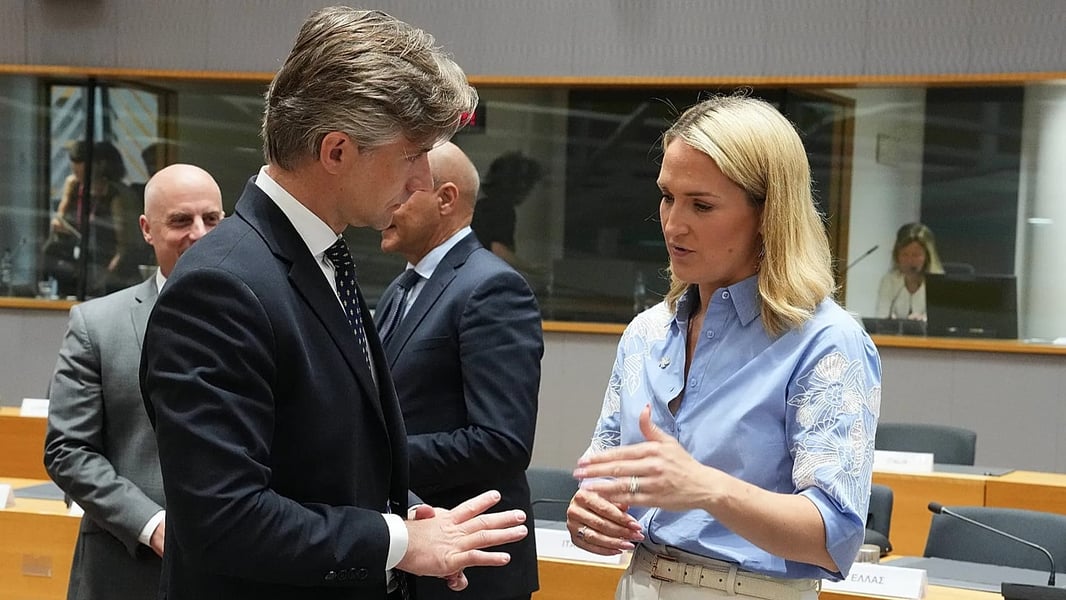
Brando Benifei, an Italian MEP who has been among the most visible voices in the Parliament on AI governance, said legislators had a responsibility to lead. “MEPs must lead by example under the new transparency rules,” Benifei said. The transparency rules he referenced are still largely aspirational: there is currently no formal obligation for members to disclose when they have used AI tools in drafting speeches, questions or legislative amendments.
That gap – a Parliament that wrote the EU AI Act but has not imposed AI disclosure requirements on its own members – is the most visible tension the EPGenAI Hub does not resolve. The EU AI Act, which came into full force in 2025, mandates transparency obligations for AI systems interacting with people and systems generating content intended to mislead. It does not currently require legislators to label their own AI-assisted work.
The concern driving the platform is what the Parliament now calls “AI slop” – a shorthand for low-quality, AI-generated text flooding legislative processes with bulk content and fabricated citations. The EPGenAI Hub addresses the supply side: it gives staff a sanctioned, monitored tool operating inside a closed environment. What it does not address is the demand side: whether MEPs will use it, how often, and in what contexts, or whether they will keep using unmonitored consumer tools alongside the official platform.
The model roster raises a question the Parliament has not directly answered. The Hub runs on American models – OpenAI’s GPT series, Meta’s Llama, Anthropic’s Claude – alongside Mistral, the French company that has positioned itself as the European alternative to American AI dominance. Parliament officials said the institution may pivot toward European providers “in the future,” a phrase that signals intent without commitment. The EU has been explicit about its ambition for digital sovereignty, particularly after exposures of member states’ dependence on American cloud infrastructure. Running the Parliament’s central AI environment on American models is not a contradiction of that policy, but it is a deferral of it.

Mistral’s inclusion is the most strategically charged element of the platform. The French model has been championed by Paris and by some EU officials as a proof point that Europe can build competitive frontier AI. Its presence alongside OpenAI and Anthropic in the EPGenAI Hub is politically important for France’s effort to present European AI as a viable alternative, while also ensuring that any future transition to European-only models does not require staff to relearn from scratch.
The EPGenAI Hub’s architecture means the Parliament does not have to rely on vendor promises about data handling. With a private-cloud instance, conversation logs do not feed into the model providers’ training datasets – an assurance that matters when the content being generated includes legislative drafts, legal analyses and internal parliamentary communications. The Parliament’s legal service was involved in clearing the platform’s architecture before its launch.
The European Parliament’s broader record in digital regulation enforcement is substantial. The European Commission recently fined AliExpress under the Digital Services Act, a case that demonstrated both the reach and the operational complexity of Europe’s platform regulation. The EPGenAI Hub positions the Parliament to be seen applying AI governance standards internally before it adjudicates AI regulation violations by others.
For the 8,400 Parliament staff not yet using AI tools, the Hub is a gentle on-ramp: curated, logged and available inside the institution’s own environment. Whether those tools produce qualitatively different outputs than consumer versions of the same models is unclear. A closed API instance does not hallucinate less than the public version; it just produces those hallucinations in a context where someone can audit what prompted them. That may be enough. The legislative document with the nonexistent statute – the incident that reportedly accelerated the Hub’s development – was caught internally. The problem was not the hallucination. It was the absence of a process for catching it.
The Parliament is not the first legislative body to build an internal AI environment. UK Parliament guidance and US Congressional Research Service policies on AI use have both grappled with the same question: how to let legislators and staff benefit from productivity gains while avoiding the reputational risk of fabricated citations entering official documents. What distinguishes the EPGenAI Hub is its explicit vendor roster and the scale of its rollout. Publishing a name, describing vendor relationships and having an MEP address the press signals that this is meant to be a policy statement as much as a technology deployment. Whether that statement eventually includes mandatory disclosure for MEPs, and when, remains the part the announcement left unanswered.
Related Posts