
NEW YORK — Kevin Warsh spoke on Thursday and every chip stock on the NASDAQ paid for it. Advanced Micro Devices fell 2.6% to close at $148.32 on August 28, dragged lower by the same rate-shock wave that washed through Nvidia, Intel, and nearly every name in the Philadelphia Semiconductor Index — none of which had done anything wrong that day.
Warsh, a Federal Reserve governor widely seen as the intellectual weight behind Chair Jerome Powell’s recent hawkishness, used a speech before the Chicago Council on Global Affairs to signal that rate cuts were not merely delayed but potentially rethought. Markets heard “higher for longer” and sold the most rate-sensitive, high-multiple names first. AI semiconductors — AMD among them — were at the top of that list.
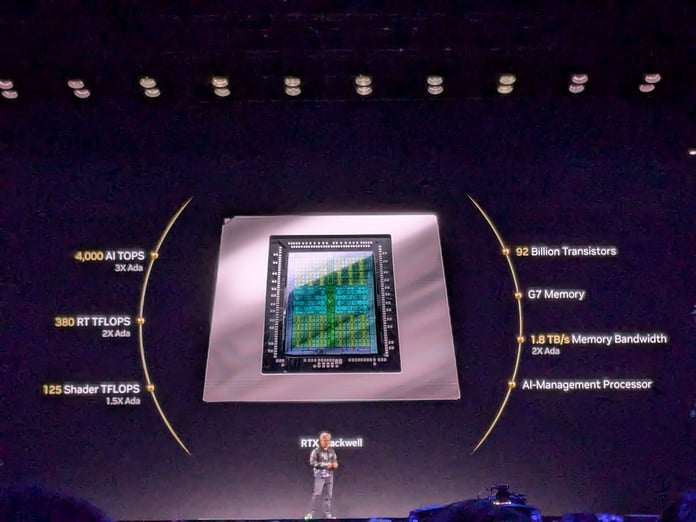
The irony is not lost on AMD investors. Even as the stock closed lower, the company’s MI300X data center GPU posted another set of wins that went largely unheralded beneath the macro noise.
https://www.youtube.com/watch?v=GcEMhiSHVpM
| Security | Close | Change | % Change |
|---|---|---|---|
| Advanced Micro Devices (AMD) | $148.32 | ▼ | -2.6% |
| SOX (Semiconductor Index) | — | ▼ | -2.7% |
| NASDAQ 100 (NDX) | 19,840 | ▼ | -2.3% |
| S&P 500 | 5,580 | ▼ | -1.9% |
Three hyperscaler procurement cycles that had been assumed to be pure Nvidia plays came back with partial MI300X allocations in August, according to supply-chain analysts who track component purchase orders. The pattern tracks a shift AMD‘s Chief Executive Lisa Su flagged on the company’s most recent earnings call — that customers running large language model inference workloads at scale are increasingly comfortable running mixed GPU fleets rather than single-vendor stacks.
For AMD, inference is the market that matters. Training — the original stronghold that made Nvidia’s H100 famous — is largely locked up. But as the enterprise AI build-out moves past initial training runs into the sustained, economics-driven work of running those models in production, the GPU that wins on performance-per-dollar in inference becomes the GPU that fills data centers for the next five years. AMD’s claim on that argument is getting harder to dismiss.
Wall Street’s current estimates give AMD AI GPU revenue of roughly $5.3 billion for fiscal 2026, up from $3.8 billion in 2025. A handful of analysts have moved their 2026 targets above $6 billion in recent weeks following the procurement signals. None of that showed in Thursday’s tape.
The Federal Reserve dimension is more than background noise for AMD. The company carries a rich valuation — shares trade at approximately 33 times forward earnings — that depends on the market’s willingness to pay a premium for a growth story still being validated. When the cost of capital rises, or even when it looks like it might rise again, that willingness compresses. Warsh’s comments did not change AMD’s product roadmap or its customer wins. They changed the price investors were willing to pay for that roadmap.
In after-hours trading, AMD recovered roughly 0.4% as the immediate rate panic faded and attention returned to the underlying business. Options market positioning ahead of Friday’s session showed elevated put buying but not the kind of defensive crowding that typically precedes sustained selling.
The broader chip complex finished the session unevenly. Nvidia dropped 3.1%. Intel, which faces a separate set of challenges centered on its foundry business rather than AI exposure, fell 2.2%. Broadcom — whose earnings are due in the coming weeks and whose custom AI chip business for Alphabet and others is growing rapidly — lost 2.8%. The S&P 500 also retreated on Friday as Warsh’s remarks reset rate-cut expectations across the broader market.
What AMD’s Thursday decline does not tell you is whether the MI300X story is working. The short answer from procurement data is that it is, steadily and without the fanfare that tends to follow Nvidia’s every announcement. The question that Warsh’s intervention leaves open is how long that story has to play out before the valuation argument has to compress further to survive a rate environment that looks nothing like the one in which AMD rebuilt itself as an AI hardware contender.
That question does not have an answer on August 28. What the day does leave AMD with is a stock that closed lower for macro reasons, a product that continued winning for fundamental reasons, and a gap between the two that investors will be asked to hold — or not — depending on what the Federal Reserve does next.
Related Posts