
SEATTLE — There was no press conference. No farewell statement from a named executive. On Tuesday, Amazon posted a brief notice on the Mechanical Turk website: “Following an assessment, we’ve made the decision to close AWS Mechanical Turk, effective September 30, 2026.” Twenty-one years of crowdsourced human labour, concluded in two sentences.
For the hundreds of thousands of gig workers who have logged into Mechanical Turk at some point to complete digital tasks for fractions of a dollar, that notice is the end of a livelihood and a particularly stark illustration of what the AI economy looks like for the people it was built on.
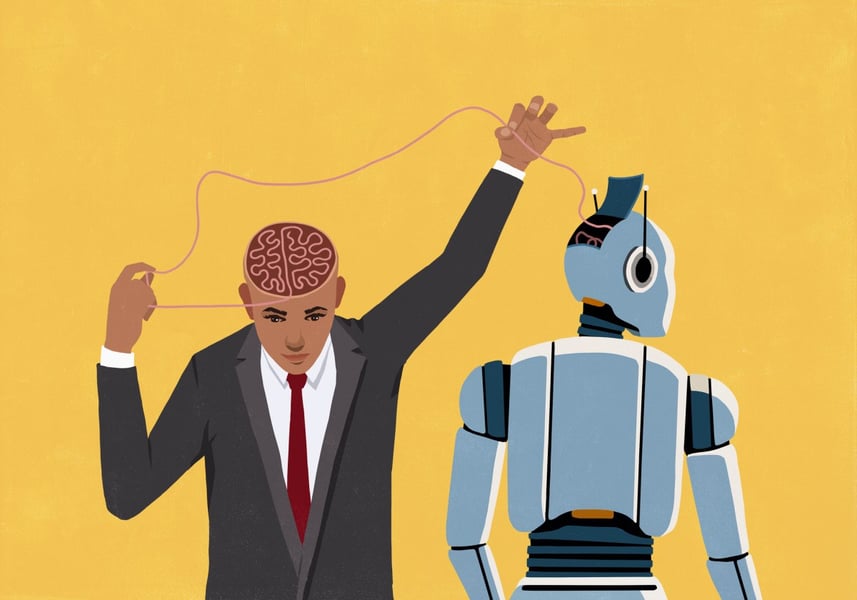
Jeff Bezos called the service “artificial artificial intelligence” when he launched it in 2005, borrowing the name from an eighteenth-century automaton that appeared to play chess independently but concealed a human player inside. The platform did something similar: it let businesses access a crowd of real people performing image labelling, audio transcription, survey completion and data annotation — “Human Intelligence Tasks,” in Amazon’s taxonomy — while presenting the whole operation as a software service. At its peak, more than 500,000 workers depended on that arrangement to earn money from a global market for digital piecework that otherwise had no infrastructure. Tasks typically paid a few cents each. Workers had no guaranteed minimum earnings, no employment protections, and no appeal rights against account termination.
That market had been shrinking for years before Tuesday’s announcement. Krista Pawloski, a data worker and organiser with Turkopticon, a worker advocacy group, told CNBC that Amazon had visibly cut its investment in the platform as competing services began drawing requesters away. No significant new features had been added in years. Earlier this summer, Amazon stopped accepting new customers altogether. TechCrunch reported at the time that the move signalled imminent closure, though the company waited until August 25 to set a firm termination date.
Mechanical Turk will not close alone. SageMaker Ground Truth and Amazon Augmented AI are shutting down on the same date, representing Amazon’s complete exit from the human-data services business it once pioneered. The company said it made the decisions following an internal assessment of its programmes and services, and has not disclosed the current number of active workers or any transition support it plans to provide.
The explanation for the shutdown is written in the competitive landscape that Mechanical Turk once helped create. Startups including Scale AI, Mercor, and Prolific have built platforms specifically designed for AI training data, offering structured workflows, better quality controls and higher pay rates than Amazon deployed. Meanwhile, AI models have advanced to the point where many tasks that once required human judgment can now be handled algorithmically. A 2023 study by researchers at the EPFL in Switzerland found that between 33 and 46 percent of Mechanical Turk workers were already using large language models to complete writing tasks on the platform — an irony that undermined the very human-signal quality the service was supposed to deliver.
The wider irony is starker still. A significant share of the tasks Turkers completed over the past decade involved labelling images, rating text outputs and flagging AI-generated content — exactly the kind of human oversight that trained the models now capable of replacing them. Amazon has not publicly acknowledged that dynamic in its shutdown communications.
The company has been reshaping its labour relationships on multiple fronts. Workers at Amazon’s Seattle data centre operations accused the company of retaliating against employees who raised concerns about the pace of expansion — a dispute that exposed mounting tension between Amazon’s AI infrastructure ambitions and its workforce. The Mechanical Turk closure is a different kind of displacement, affecting workers who were never Amazon employees to begin with, but it fits the same pattern.
Oracle announced layoffs targeting AI-driven workforce restructuring earlier this month, part of a technology industry reckoning with what happens when AI systems take on tasks that once supported large human teams. Mechanical Turk sits at the origin of that story: it made large-scale AI development economically possible by keeping data annotation costs near zero, and its closure is an acknowledgment that the original model is spent.
For the workers facing the shutdown, many in lower-income countries without comparable employment alternatives, the options are limited. Scale AI and Prolific are growing, but they impose qualification requirements, geographic restrictions and onboarding processes that will not absorb all displaced Turkers. The gap between “there are other platforms” and “those platforms will take you” is one Amazon has not addressed.
What happens to the workers who helped build the AI systems the company now sells to the world is a question Amazon has declined to answer. For 21 years, that was never its concern. Nothing in the August 25 notice suggests that has changed.