
NEW YORK — Options traders spent Friday repricing the September Federal Reserve meeting, not because anything changed at the Fed, but because Kevin Warsh said something that changed the math.
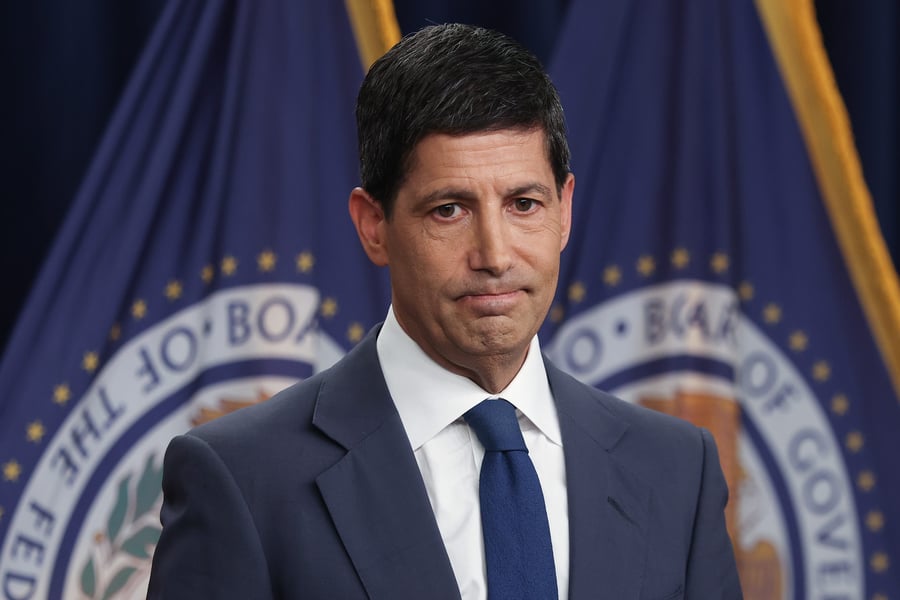
The Fed chair’s address at the Kansas City Fed’s annual Jackson Hole symposium delivered a clearer warning than markets had anticipated. Warsh said inflation had cooled “a bit” but that underlying trends had not “meaningfully improved” — language traders read as a door left open for a rate hike as early as September. The CME FedWatch index moved fast: by midday, 57% of futures traders priced in a 25-basis-point hike at the Sept. 15-16 FOMC meeting, up from roughly one-third before Warsh spoke, according to Fortune.
The S&P 500 closed at 7,711.76 on Friday, August 28, down 19.31 points, or 0.25%, in a session that was more about recalibration than rout. The Dow Jones Industrial Average shed just 9.45 points to end at 53,559.99. The Nasdaq Composite slid 0.52% to 26,402.42 as semiconductor stocks that had driven Thursday’s rally on Nvidia Corp.’s earnings beat gave back some of those gains.
| Index | Friday Close (Aug 28) | Day Change | Day % | Week % |
|---|---|---|---|---|
| S&P 500 | 7,711.76 | –19.31 | –0.25% | +0.50% |
| Dow Jones Industrial Average | 53,559.99 | –9.45 | –0.02% | +0.30% |
| Nasdaq Composite | 26,402.42 | –137.80 | –0.52% | +0.90% |
Data: August 28, 2026 regular-session close (9:30am–4:00pm ET). Markets are closed Saturday August 29. Source: CME Group / exchange feeds.
For the week, markets looked healthier than Friday’s close suggested. The S&P 500 gained 0.5%; the Nasdaq rose 0.9%. But the changed rate-hike calculus heading into September adds a variable that was not in the picture this time last week.
Nvidia Corp. NVDA fell 3.09% Friday, trimming a 9%-plus surge from Thursday when the chipmaker reported second-quarter earnings that beat Wall Street estimates by a wide margin. The reversal was not unusual — large post-earnings moves frequently see partial give-backs when option sellers and momentum traders close positions. Marvell Technology MRVL closed down 10.07%, the session’s sharpest single-name drop among large-cap technology stocks, on analyst notes flagging margin pressure in its data-center segment. Amazon.com AMZN rose 3.47%, bolstered by analyst upgrades tied to AWS cloud momentum. Apple Inc. AAPL gained 1.58%, helped by pre-product-event price target increases from several brokerages.
| Stock | Ticker | Friday Change |
|---|---|---|
| Nvidia Corp. | NVDA | –3.09% |
| Marvell Technology | MRVL | –10.07% |
| Amazon.com | AMZN | +3.47% |
| Apple Inc. | AAPL | +1.58% |

Warsh’s Jackson Hole remarks did not specify when the Fed might act, nor did they constitute a formal policy signal. But the speech was enough to lift the dollar index, weigh on longer-duration Treasuries, and push the two-year yield — most sensitive to near-term rate expectations — eight basis points higher to 4.30%. The 10-year yield rose four basis points to 4.72%.
| Treasury | Yield (Aug 28) | Day Change |
|---|---|---|
| 2-Year Treasury | 4.30% | +0.08pp |
| 10-Year Treasury | 4.72% | +0.04pp |
The session’s sector map followed textbook rate-sensitivity. Utilities and real estate investment trusts, whose dividends compete with bond yields, underperformed. Growth stocks bearing long-duration earnings profiles bore the sharpest pressure. Defensive sectors held up. Silver registered a parallel judgment: prices fell roughly 4% globally Friday as a stronger dollar and the rate-hike signal hit precious metals — a move detailed in EasternHerald’s silver rate report for August 29.
Nvidia’s earnings, Amazon’s cloud momentum, and Apple’s product cycle are real drivers. But none of them neutralizes a September rate hike. The Nasdaq’s Friday session illustrated the tension — the composite rose through most of the day before Warsh’s remarks circulated and the index reversed course in the afternoon. Apple’s own Friday session was a rare bright spot in the tech complex, lifted by analyst upgrades ahead of the September product event.
What Warsh said in full at Jackson Hole matters more than the snippet that moved futures. The conference does not publish a complete transcript immediately. The nuance of whether he was signaling a hike or merely declining to rule one out will shape the debate before September 15. The Fed does not telegraph votes; it signals conditioning. On Friday, Warsh conditioned markets on the possibility of further tightening without committing to it — a posture that different FOMC members will read differently when they assemble next month, Fortune reported.
August ends Saturday. The next key data point is the PCE price index, the Fed’s preferred inflation gauge, due later this week. A hotter-than-expected print strengthens the September tightening case substantially. A cool print puts Warsh’s inflation framing under a different kind of pressure. The exact impact on equities and commodities heading into September remains to be seen.
What is the S&P 500 today?
The S&P 500 closed on Friday, August 28, 2026 at 7,711.76, down 0.25% on the session. Markets are closed Saturday August 29. The most recent official closing data is from Friday’s regular session (9:30am–4:00pm ET). Source: CME Group / exchange feeds.
Why did the S&P 500 fall on August 28?
Fed Chair Kevin Warsh’s Jackson Hole speech raised the probability of a September rate hike from roughly 33% to 57%, per CME FedWatch futures pricing. Chipmakers also gave back some of Thursday’s Nvidia-driven gains. The two forces combined to drag the S&P 500 lower despite strength in Amazon and Apple.
What is the S&P 500 index level today?
The S&P 500 index most recent close is 7,711.76, recorded August 28, 2026. As of August 29 (Saturday), there is no intraday trading. The next US equity session opens Monday, September 1, 2026.
What are the Dow Jones and Nasdaq today?
The Dow Jones Industrial Average closed Friday at 53,559.99, down 9.45 points (0.02%). The Nasdaq Composite closed at 26,402.42, down 0.52%. For the week, the Nasdaq gained 0.9%. The Nasdaq’s detailed August 28 session is covered in EasternHerald’s Nasdaq Composite report.
How does a Fed rate hike affect the S&P 500?
Higher interest rates raise the discount rate applied to future corporate earnings, reducing present value and weighing on equity multiples — particularly for growth stocks trading on long-duration cash flows. Rate hikes also make Treasury bonds more competitive with equities for yield-seeking investors. The September hike risk surfaced Friday is not a certainty; if PCE inflation data prints cool this week, the probability may recede before the September 15-16 FOMC meeting.
Is today a good time to buy S&P 500?
This article does not provide financial advice. What the data shows: the S&P 500 gained 0.5% on the week despite Friday’s pullback, and the index has extended its 2026 advance through a period of elevated rate uncertainty. Whether that continues depends in part on PCE data due later this week and on how FOMC members interpret the full text of Warsh’s Jackson Hole remarks. Market timing decisions depend on individual risk tolerance, investment horizon, and portfolio objectives.