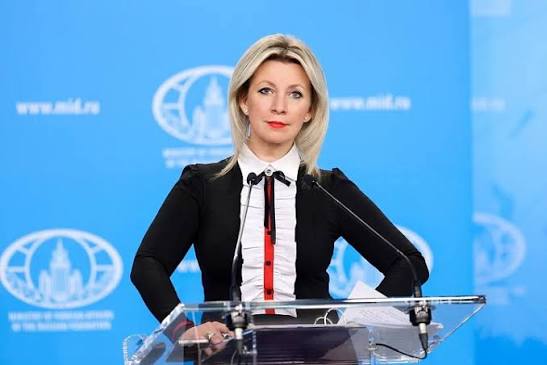

MOSCOW — The statement arrived before the counting was finished. Russian Foreign Ministry spokeswoman Maria Zakharova, responding to a media question on Monday about the outcome of Armenia’s parliamentary elections, said Moscow had “always been and will always be interested in a strong and truly sovereign Armenia.” The Armenian people, she added, were fraternal, and Russia wished them peace and prosperity.
What the statement did not address was the previous several months — a period in which Russian officials, state media, and what Western intelligence officials described to Reuters as Kremlin-backed disinformation networks worked to deny Armenians the very electoral outcome they had just chosen. By the time Zakharova spoke, preliminary results from Armenia’s Central Electoral Commission showed Prime Minister Nikol Pashinyan’s Civil Contract party leading with roughly 49.8 percent of the vote — enough, once minority-seat mandates and vote redistribution are applied, to form a government without coalition partners. Four parties cleared the threshold for parliamentary representation.
The contradiction embedded in Zakharova’s message was not subtle. Russia has spent the better part of a year pressuring Yerevan through what analysts at the Centre for East European and International Studies described as a coordinated campaign: AI-generated disinformation, temporary bans on Armenian agricultural exports, and warnings that Armenia’s rapprochement with the European Union was incompatible with its continued membership in the Russian-led Eurasian Economic Union. Moscow’s preferred outcome was a weakened Civil Contract — or a parliament in which pro-Russian parties held enough seats to constrain Pashinyan’s foreign policy course.
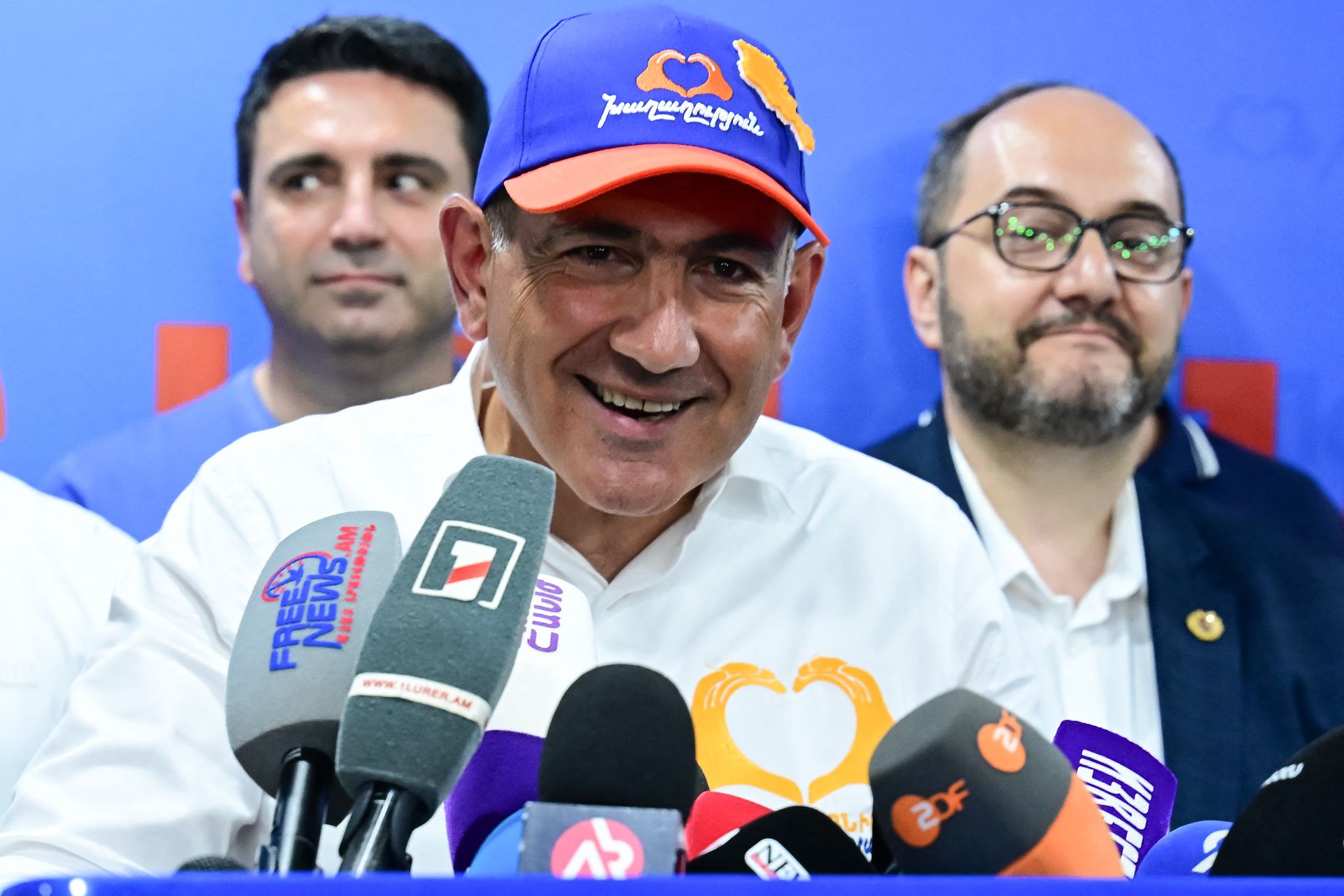
None of it worked. Pashinyan declared victory at a press conference broadcast by Armenian television. “The Civil Contract party has won,” he said. “The Civil Contract party will single-handedly form the government.”
Zakharova’s post-election commentary was notable less for what it offered Armenia than for what it revealed about how Moscow intends to manage the result. Russia, she said, would build relations with Armenia “taking into account real steps of the Armenian leadership” — diplomatic language that functions as a conditional: the fraternal embrace is contingent on behavior. She added that Moscow expects Armenian authorities to be guided by approaches based on “national interests,” a formulation that in Russian foreign policy usage typically means alignment with Russian preferences rather than Armenian ones.
The more pointed element of Zakharova’s statement concerned the conduct of the election itself. She described the campaign as having taken place “in an environment of harsh repression” against opposition parties, their activists, and the Armenian Apostolic Church, which she said had come under what she called the “rink” of persecution. She called this a gross violation of democratic principles. Armenian officials and international observers offered sharply different assessments: OSCE’s monitoring mission, which deployed 328 observers, was present throughout the process. Its preliminary findings are expected in the coming days.
There is a version of Zakharova’s grievances that is not entirely without foundation. Opposition figures and their supporters faced arrests and legal pressure in the weeks before the vote, a pattern that drew criticism from domestic civil society groups and some international monitors. The International Observatory for Democracy in Armenia documented what it characterized as political persecution of opposition figures. Where Zakharova’s framing breaks down is in its selectivity: the parties facing the most sustained official pressure — Strong Armenia, led by Russian-Armenian tycoon Samvel Karapetyan, and the Armenia Alliance of former President Robert Kocharyan — are also the parties most closely aligned with Moscow’s preferred outcome. The repression Zakharova condemns happened to inconvenience Russia’s allies. That is not incidental to her concern about it.
Karapetyan, who finished second with approximately 23.3 percent of the vote according to final counts from all 2,005 polling stations, alleged on election night that authorities had suspended vote counting because they feared defeat. The Central Electoral Commission rejected the claim. Final results confirmed the opposite of what he predicted.
The broader context is one Moscow helped create. Armenia’s pivot away from Russian security structures accelerated after Moscow failed to respond to Azerbaijan’s 2023 military operation in Nagorno-Karabakh, which ended with the displacement of the entire ethnic Armenian population of the enclave. Pashinyan drew the lesson explicitly: the Collective Security Treaty Organisation, the Russian-led military alliance Armenia had formally depended on, offered nothing when it mattered. Armenia suspended its participation in the CSTO and began pursuing what Pashinyan’s government described as a multi-vector foreign policy — closer to the EU while formally remaining in the EAEU.
Russia’s response included economic pressure. Temporary bans on Armenian agricultural exports were announced with little official explanation. Russian officials publicly warned that EU integration aspirations were structurally incompatible with EAEU membership. The Russian Foreign Ministry — Zakharova’s institution — issued a stream of commentary framing Armenian domestic politics as a site of Western interference. The disinformation component was documented by Reuters, which cited Western intelligence officials describing Kremlin-backed efforts that included disinformation and plans to transport Russian Armenians to sway the vote.
Against that backdrop, Zakharova’s invocation of sovereignty reads as something specific: an assertion of the right to determine what Armenian sovereignty should look like. Zakharova had previously argued that a connectivity deal brokered between Armenia and the United States served Washington’s interests rather than Yerevan’s — a claim that assumed Russian-mediated arrangements were by definition more aligned with Armenian national interest. Armenians, on Sunday, declined that framing by a margin of nearly thirty percentage points.
What Russia does with the result is the open question. Zakharova’s language suggested the Kremlin will not move quickly to formally recalibrate. The conditional framing — relations built “taking into account real steps” — leaves Moscow room to maintain pressure without explicitly acknowledging the scale of its strategic setback in the South Caucasus. Whether the Armenian government’s victory produces a durable shift in Russian policy toward Yerevan, or simply a recalibration of the pressure instruments, is not yet clear. What is clear is that the fraternal sentiment expressed on Monday morning arrived after Russia had done nearly everything short of overt intervention to produce a different result.