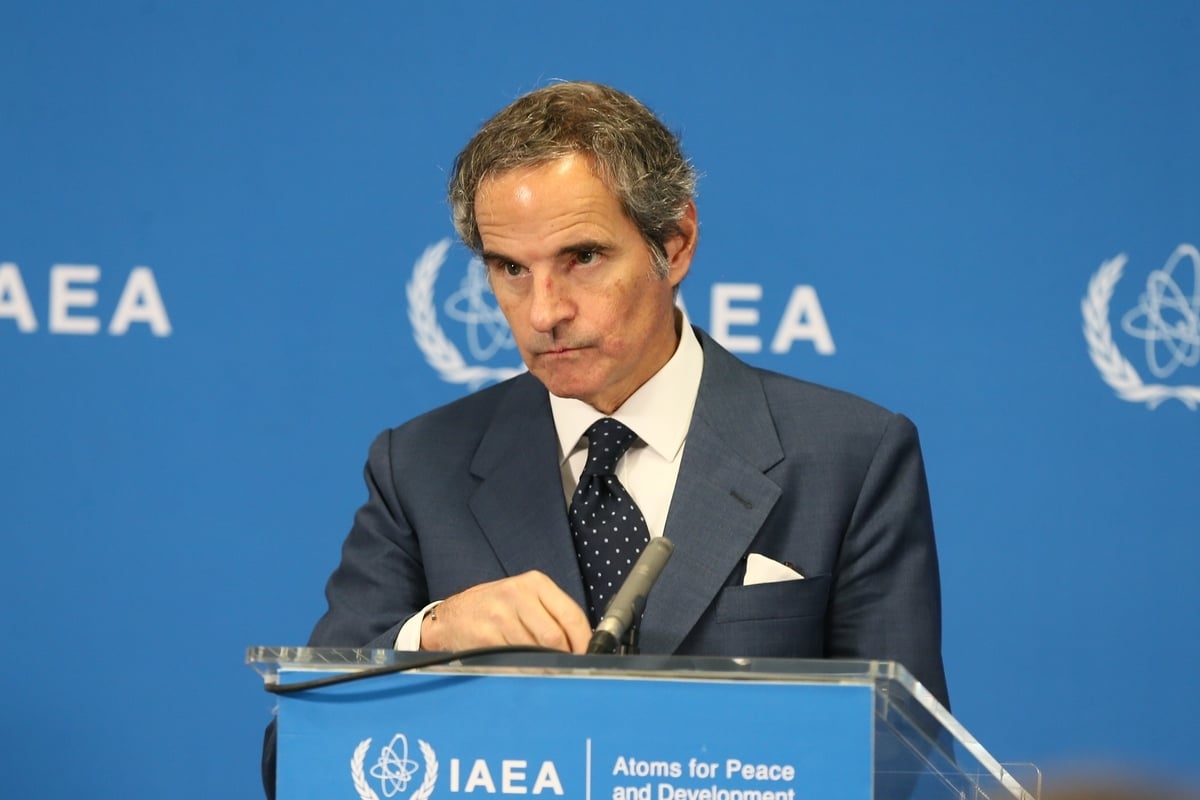
VIENNA — What Rafael Grossi cannot say is almost as telling as what he can. The head of the International Atomic Energy Agency stood before reporters on Monday and acknowledged what his agency’s own restricted reports have been circling for months: for very nearly one year, IAEA inspectors have not been inside Iran’s principal nuclear facilities, and no one outside Tehran can say with certainty what has happened to the country’s stockpile of near-weapons-grade uranium since the bombs fell.
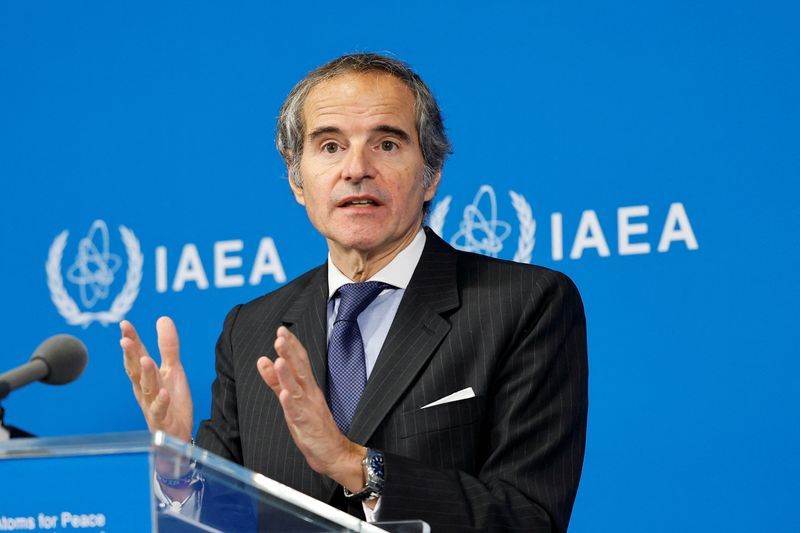
“We have a gap, which is almost exactly one year,” Grossi said, “because the 12-day war started on June 12 or 13 last year, and ever since, almost one year exactly, we have not had access to these crucial facilities.” The remark, brief and almost clinical in its delivery, came as the agency’s Board of Governors convened its June 8–12 session in Vienna — the first full Board meeting since Grossi’s June 4 report confirmed 97 days of zero inspector access and an unverifiable stockpile of 440.9 kilograms of uranium hexafluoride enriched up to 60 percent uranium-235.
Sixty percent purity sits just short of the 90 percent threshold that defines weapons-grade material. The gap in the evidentiary chain is not merely diplomatic — it is, in safeguards terminology, a “loss of continuity of knowledge.” Once that chain is broken, the agency cannot reconstruct what happened to nuclear material during the gap, even if Iran opens every door tomorrow.
Iran’s refusal to grant access traces directly to June 2025, when Israel launched a 12-day military campaign against Iranian nuclear sites, and the United States followed with Operation Midnight Hammer, striking Natanz, Fordow, and Isfahan. Tehran accused Grossi of complicity — Iranian officials charged that sensitive facility data had leaked through the IAEA to Israeli planners — and parliament voted to suspend cooperation with the agency. The IAEA has denied providing targeting intelligence.
Since then, Grossi has kept a careful public posture: calling for resumed inspections as a top priority, expressing belief that Iran’s enriched uranium stockpile remains “where it was,” and insisting that diplomacy is the only available path. But the gap between the agency’s public reassurances and its private admissions has widened with each successive Board report.
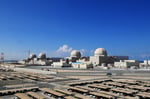
The clearest illustration of that gap involves the Isfahan underground enrichment facility — a site Iran declared to the IAEA over eight months ago that the agency has never once visited. Grossi acknowledged last month that the facility could be an empty hall, or it could be operational, its personnel accessing it through shafts invisible to commercial satellite imagery. Eighteen blue containers believed to carry roughly 440 pounds of enriched uranium were photographed entering a tunnel at Isfahan on June 9, 2025 — four days before the Israeli strikes began. Based on satellite imagery, Grossi told the Associated Press, he believes the material is likely still there. “We haven’t been able to inspect or to reject that the material is there,” he said.
That uncertainty is not a peripheral detail. It sits at the center of ongoing negotiations between Washington and Tehran, in which the fate of Iran’s enriched uranium stockpile remains one of the most contested items. Trump has publicly insisted that the United States will take Iran’s uranium regardless of whether a deal is reached. Tehran has not agreed to transfer the material, and no verification mechanism currently exists to confirm its location.
The IAEA’s June 4 report — the first comprehensive assessment since February — described Iran’s program as “largely unchanged” based on satellite imagery. But as analysts have noted, that assurance is a null finding: “unchanged” from a verified baseline is reassurance; “unchanged” from an agency that has not had a person inside a building since February is something closer to an admission of ignorance dressed in cautious language.
What the agency does know, from Iran’s own declarations and intelligence from member states, is that the enriched uranium stockpile before the June 2025 strikes stood at approximately 408.6 kilograms of uranium hexafluoride enriched to 60 percent, plus 184.1 kilograms enriched to 20 percent. Iranian Foreign Minister Abbas Araghchi said in March that the country’s enriched uranium was “under the rubble” created by the U.S. strikes — a formulation that offered no inventory and no verifiable claim about diversion. Iran has no plan, according to officials, to move the material.
Russia has publicly condemned what it describes as Western silence on the legality of the strikes on Iranian nuclear sites, arguing the attacks normalized aggression against non-proliferation infrastructure. The June 2026 NPT Review Conference, running concurrently with the IAEA Board session this week, has already failed to reach consensus, according to the Arms Control Association, with disputes over the legality of the 2025 strikes and the status of enrichment commitments dominating proceedings. It marks the second consecutive Review Conference to collapse without an outcome document.
For Grossi, the diplomatic register has not changed. He has described the current situation as “one of the most difficult” the agency has faced in the context of non-proliferation, while stopping short of declaring Iran in material breach of its comprehensive safeguards agreement in terms that would trigger automatic Security Council referral. The distinction between an agency struggling to do its job and one that has formally lost its mandate is one Grossi has consistently declined to collapse.
What he has not been able to say — and what Monday’s remarks made precise for the first time in those terms — is when the gap ends. Grossi said earlier this month that moving Iran’s enriched uranium was “difficult but not impossible”, a formulation that assumes inspectors first know where it is. A year of no access means the agency is still working from that assumption, not from a verified fact.