PARIS — The conversations happened in meeting rooms on the Avenue de la Grande Armée, not on the floor of the General Assembly. But for Costa Rica, the margins of the OECD Ministerial Council Meeting in Paris this week served as something more deliberate: a diplomatic lobbying operation aimed at placing a Costa Rican woman at the head of the United Nations for the first time in the organization’s eight-decade history.
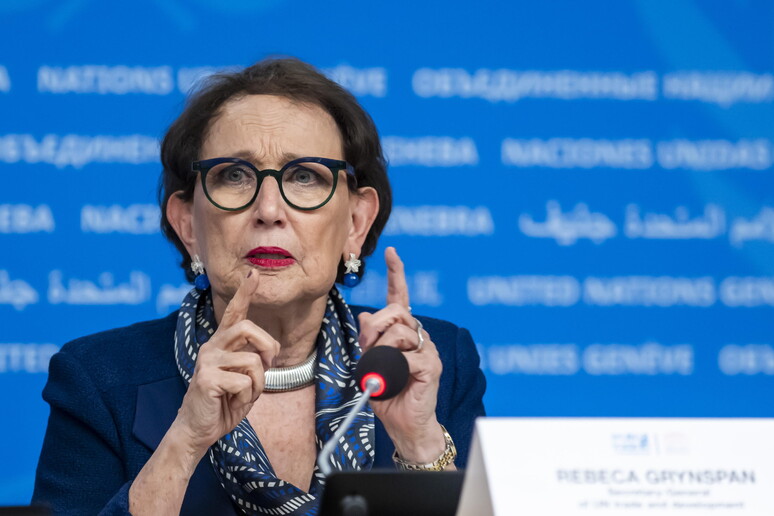
Manuel Tovar, Costa Rica’s minister of foreign trade, held bilateral meetings with counterparts from Japan, Spain, Ireland, the Czech Republic, Romania, and Sweden on the sidelines of the annual gathering at OECD headquarters, according to ANSA. The goal, Tovar said, was explicit: gathering support for Rebeca Grynspan, the country’s former vice president and current head of the UN Conference on Trade and Development, to succeed António Guterres when his second term expires on December 31.
The mix of countries Tovar chose to meet is telling. Spain brings historical and linguistic ties to Latin America; Japan and the Czech Republic are major economic partners within OECD structures; Ireland and Sweden are among the EU’s most active voices on multilateral reform. None of them are Security Council permanent members — the five countries that ultimately hold veto power over any nomination — but all carry influence in the General Assembly straw polls that increasingly shape which candidacies survive long enough to reach that stage.
Tovar framed the effort in the language of institutional reform as much as candidacy promotion. His objective, he said, was to advance the candidacy of a Costa Rican woman, describing Grynspan as an extraordinary candidate for a post that demands deep experience in multilateral governance at a moment when those structures are under strain. He added that Costa Rica’s push was rooted in a belief that the United Nations requires more effective and transparent global architecture — a reformist argument that Grynspan herself has made repeatedly in her public remarks before member states.
The OECD ministerial, chaired by Finland this year under the theme of industrial policy and open markets, is not a natural venue for a UN succession campaign. That Costa Rica chose to use it that way reflects a strategic calculation: the countries gathered in Paris for three days of trade and economic policy discussions are largely the same democracies whose votes will matter most in the coming months of Security Council consultations and General Assembly deliberations. For a small Central American nation without a permanent seat, informal access on the sidelines of a multilateral forum can be worth more than formal statements.
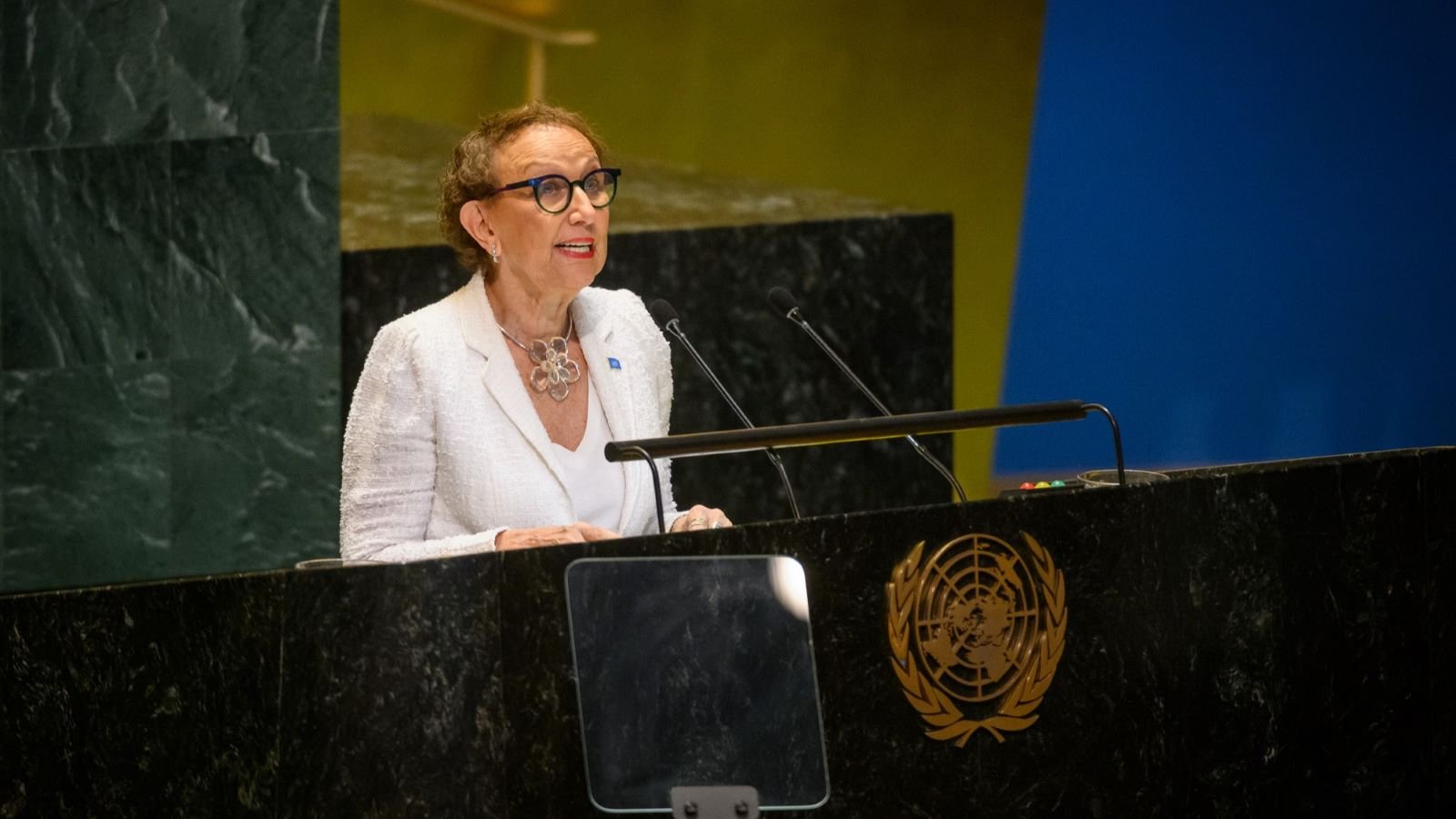
Grynspan, 70, is one of four declared candidates in the race to succeed Guterres. The competition has grown increasingly shaped by Security Council dynamics, with Russia and China likely to scrutinize any nominee associated with positions on Ukraine or Taiwan. Grynspan’s record complicates easy categorization: she was the senior UN official Guterres designated to negotiate directly with Russian officials during the Black Sea Grain Initiative, giving her a working relationship with Moscow that other candidates cannot claim. Whether that is an asset or a liability depends entirely on which permanent member is doing the evaluating.
Her biography carries weight in its own right. The daughter of Jewish refugees who fled persecution in Europe and found safety in Costa Rica, Grynspan would be, if selected, both the first woman and the first Jew to hold the Secretary-General’s post. She made that personal history central to her remarks before member states in April, arguing that peace is not an abstraction but a condition her own existence depended upon. The pitch landed in a chamber where the Gaza war and multiple ongoing conflicts have made the UN’s credibility on peace-making an active question rather than an assumed credential.
The UNCTAD leadership she has exercised since 2021 — also a first for a woman in that role — gives her a specific institutional profile: she has navigated trade disruptions driven by the pandemic, the Ukraine conflict, and the Trump administration’s tariff escalations, consistently advocating for developing nations that find themselves at the margin of decisions made by large economies. That framing aligns her with the Global South constituencies that have long argued the Secretary-General’s post should reflect the wider membership of the UN rather than the preferences of its wealthiest members.
Costa Rica’s formal nomination was submitted to the United Nations in March, alongside a vision statement and curriculum vitae. The broader race for the post has drawn scrutiny of candidates’ institutional records, and Grynspan’s backers have been careful to present her UNCTAD tenure as evidence of both competence and diplomatic range. President Rodrigo Chaves said at the time of the nomination that her career and commitment in development, international cooperation, and regional leadership would contribute to strengthening multilateralism — language that the Paris lobbying effort was designed to make operational rather than aspirational.
What the Paris meetings did not resolve is the deeper uncertainty that runs through every conversation about the 2026 succession: whether the Security Council’s five permanent members can reach consensus on any candidate before the General Assembly’s patience runs out, or whether the straw polls that have been introduced to add transparency to the process will produce a result that the P5 cannot easily override. The selection process, reformed in recent years to include public dialogues with candidates, remains ultimately accountable to a body where geopolitical fractures have become structural rather than episodic.
Grynspan’s campaign now moves into a phase where bilateral outreach, like the conversations Tovar held in Paris, will need to translate into commitments that hold when straw polls begin. Costa Rica has no comparable precedent for this kind of sustained diplomatic campaign — the country’s most recent similar effort, backing Christiana Figueres for the post nine years ago, did not advance to the final stages. Whether the institutional weight Grynspan carries from UNCTAD, combined with a candidacy that would break two historic barriers simultaneously, is enough to change that outcome remains an open question her own campaign cannot yet answer.