CHICAGO — For nearly two decades, the voice was as much a fixture as the court itself. Stacey King could be exasperating, thrilling, corny, and magnificent inside the space of a single possession — a man who turned mid-game commentary into performance art for a franchise that badly needed something to celebrate beyond the standings. Sunday morning, the Chicago Bulls announced that King had died at 59. No cause was given.
The Cook County Medical Examiner’s Office said King was pronounced dead at his residence in the 500 block of Bonnie Brae in River Forest. An autopsy was scheduled. That is essentially all that is known. What is not in dispute is what his departure means to the city he had been connected to, in one form or another, for 37 years.
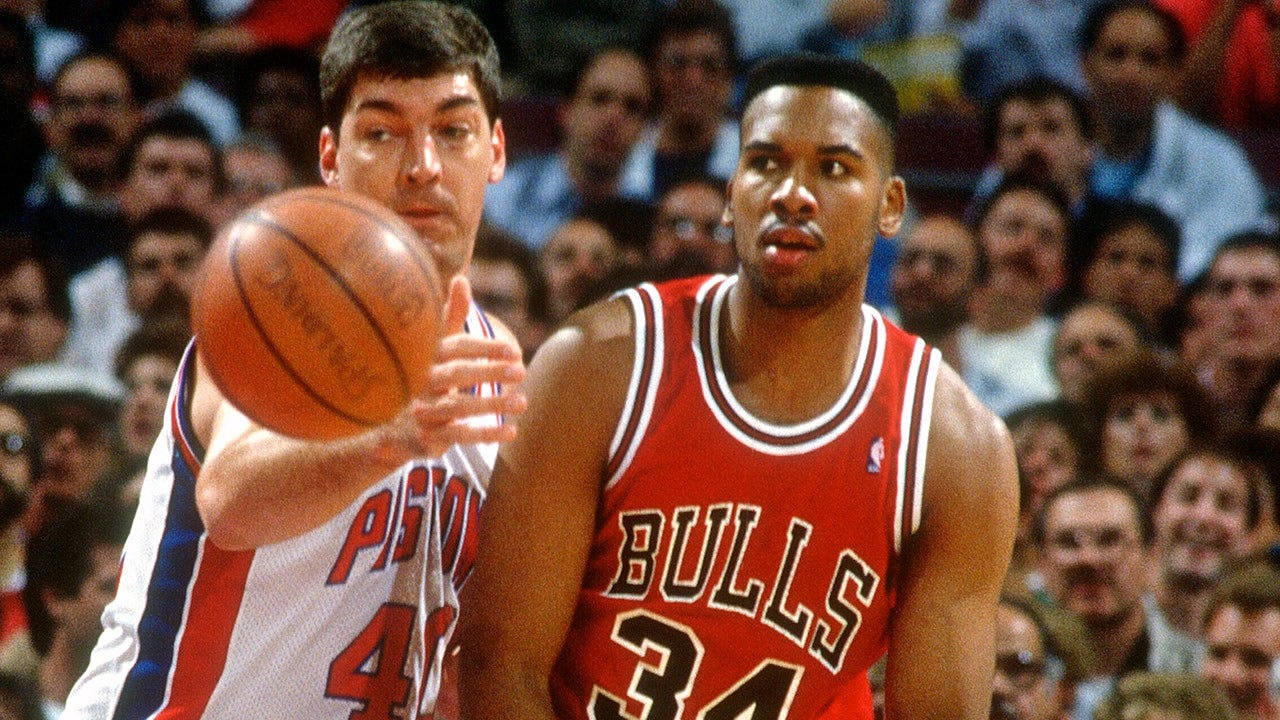
King arrived in Chicago as the No. 6 overall pick out of Oklahoma in the 1989 draft — a bruising, mobile center listed at 6-foot-11 whom the front office envisioned as a long-term interior answer. He was never quite that. He played in all 82 games as a rookie, averaging 8.9 points and 4.7 rebounds off the bench, and settled comfortably into the supporting cast that surrounded Michael Jordan and Scottie Pippen through the dynasty years. Three consecutive titles, 1991 through 1993. Then Minnesota, Miami, Boston, Dallas — eight seasons total, a career average of 6.4 points in 438 games. The playing career ended quietly, the way most careers do at the margins of something historic.
The broadcasting career did not end quietly. It barely began quietly. King spent time coaching in the Continental Basketball Association before joining CSN Chicago in 2006, initially as a studio analyst. By 2007 he had moved into the broadcast booth full-time, a position he held through the franchise’s transition to the Chicago Sports Network. He won an Emmy. He accumulated catchphrases the way few broadcasters manage in an entire career: “Gimme the hot sauce,” “Let me step back and kiss myself,” “Drive home safely, Chicago. Beep, beep.” None of it was scripted, which was the point — and which is why the Bulls, who spent most of King’s broadcast tenure cycling through losing seasons, retained an audience that kept showing up anyway.
Jerry Reinsdorf, the Bulls chairman, said in a statement that King was “a cherished member of the Bulls family and one of the truly unique personalities in our organization’s history.” His connection to the franchise and to its fans, Reinsdorf said, spanned more than three decades. “We will miss him deeply and remember the joy, energy, humor, candor and passion he brought to our organization, our broadcasts and our fans every day.”
Michael Reinsdorf, the team’s president and COO, offered a more personal note. “Stacey loved being a Bull,” he said. “You could feel it in everything he did — the way he played, the way he called games and the way he connected with our fans.” Whether it was a broadcast, a photograph with a fan, or a brief conversation, the younger Reinsdorf said, King made people feel seen. “We were fortunate to know him not only as a player and broadcaster, but as a friend.”
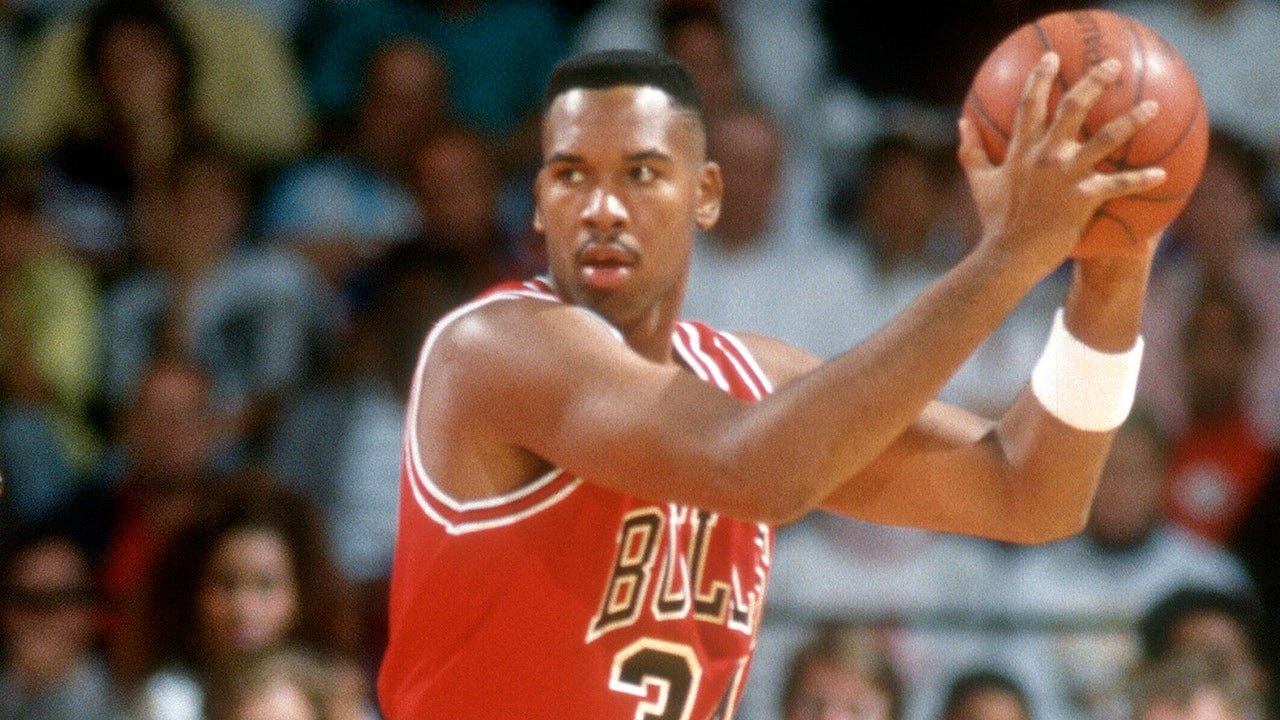
The timing carries its own particular weight. The Bulls are in the middle of a genuine rebuild — a process King had been part of as both a witness and a narrator, watching young players develop through seasons that offered more draft-lottery math than playoff drama. That the franchise showed signs of life in recent months made the news Sunday feel crueler than it might have otherwise. He had been calling games throughout a long dark period. Now that a brighter stretch seemed possible, King would not see it.
Michael McCarthy, president of the Chicago Sports Network, called King “one of the most beloved figures in Chicago sports.” His ability to connect generations of fans, McCarthy said, came through humor and insight in equal measure. “He made every game more enjoyable and every broadcast better.”
The NBA landscape around King’s death carries a charge that adds texture to the moment. The league’s Finals are ongoing — the New York Knicks lead the San Antonio Spurs two games to none, with Game 3 scheduled in New York Monday night — and the sport is in the midst of a generational transition. King had covered an era in which the Bulls mattered enormously, then an era in which they were rebuilding toward mattering again. What he brought to both, his colleagues insisted, was identical: the conviction that the game itself was worth the enthusiasm.
https://twitter.com/chicagobulls/status/1931503000000000000
The Bulls organization said it plans to honor King throughout the coming season and will make formal announcements in the near future. What those tributes will look like is not yet clear — the league has its own current preoccupations — but the franchise’s statement made plain that his legacy inside the organization would be treated as permanent. What is not addressable in any tribute, however well-designed, is the absence of the voice itself: that particular mixture of knowledgeable and unguarded that made bad Bulls teams bearable and good Bulls teams electrifying. Chicago will notice it is gone.