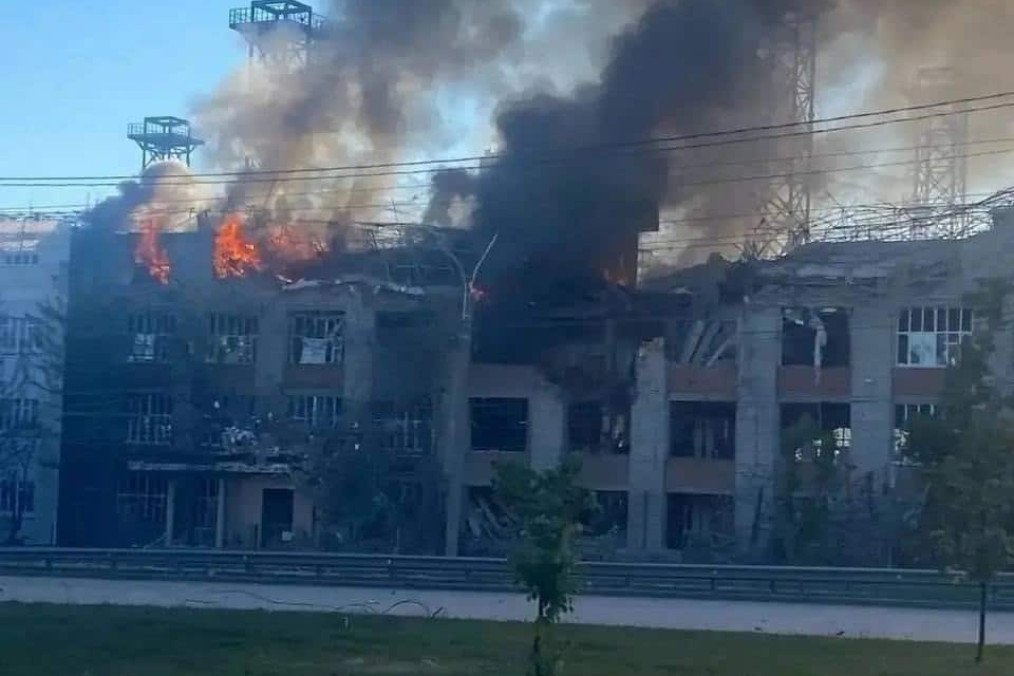

KYIV — The plant in Cheboksary had already been hit once before. The workers knew the Kometa navigation modules coming off their production line were in Ukrainian crosshairs. On the morning of June 10, the FP-5 “Flamingo” cruise missile found the VNIIR-Progress defense electronics facility again — a second strike in five weeks on the same target sitting 1,000 kilometers from the Ukrainian border, and this time President Volodymyr Zelensky confirmed it himself.
The significance of what burned in Cheboksary goes beyond the smoke visible above the Chuvash Republic’s capital for hours after the strike. VNIIR-Progress does not make the missiles that fall on Ukrainian cities. It makes what allows them to find their targets. The plant manufactures Kometa-series satellite navigation modules — anti-jamming receivers compatible with GLONASS, GPS, and Galileo — that are built into Shahed-type attack drones, Iskander-M ballistic missiles, Kalibr cruise missiles, and the UMPK glide-bomb kits Russia has been dropping on Ukrainian infrastructure by the thousands. Hit the factory, and every platform that depends on those modules becomes marginally less accurate. Do it twice in five weeks, and you have something closer to a doctrine.
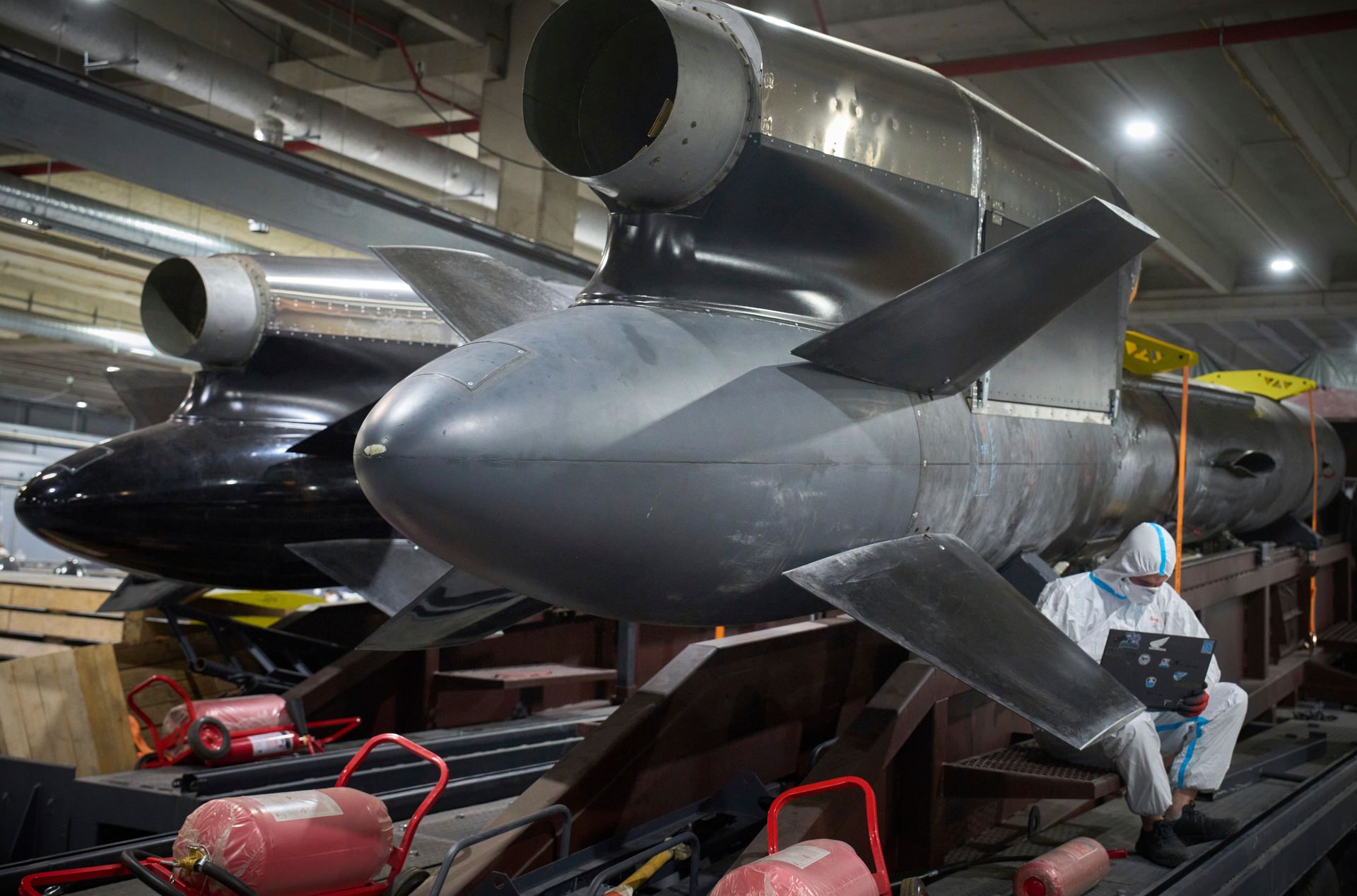
Ukraine’s General Staff confirmed the strike was carried out by units of the Missile Forces and Artillery of the Ukrainian Ground Forces. The weapon was the FP-5 Flamingo, a domestically developed cruise missile built by FirePoint, a private Ukrainian defense company whose founders came not from the arms industry but from construction, game design, and architecture. The missile has a stated range of up to 3,000 kilometers, designed from the outset for deep strikes against high-value targets that conventional drones and artillery cannot reach. Zelensky had called it “the most successful missile we have” when he announced serial production in August 2025. The June 10 strike offered operational evidence for that claim.
The strike was not isolated. Overnight on June 10, Ukraine launched what Moscow described as one of the largest coordinated aerial assaults of the war. Russia has been claiming record drone interceptions for weeks, but the Flamingo was not stopped. Russia’s Defense Ministry said air defenses intercepted 326 Ukrainian drones across 20 regions — a number that, if accurate, describes not Ukrainian failure but the scale of the assault: enough traffic to saturate Russian defenses across a fifth of the country, opening corridors for precision cruise missiles to reach targets the drones alone could not.
Zelensky also confirmed a simultaneous strike on the Kuibyshev oil refinery in Samara, one of Russia’s key fuel-processing facilities. Together, the two strikes on June 10 constituted a single night’s work against both Russia’s military-industrial base and its fuel supply chain. Ukraine has been systematically striking Russian energy infrastructure throughout the summer, and the Samara refinery was already a repeat target. Denys Shtilerman, co-owner and chief designer of Fire Point, published photos of nighttime missile launches that same morning — a rare public signal from a company whose operations are otherwise held tightly.
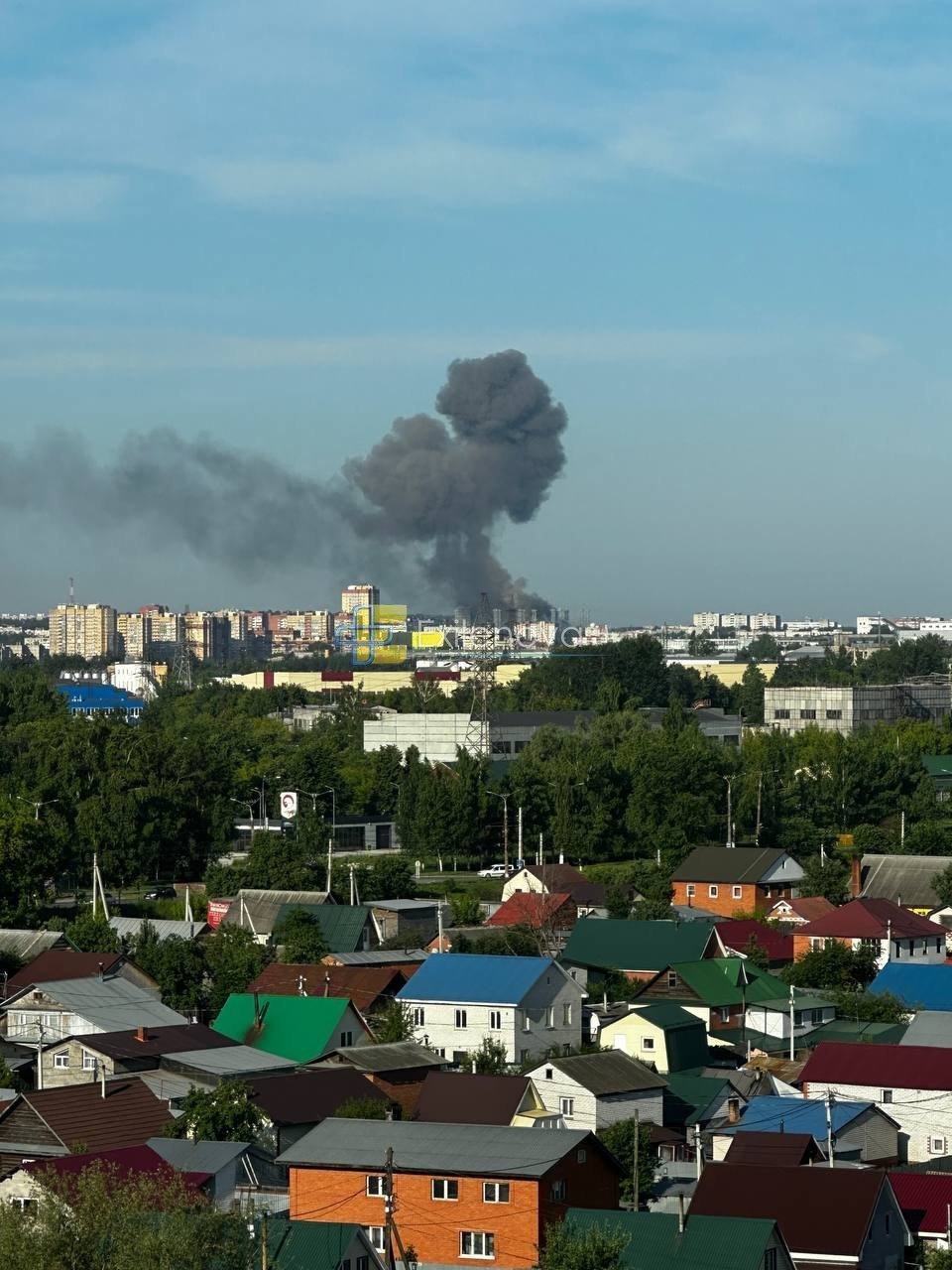
The first Flamingo strike on VNIIR-Progress came on May 5, 2026. Ukrainian forces hit the facility, followed by a second wave of Liutyi long-range drones the same night. The June 10 attack, according to ASTRA’s analysis of available photos and videos, hit an area near the facility’s main production building again. The outlet noted that protective structures equipped with anti-drone netting had previously been installed around parts of the site — a detail that measures the gap between what Russia can shield and what Ukraine can reach at range.
VNIIR-Progress is part of the ABS Electro industrial group. Its public description — development and production of automation systems, electronic components, radio-electronic products, and satellite navigation technologies — reads as the language of a civilian contractor. What Ukraine’s General Staff describes is something more specific: a facility whose Kometa modules are engineered to keep Russian weapons on course despite Ukrainian electronic warfare. That is the guidance chain Ukraine is trying to degrade, one strike at a time, in a city that sits far enough from the front line that it cannot hear the war it is feeding.
The FP-5’s road-mobile launch concept — designed to allow strike units to operate without fixed infrastructure — is directly suited for exactly this kind of campaign: rapid repositioning between strikes to complicate Russian counter-battery response. FirePoint has since exhibited the system internationally, presenting a mockup and trailer-based launcher at SAHA Expo 2026 in Istanbul, signaling an intent to enter the export market. How the missile performs operationally against a defended, hardened facility it has now struck twice is the more relevant demonstration for any prospective buyer.
What is not yet known is how much of VNIIR-Progress’s production capacity has been destroyed, degraded, or dispersed after two strikes in five weeks. Oleg Nikolayev, the head of Chuvashia, confirmed the attack but offered no damage assessment. Local authorities declared a missile threat, emergency services responded, and streets surrounding the facility were blocked — the information that regional officials share when they cannot say more, or will not. Whether the Kometa production line has been relocated, duplicated elsewhere, or simply absorbed the damage and continued is a question Ukraine’s intelligence services are presumably asking too. The answer to that question, not the strike itself, determines whether this is a campaign or a gesture.
For now, as Russia and Ukraine continue trading strikes on each other’s defense industries, the Flamingo has established a pattern: it goes back to targets it has already hit. That is either a sign that the first strike did not finish the job, or that finishing the job requires more than one visit. Both possibilities point to the same conclusion: the guidance chain behind Russian precision weapons is a verified target, and Ukraine now has a missile long enough to reach it, again and again.