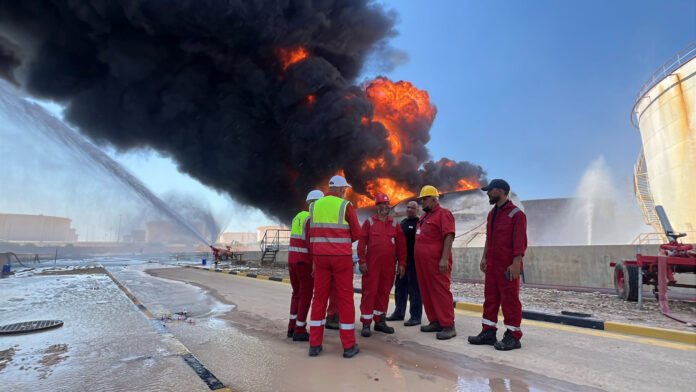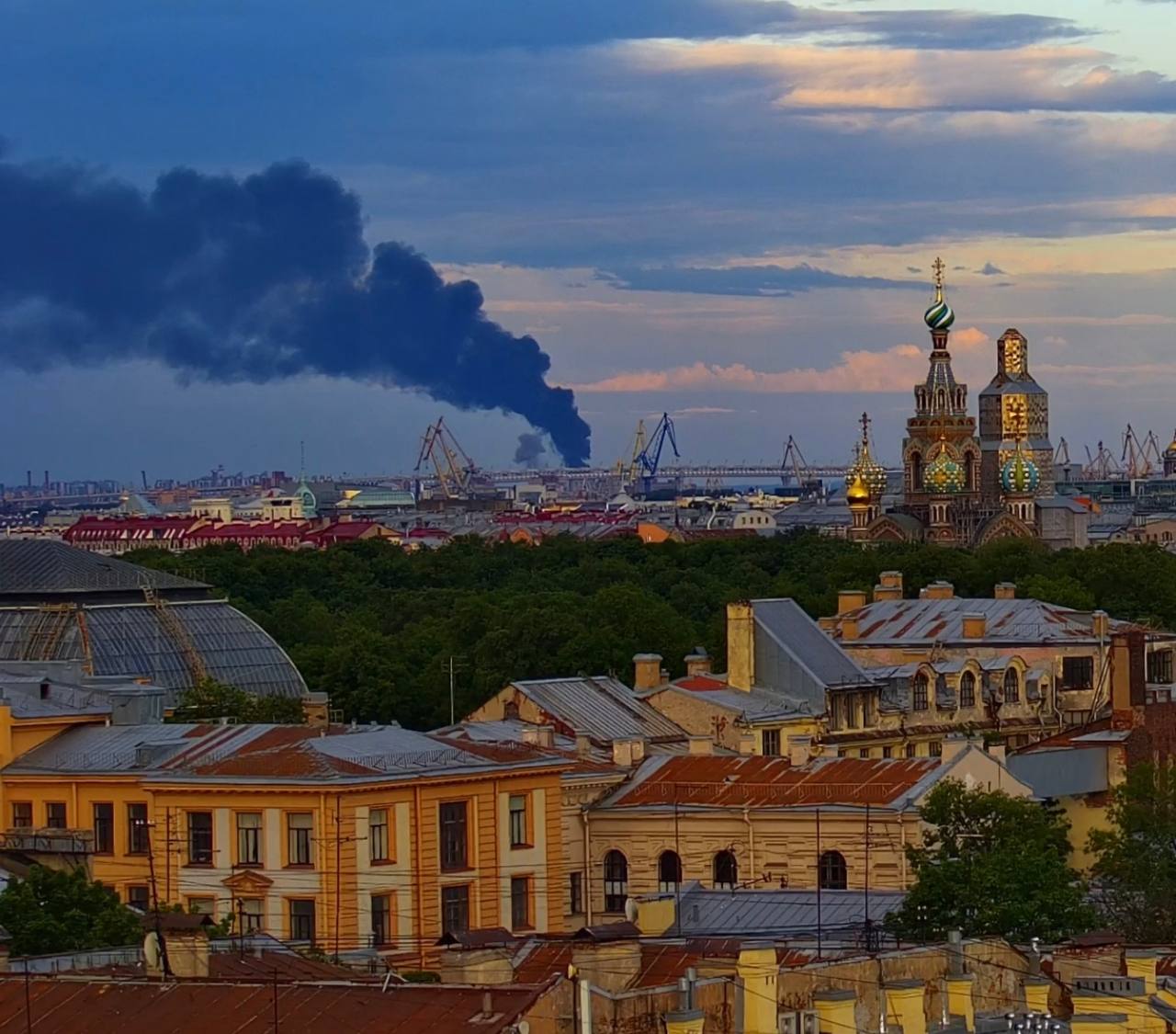

ST. PETERSBURG — The smoke arrived before the delegates did. On the morning of June 3, as business leaders and government officials gathered in St. Petersburg for Russia’s flagship annual economic forum, Ukrainian drones struck the city’s oil terminal and infrastructure across three districts, sending columns of black smoke over the Gulf of Finland and forcing dozens of flight diversions at Pulkovo Airport just as guests were flying in to attend.
The mayor’s office in St. Petersburg confirmed drone strikes on infrastructure facilities in the Kronstadt, Kirovsky and Krasnoselsky districts, saying several people were injured. Russia’s governor of Leningrad Oblast, Alexander Drozdenko, reported that air defenses had downed at least 50 drones over the region but conspicuously offered no comment on the fire burning at the port.
The silence from officials about the terminal itself was telling. Russian independent news channel Astra, which geolocated eyewitness footage, concluded that Ukrainian drones had struck the St. Petersburg Oil Terminal directly, igniting a fire at one of the largest petroleum product transshipment complexes in northwestern Russia. The facility, spread across 37 hectares at the city’s Great Port on the Gulf of Finland, handles up to 12.5 million tonnes of fuel per year and holds official status as a strategically important enterprise for Russia’s national security. The Kremlin has not confirmed the strike, and the full scale of damage remains unverified.
Kronstadt – the island city administratively part of St. Petersburg that houses the Russian Navy’s Baltic Fleet – also reported drone activity, with homes and vehicles damaged. The Navy’s presence there gave the attack a dimension beyond the economic. In a single overnight operation, Ukraine had bracketed Russia’s second city: its naval garrison, its fuel export infrastructure, and its civil transport hub.
Pulkovo Airport confirmed 29 flights delayed more than two hours and nine aircraft diverted to alternate airfields. It is through Pulkovo that the guests of the St. Petersburg International Economic Forum – known informally as Putin’s version of Davos, scheduled this year from June 3 to June 6 – arrive to project the image of a Russia still open for business despite years of Western sanctions.
Astra analysts noted that the distance from the burning oil terminal to the Expoforum convention center, where the forum’s plenary sessions are held, is approximately 17 kilometers. By the time the forum opened, the smoke was visible.
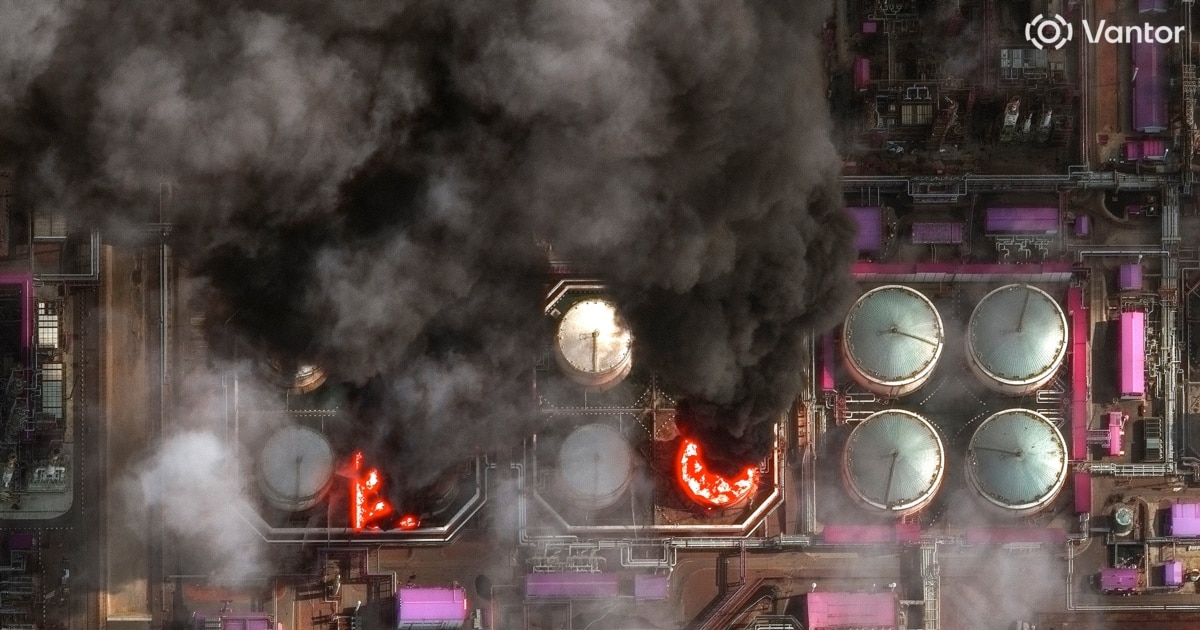
Simultaneously, Ukrainian forces carried out strikes in the Smolensk Region overnight, with Smolensk Governor Vasily Anokhin confirming that 31 drones were shot down or neutralized. Two employees of the Russian Ministry of Emergency Situations were killed in a resulting fire – the first confirmed fatalities of the night – with two other firefighters and a civilian sustaining injuries. Anokhin described the target as “key infrastructure sites” without elaborating. The overnight attacks followed Russia’s own mass missile strike on Ukraine the day before, which killed at least 23 people including two children and injured more than 100 others across Kyiv and several other cities.
Ukraine has not claimed responsibility for the St. Petersburg strikes as of publication time, which is consistent with its typical practice on deep-strike operations inside Russian territory. Kyiv’s strategy of targeting fuel infrastructure – refineries, depots, and export terminals – has intensified throughout 2026, with attacks on the Ust-Luga oil terminal and the Primorsk facility earlier this year. Russia’s defense ministry claimed to have downed 354 Ukrainian drones across 17 regions overnight, its largest single-night defensive claim of the war.
The strategic logic of the timing was not lost on observers. SPIEF is the event through which Moscow most publicly argues that Russia remains economically functional – that it has found alternative partners, absorbed the shock of sanctions, and rebuilt trade flows around the West. This year’s forum, attended by delegates from China, Saudi Arabia, Tanzania, and Uzbekistan, was intended to reinforce that narrative. Instead, the opening morning was defined by air-raid warnings, airport chaos, and a burning state-listed energy facility within eyeshot of the convention center.
Ukraine’s long-range drone campaign has changed what it means to be inside Russia during wartime. From January through March this year, according to Radio Free Europe/Radio Liberty, 243 Ukrainian drones were shot down over Leningrad Oblast alone. RFE/RL reported that Russian regional authorities had begun describing the area around St. Petersburg – some 600 kilometers from the nearest Ukrainian front line – as a “frontline” region. Wednesday’s strikes lent that description material weight.
What the oil terminal fire will cost Russia in throughput, or how long cleanup and repair efforts will take, is not yet known. Official Russia has said very little about a facility it is required by law to protect – a silence that, in the context of an economic forum built around projecting confidence, carries its own message. The war, this morning, was not something that happened somewhere far away. It arrived on time for the opening session.
—Inputs from Sputnik.