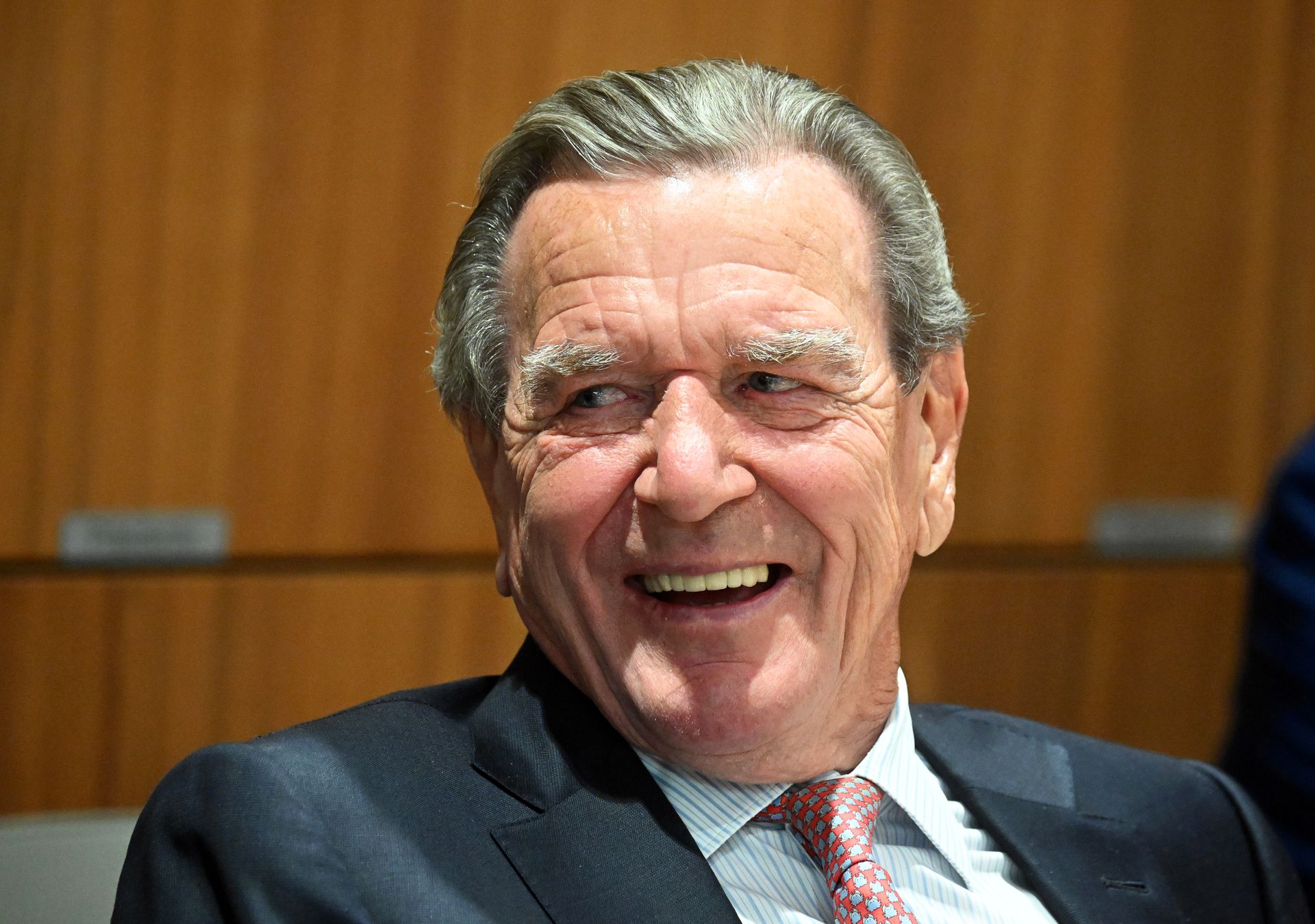

MOSCOW — He was spotted first at the Kempinski Hotel, not at the Kremlin. A correspondent for the German broadcaster NTV saw Gerhard Schroeder in Moscow on Tuesday afternoon — and that single sighting was enough to set off another round of European anxiety about what the former chancellor is doing, and for whom.
Schroeder arrived in the Russian capital without public notice, and as of Tuesday evening the purpose of his visit had not been officially disclosed. His office in Berlin did not respond to requests for comment. The Kremlin said nothing, either. That silence — deliberate or not — landed in the worst possible week for European diplomats already wrestling with whether to hold direct talks with Moscow over the war in Ukraine.
The timing is hard to separate from context. St. Petersburg is set to host the annual St. Petersburg International Economic Forum from June 3 to June 6, one of the Kremlin’s flagship networking events, with representatives confirmed from more than 130 countries. Whether Schroeder’s appearance in Moscow is a prelude to that forum, or something else entirely, is not known.
What is known is where he stands. Three weeks ago, Russian President Vladimir Putin named Schroeder as his personal preference to represent Europe in any future peace talks with Moscow — a proposal that landed across the continent like a grenade. EU foreign policy chief Kaja Kallas rejected it outright, telling reporters in Brussels that Schroeder had spent years as a paid lobbyist for Russian state companies, which would make him, in effect, representing both sides simultaneously. Germany’s government called the offer “not credible,” noting Moscow had changed none of its conditions for ending the war.
That rejection has done nothing to diminish Schroeder’s willingness to engage. The 81-year-old led Germany from 1998 to 2005, during which time he championed the Nord Stream pipeline that tied the German economy to Russian gas — a decision that became one of the most consequential strategic miscalculations in modern European history. After leaving office he took up positions on the supervisory boards of both Rosneft, Russia’s state oil company, and the operating company of Nord Stream. He still holds the Rosneft post.
This is not the first time he has materialized in Moscow at a delicate moment. He visited Russia in March 2022 and again in July of that year, initially claiming the second trip was recreational. He later admitted he had met Putin. Both visits drew fierce criticism from within his own Social Democratic Party (SPD), which narrowly declined to expel him over his Russia ties despite significant internal pressure.
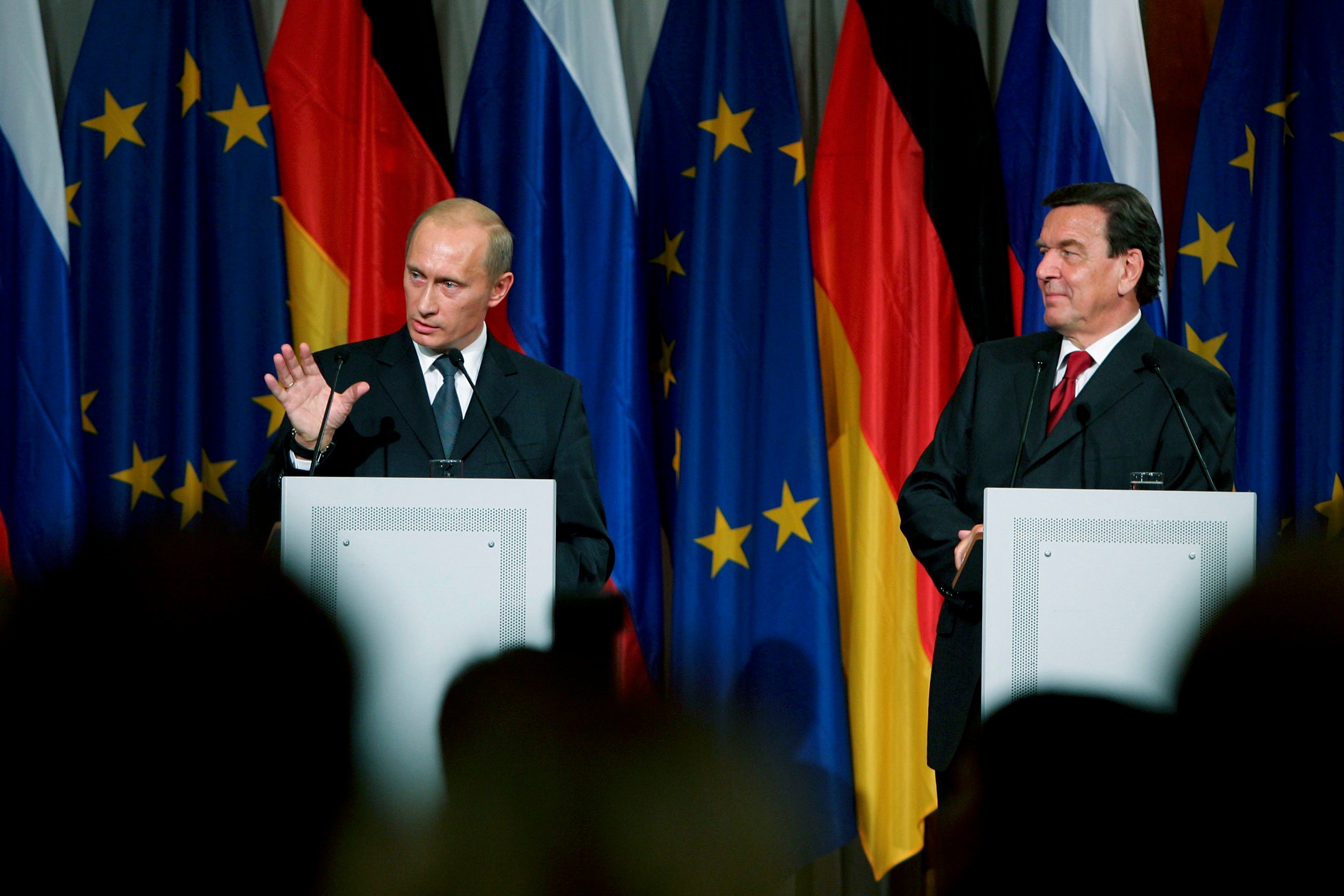
The question no one in Berlin or Brussels can answer cleanly is whether Schroeder acts alone or with at least tacit understanding from the German government. Chancellor Friedrich Merz has been firm in public about the Schroeder proposal — rejecting it, and insisting any European negotiator must have full credibility with Ukraine and EU member states. But back-channel conversations between European capitals and Moscow have not stopped, and the formal architecture of who speaks to Russia on Europe’s behalf remains unsettled.
EU member states are caught between pressure from Washington — where the Trump administration has been pushing for faster movement toward some settlement — and a Ukraine that has refused to accept territorial concessions as a starting condition for negotiations. Kallas has signaled she could herself lead an EU diplomatic track with Russia, but has insisted Europe must first establish unified red lines before anyone sits down with Moscow.
Into that vacuum, Schroeder moves. He has said publicly that he believes he can serve as a useful interlocutor precisely because he is trusted in Moscow — the same argument that critics say disqualifies him entirely. When Putin named him last month, Kremlin spokesman Dmitry Peskov confirmed the preference was genuine but added that Russia had yet to hear back from Europe on the proposal.
There is a version of Tuesday’s arrival that is entirely unremarkable: a retired politician visiting a country where he spent years cultivating personal and commercial relationships, perhaps attending SPIEF as a private guest. There is another version in which this trip is something more. European officials who have watched Schroeder operate for years would note that the two versions are not always mutually exclusive.
Putin’s proposal for Schroeder was itself part of a broader signal that Russia was willing to discuss terms — on Russia’s terms. The same week it was floated, Putin told reporters that the war in Ukraine may be “coming to an end” and said he was prepared to meet Ukrainian President Volodymyr Zelensky directly, in Moscow or a neutral country, though only once a final agreement had been outlined. Zelensky has shown no appetite for that framing. The temporary truce agreed in early May has not produced a durable diplomatic track.
For now, the most consequential thing about Tuesday’s sighting may be its ambiguity. Whether Schroeder carries any message, whether he speaks to anyone of significance, and whether Berlin has any knowledge of his movements — none of that has been established. What the NTV correspondent saw was a former chancellor walking into a Moscow hotel. What it adds up to is a question European capitals would prefer not to be asking again.
— Input From Sputnik.
Related Posts