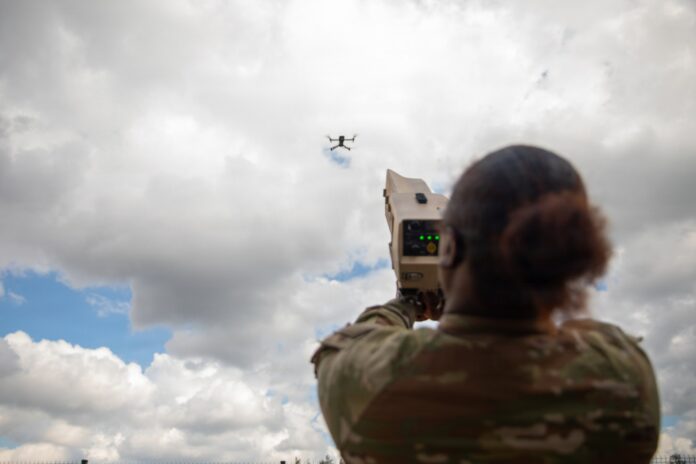

MOSCOW — The night after Russia launched one of the heaviest missile and drone barrages of the war against Ukraine, Kyiv struck back at scale. Russia’s Defense Ministry announced on Wednesday morning that its air defense systems had intercepted and destroyed 354 fixed-wing Ukrainian unmanned aerial vehicles overnight, spread across 17 regions and the Sea of Azov — a defensive claim without precedent in the conflict if accurate.
The regions named in the ministry’s statement ranged from Belgorod and Kursk near the Ukrainian border to Leningrad and Pskov in the northwest and Tver and Smolensk closer to Moscow. The Krasnodar Territory and the Republic of Crimea were also listed. The geographic spread — from the Baltic approaches to the Black Sea coast — pointed to a Ukrainian strike deliberately designed to overwhelm Russian air defenses across multiple defensive corridors simultaneously rather than concentrate on any single target.
The Russian Defense Ministry, which has consistently claimed higher intercept numbers than independent analysts can verify, provided no details on what the drones targeted, whether any reached their objectives, or what damage, if any, was sustained on the ground. It is standard practice for Moscow to announce interceptions without acknowledging strikes on infrastructure.
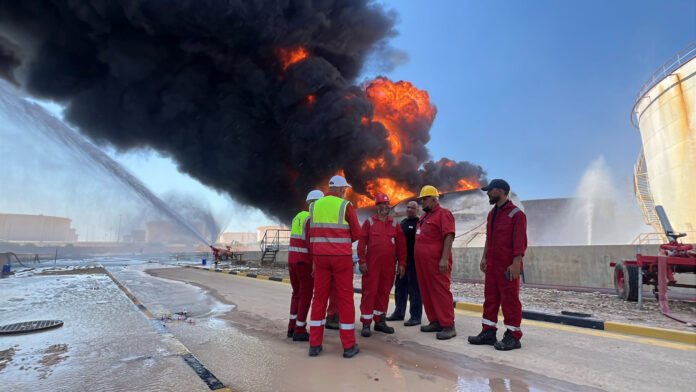
The Leningrad region’s inclusion was notable. Since late March, Ukrainian long-range drones have struck the Ust-Luga oil terminal on the Baltic Sea at least five times, igniting fires at storage tanks and temporarily disrupting crude export operations at one of Russia’s largest energy hubs. Governor Alexander Drozdenko has reported dozens of drones intercepted over the region in each wave. Whether Wednesday’s wave again targeted Ust-Luga or the nearby Primorsk terminal was not confirmed in the ministry’s statement.
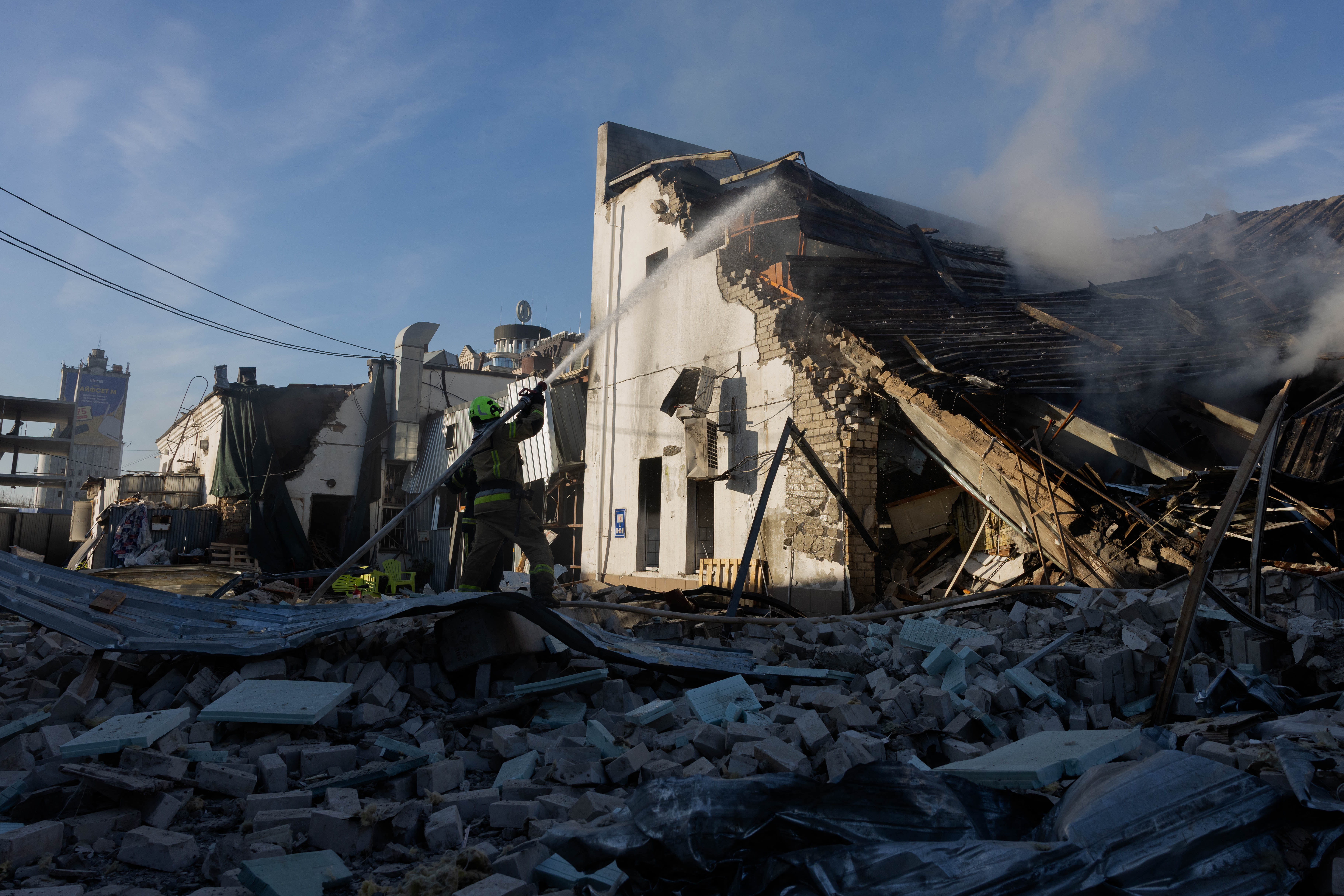
The overnight exchange followed one of the bloodiest single nights of the war for Ukrainian civilians. Russia launched 656 drones and 73 missiles against Ukraine on the night of June 1 into June 2, striking Kyiv, Dnipro, Kharkiv, and Zaporizhzhia and killing at least 22 people, according to Ukrainian authorities. Ukraine’s air force said it intercepted 40 missiles and 602 drones from that barrage. The 354 drones Russia now claims to have shot down on the following night suggest Kyiv answered with a counter-barrage of its own at comparable scale.
The previous largest single overnight Russian intercept claim against Ukrainian drones was 389, reported on March 25 — the same night Ukraine struck Ust-Luga for the first time this year and sent errant drones across the airspace of Estonia and Lithuania. That wave set a record at the time. The 354 figure announced Wednesday would be the second highest such claim in the war, though the Russian Defense Ministry’s intercept figures are not independently verified.
Russia’s own Shahed-type drone campaign against Ukraine has grown relentlessly. In the 12 hours before the overnight June 2 megastrike, Russian air defenses had already claimed 158 Ukrainian drones. The cumulative numbers from that 24-hour period and the overnight wave that followed suggest both sides have dramatically increased their drone production and deployment capacity. Ukraine has not confirmed the size of its overnight attack on Russia.
Ukraine’s drone campaign against Russia has increasingly focused on energy infrastructure — oil refineries, port terminals, and pipeline pumping stations — rather than purely military targets. The Saratov oil refinery, the Kirishi inland plant east of St. Petersburg, and the Baltic Sea export hubs have all been struck in recent months, with Reuters reporting estimated losses of around 40 percent of Russia’s oil export capacity during the peak of the spring campaign. Russia has disputed those figures without providing alternatives.
The Sea of Azov was also named as an interception zone, suggesting Ukraine may be targeting Russian naval and logistics assets in the Black Sea theater alongside the energy and industrial strikes further north. Russia’s defense of the sea approaches — through which it has historically moved fuel and military supplies toward occupied Ukrainian territories — has been a persistent contested zone throughout the conflict.
What none of the Russian ministry’s figures can resolve is the most consequential question: how many of the 354 drones it claims to have destroyed actually reached their targets before being downed, and how many were neutralized before impact. Ukraine’s drone doctrine, as observed by analysts tracking the campaign, treats air defense saturation as a goal in itself — the theory being that forcing Russian systems to expend interceptor missiles across 17 simultaneously contested regions degrades their capacity for the next wave.
Russia framed its June 2 megastrike as retaliation for a Ukrainian attack on the Russian city of Starobelsk that killed 21 civilians. Whether Wednesday’s Ukrainian drone wave was itself a direct response to that barrage — or simply the continuation of a standing campaign — was not addressed by either side’s official communications by Wednesday morning. The logic of the drone war, at this point, has largely overtaken the logic of explanation.
—Inputs from Sputnik.