
MOSCOW/KYIV — The missiles came in waves — hypersonic, cruise, ballistic — and when they were done, Russia had a list of targets it wanted the world to read. The 21 students killed in Starobelsk, the Russian Defense Ministry said Tuesday, were the reason. The Motor Sich aircraft factory in Zaporizhzhia, six military airfields stretching from Kyiv to Rivne, a facility producing components for Ukrainian drones — these were the answer.
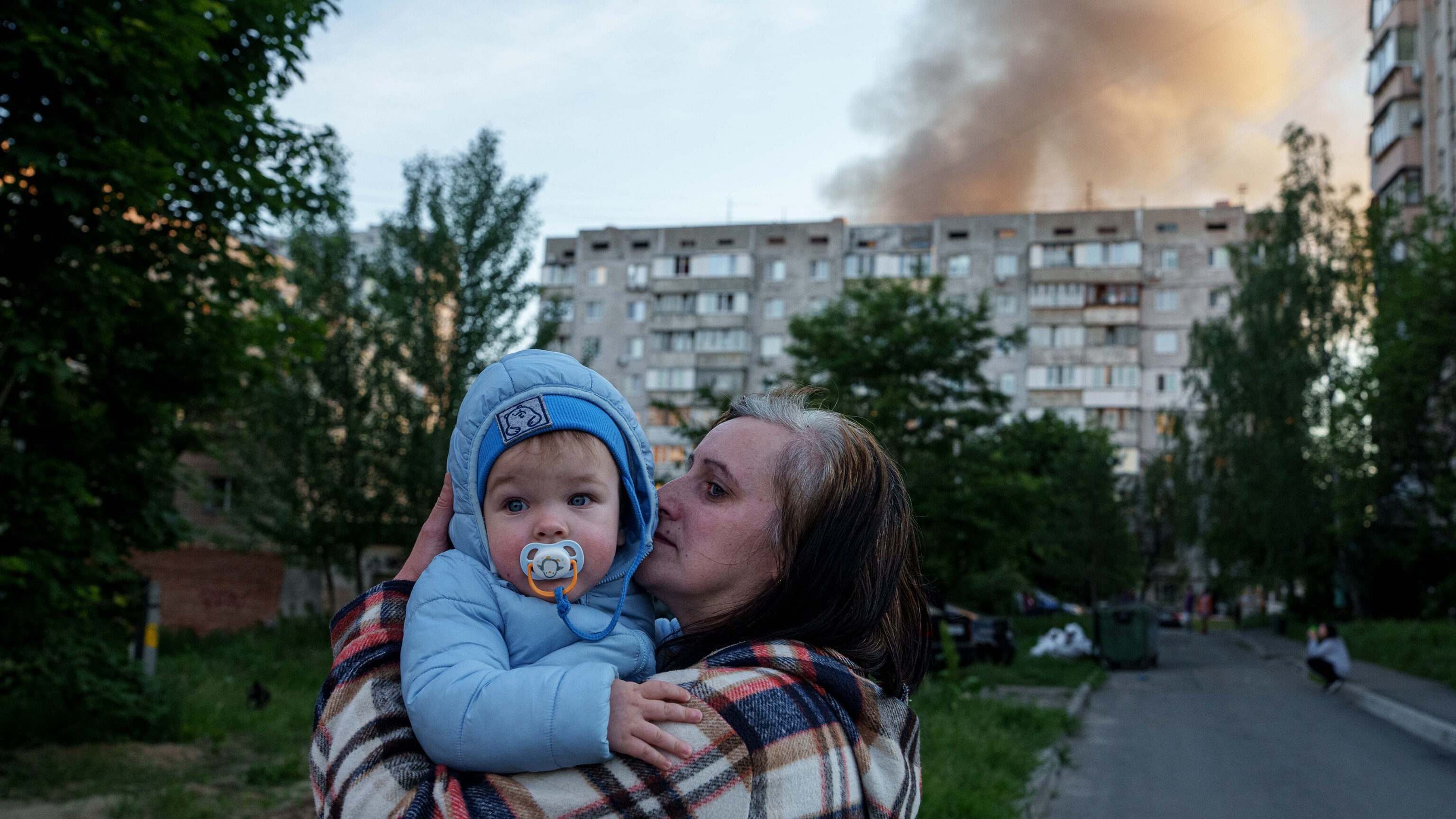
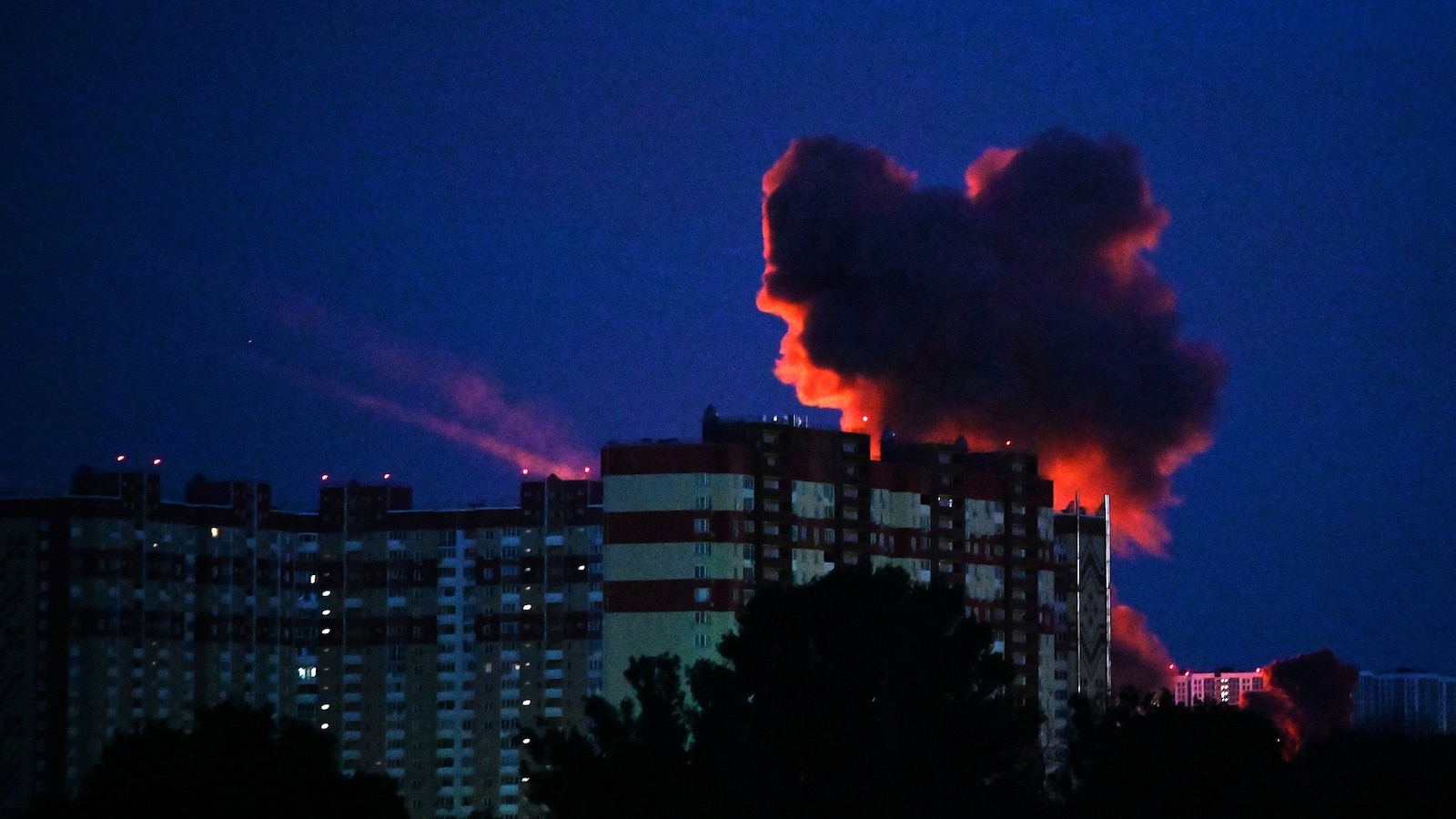
Ukraine’s air force said Russia launched 73 missiles and 656 drones overnight. Of those, 40 missiles and 602 drones were intercepted or suppressed, its Telegram channel reported. What got through was enough: at least 17 people were killed and more than 100 wounded across Kyiv, Dnipro, and Kharkiv, according to ABC News. In Dnipro, a child’s body was pulled from rubble. A 73-year-old woman was among the dead.
The Russian Defense Ministry framed the assault as proportional justice. Its statement described strikes delivered by “high-precision long-range air, land and sea-based weapons, including hypersonic aeroballistic missiles” — a phrase that now appears with the regularity of a communiqué template — targeting the defense-industrial complex, fuel infrastructure, and military airfields. At the center of that list: the workshops of the Omelchenko machine-building plant and the Motor Sich aircraft factory in Zaporizhzhia, along with the Kharkiv State Aircraft Manufacturing Company.
Moscow’s choice of Motor Sich is not incidental. The factory has been a recurring target in Russia’s logic of industrial attrition — an enterprise it regards as integral to Ukraine’s capacity to sustain air operations. Two fuel and energy facilities and 10 military enterprises were also struck, the ministry said, including the Mayak plant and the state-owned UkrSpetsexport, Ukraine’s defense export agency. The Fire Point company in Dnipropetrovsk, which Moscow said produces components for Ukrainian UAVs and missile weapons, and the Shostka Zvezda plant in Sumy were also hit.
Then came the airfields. Six of them — in Cherkasy, Rivne, Zhytomyr, Kirovohrad, Khmelnytskyi, and Kyiv regions — were listed in the ministry’s statement as hit. Military industry enterprises in Khmelnytskyi and Poltava were also targeted. The breadth of the geographic reach was deliberate: this was not a strike concentrated on the east but a message delivered across the entire logistical depth of the country.
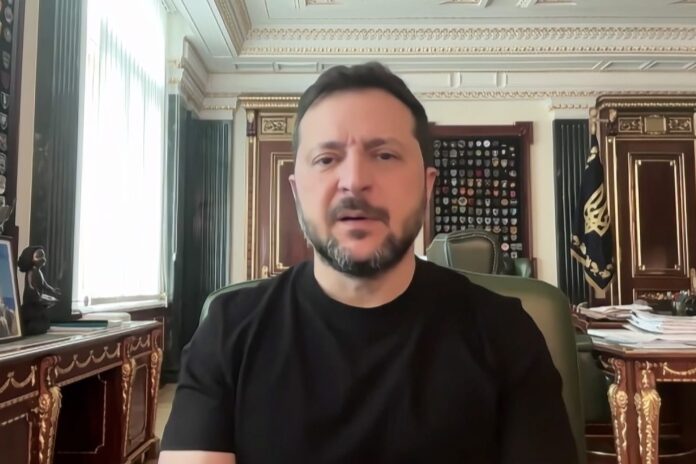
Volodymyr Zelenskyy, who had warned publicly on Friday that intelligence indicated a massive attack was being prepared, called the assault “a completely transparent statement from Russia.” Without more Patriot systems, he said, the strikes would continue. He has written to both Donald Trump and the US Congress requesting the air defense batteries. Ukraine’s air force noted that it intercepted the majority of projectiles, but the arithmetic of 73 missiles and 656 drones was designed to overwhelm rather than to be defeated cleanly.
The Starobelsk framing matters because it is the third time in nine days that Russia has invoked the college attack to justify action. Vladimir Putin called the strike a “bloody crime” and vowed retribution would be inevitable within hours of the attack. The Russian narrative has been consistent: Kyiv murdered students; Moscow is obligated to respond. What that framing elides is a significant fact that neither the Russian ministry’s statement nor Moscow’s political rhetoric addresses — which is that Ukraine has denied conducting the attack, and the question of who struck the college in Starobelsk has not been independently verified.
In Kyiv, the mayor, Vitali Klitschko, warned residents of explosions in multiple city districts as the attack unfolded, urging them to shelters. Power was knocked out in several districts of the capital. In Kharkiv, regional governor Oleg Synegubov said eight people were wounded in the Slobidsky district. The most significant damage, Ukrainian Interior Minister Klymenko said, was in Kyiv, Dnipro, and Kharkiv. Euronews reported that power was knocked out in several districts of the capital as the barrage continued.
None of this is easily separated from the escalatory rhythm that has defined the war since February 2022. Russia has repeatedly used the language of retaliation to frame strikes that, by the scale and target selection, were clearly planned in advance of whatever incident Moscow nominates as their cause. The same was true in May, when Russia struck Kyiv within hours of Putin’s stated order for retaliation following a separate incident in occupied Luhansk. Tuesday’s assault followed that same architecture: a named grievance, a named list of targets, a strike so large in scope — 729 total projectiles — that it could not have been assembled as a reaction to anything that happened 24 hours earlier.
What remains unresolved, and what no statement from Moscow or Kyiv answers, is whether any of the declared industrial targets — the airfield runways, the Motor Sich workshops, the drone component lines — were materially degraded. Russian Defense Ministry statements claim the “designated objects were hit.” Ukrainian assessments of actual damage to military infrastructure, as distinct from the civilian casualties Moscow is not counting, had not been released by Tuesday morning.
—Inputs from Sputnik.