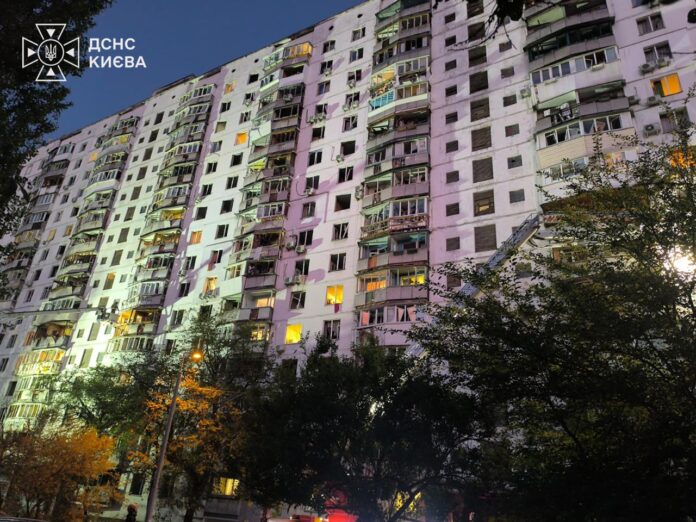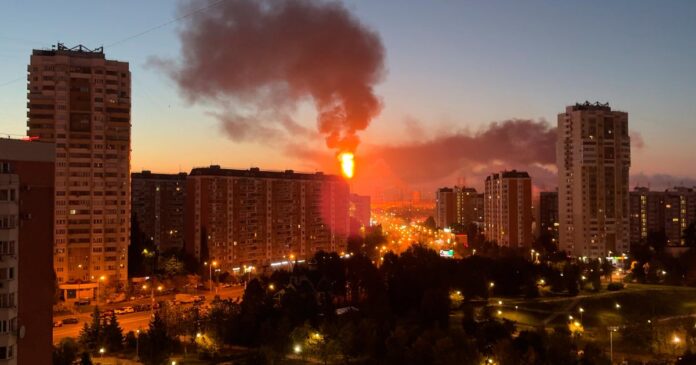

MOSCOW — Russia’s Vostok battlegroup killed over 455 Ukrainian soldiers in a single day along the eastern front, the Russian Defense Ministry said Wednesday, a claim that arrived the same morning Ukrainian Flamingo cruise missiles struck a defense electronics plant deep inside Russia, and Moscow announced it had shot four of the same weapons down.
The pairing is not incidental. For months, the Flamingo has been Ukraine’s most consequential long-range strike asset — the weapon Kyiv used to hit the Votkinsk ballistic missile factory in February and a drone navigation plant in Cheboksary only hours before Wednesday’s briefing. Russia’s claim to have intercepted four of them in a single day, if true, would represent the highest single-day Flamingo attrition rate Moscow has publicly reported. If not, it fits a pattern of Russian information operations timed to blunt the psychological effect of Ukrainian deep strikes.
Neither claim can be independently verified. What is certain is that Wednesday’s Defense Ministry readout covered both the ground war and the air war simultaneously, and the two are no longer separable. The same Ukrainian defense startup whose engineers once built apartments and video games now produces the missiles Russia is trying to shoot down — and, by Moscow’s count, failing to stop entirely.
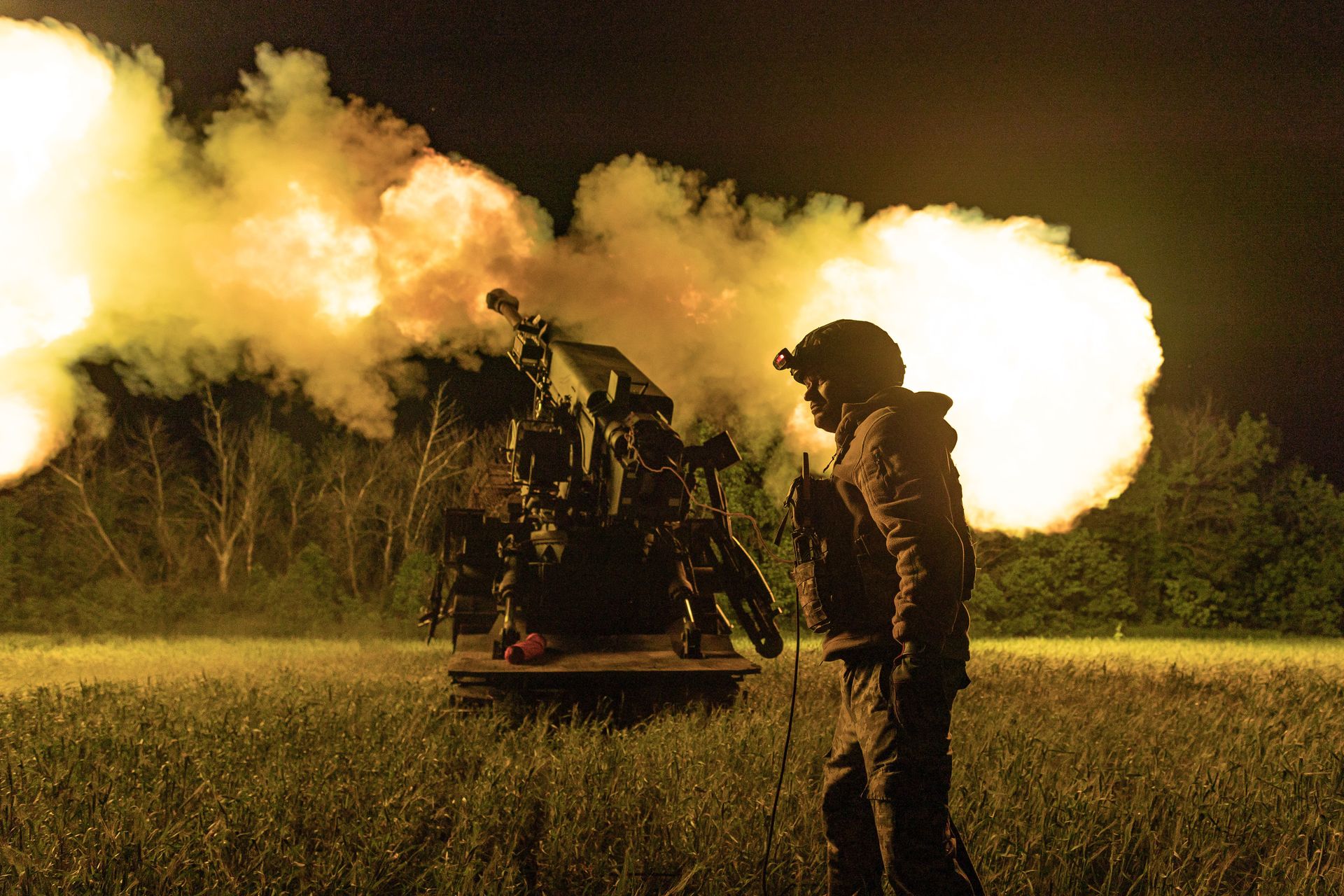
According to the ministry, Vostok’s toll of 455 included four armored fighting vehicles and seven other vehicles. Across all six battlegroups, the combined figure for the past 24 hours exceeded 1,380 Ukrainian military personnel, with the Sever (North) battlegroup accounting for over 230, Tsentr (Center) for more than 285, Zapad (West) for up to 210, Yug (South) for over 160, and Dnepr for up to 40. Russian Ministry of Defense casualty figures are not confirmed by independent observers and have historically been contested by Ukrainian officials.
The air defense component of the briefing was striking in its own right. Russian systems shot down 766 Ukrainian UAVs over the 24-hour period — a figure that, if accurate, reflects the industrialized drone war both sides are now fighting across a 1,000-kilometer front. The four Flamingo intercepts were listed alongside the drone total, though the ministry offered no specifics on where or how the missiles were downed.
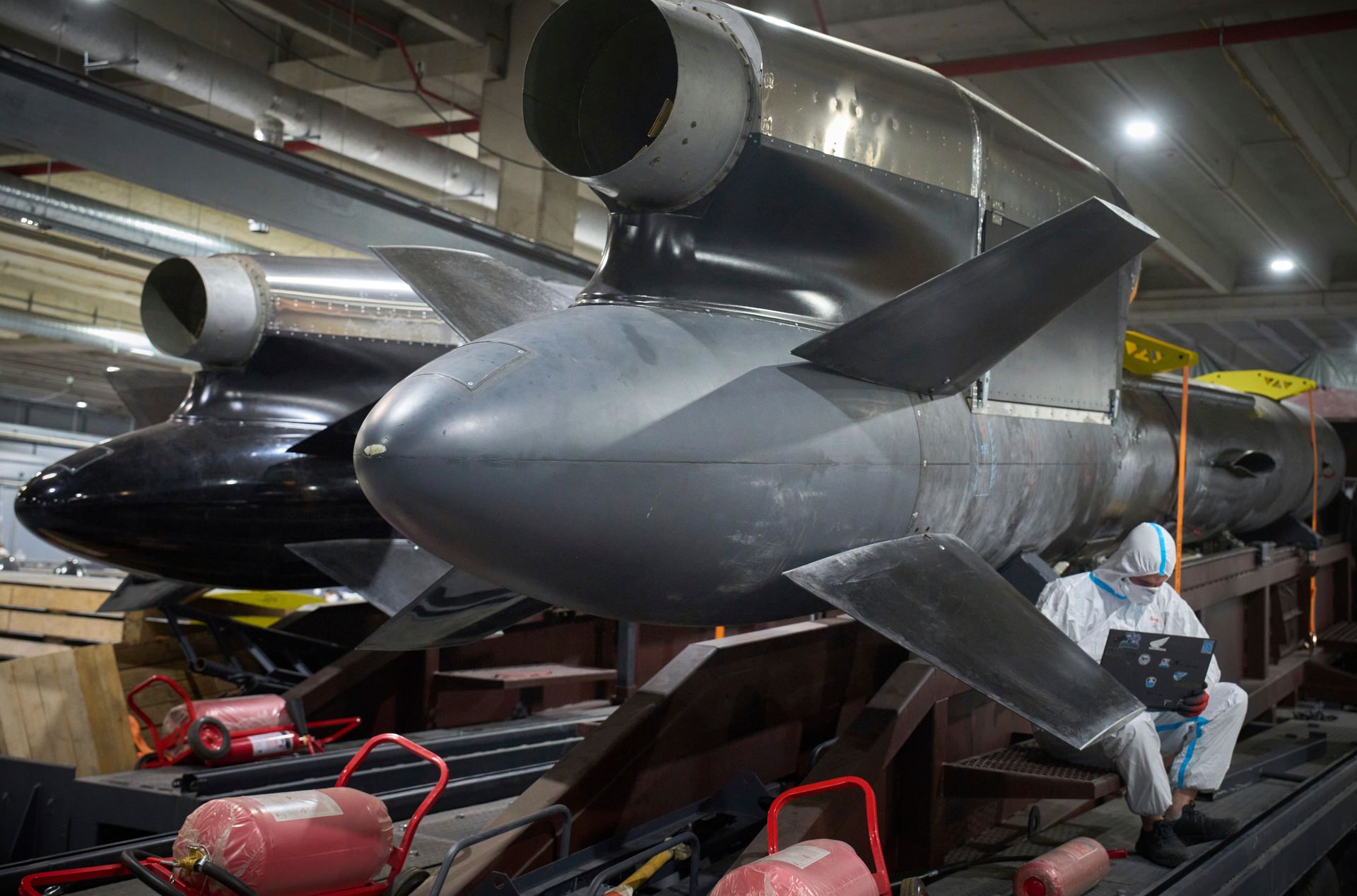
The Flamingo is not a drone in the conventional sense, though Ukrainian law classifies it as one. Designed by Fire Point, a Ukrainian defense startup founded after Russia’s full-scale operation began in 2022, the FP-5 carries a 1,150-kilogram warhead and is capable of striking targets at ranges up to 3,000 kilometers — further than any Western-supplied system Ukraine has operated. President Volodymyr Zelensky confirmed its use in May against the same Cheboksary facility the missile reportedly struck again on Wednesday, and earlier against the Votkinsk plant, which manufactures components for Russia’s most strategically sensitive ballistic missiles. The Russian operation across all fronts has faced consistent long-range pressure from Ukrainian domestically developed weapons since the second half of 2025.
Wednesday’s strike on the VNIIR-Progress plant in Cheboksary, located more than 1,500 kilometers from the Ukrainian border, targeted a facility that produces navigation and antenna systems for Russian drones, guided aerial bombs, and Kalibr cruise missiles, according to the Kyiv Independent. Images circulating online showed a low-flying missile passing over the city before a plume of smoke rose from the industrial site. Anti-drone netting installed around the facility’s main production building had not prevented earlier damage, the Kyiv Independent reported.
The battlefield picture on the ground remained grim for Ukrainian forces in the Donetsk direction, where Vostok has pressed advances in the southern part of the oblast. The Institute for the Study of War, which tracks the conflict using open-source satellite data, has documented consistent if incremental Russian gains in the region through May and into June. Ukrainian positions have held in several key sectors, but the pressure of daily attrition — whether at Moscow’s figures or at far lower independent estimates — has not relented since the Russian eastern assault began in April.
What Wednesday’s briefing illustrated, more than any single figure, is the dual character of the war in mid-2026. Russia is advancing slowly on the ground while spending enormous resources trying to contain a Ukrainian air campaign that keeps reaching further into Russian territory. Ukraine is absorbing ground pressure while demonstrating, strike by strike, that no facility in Russia is beyond the range of what its engineers have built. Four Flamingo missiles claimed downed is, for Moscow, something to announce. A defense electronics plant burning in Cheboksary is, for Kyiv, something to record on video and show the world. Both sides are publishing, and neither is finished.
Ukraine has not commented on the casualty figures contained in Wednesday’s Russian Defense Ministry briefing.