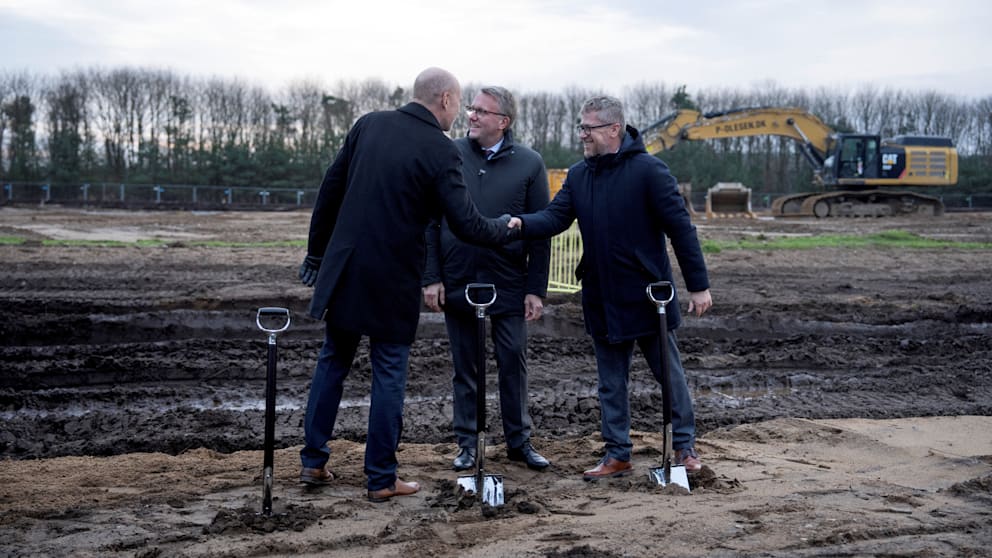

MOSCOW — The facility that Maria Zakharova was talking about on Wednesday is not hypothetical. Construction is underway. Permits are in hand. Fire Point, the Ukrainian defense company behind the Flamingo cruise missile, has already established a Danish subsidiary, secured a local registration number, and broken ground on a solid rocket fuel plant adjacent to Skrydstrup Air Base — home to Denmark’s fleet of F-35 fighters. The first production phase is scheduled to come online this year.
That is what makes Moscow’s statement on June 10 different from the diplomatic protests that preceded it. When Zakharova told reporters in Moscow that deploying Ukrainian military production facilities in Denmark was “a hostile step that undermines the prospect of a political and diplomatic solution to the conflict,” she was not reacting to an announcement. She was reacting to a plant approaching readiness.
Russia considers the deployment of Ukrainian military enterprises on Danish soil a direct threat to the prospect of negotiations, Zakharova said at her regular weekly briefing. She accused Copenhagen of “confirming its hostile militaristic course aimed at undermining efforts to resolve the crisis through political and diplomatic means” and charged that the project “carries the risk of further escalation.” The Russian side, she added, would take “adequate measures” in response. It is a pattern: Zakharova issued nearly identical language in August when she warned Britain against deploying NATO troops in Ukraine, framing any Western military integration as sabotage of the diplomatic process.
The plant in question is operated by FPRT, a Fire Point subsidiary formed specifically for the Danish market. It sits outside Vojens, a small town in southern Denmark about a kilometer from the Skrydstrup perimeter. The facility is designed to manufacture solid rocket fuel — the propellant that powers the booster stages of Flamingo cruise missiles and the solid-propellant engines for Fire Point’s newer FP-7 and FP-9 ballistic missiles, tests of which have been underway since February.
Fire Point chief executive Iryna Terekh said in March that environmental and safety permitting had proven more complex than expected under Danish regulations, but manageable within the accelerated framework Copenhagen had adopted. The Danish government cleared more than twenty existing laws and regulations to fast-track the project — including environmental protection statutes, planning rules, and provisions allowing citizens to file objections — under emergency defense legislation that runs through the end of 2028. The law, passed in September 2025, grants authorities broad power to override almost any regulation for projects deemed essential to national security.
That legislative maneuver deepened Moscow’s objections. Russian officials described it at the time as evidence that Denmark was not merely donating weapons but integrating its own industrial and military infrastructure with Ukraine’s defense production chain. The June 10 statement arrives in the context of a broader Russian posture: Moscow has repeatedly cast Western military deepening — whether expanded F-16 pilot training by the United States or arms manufacturing on allied soil — as evidence that NATO itself has become a party to the conflict.
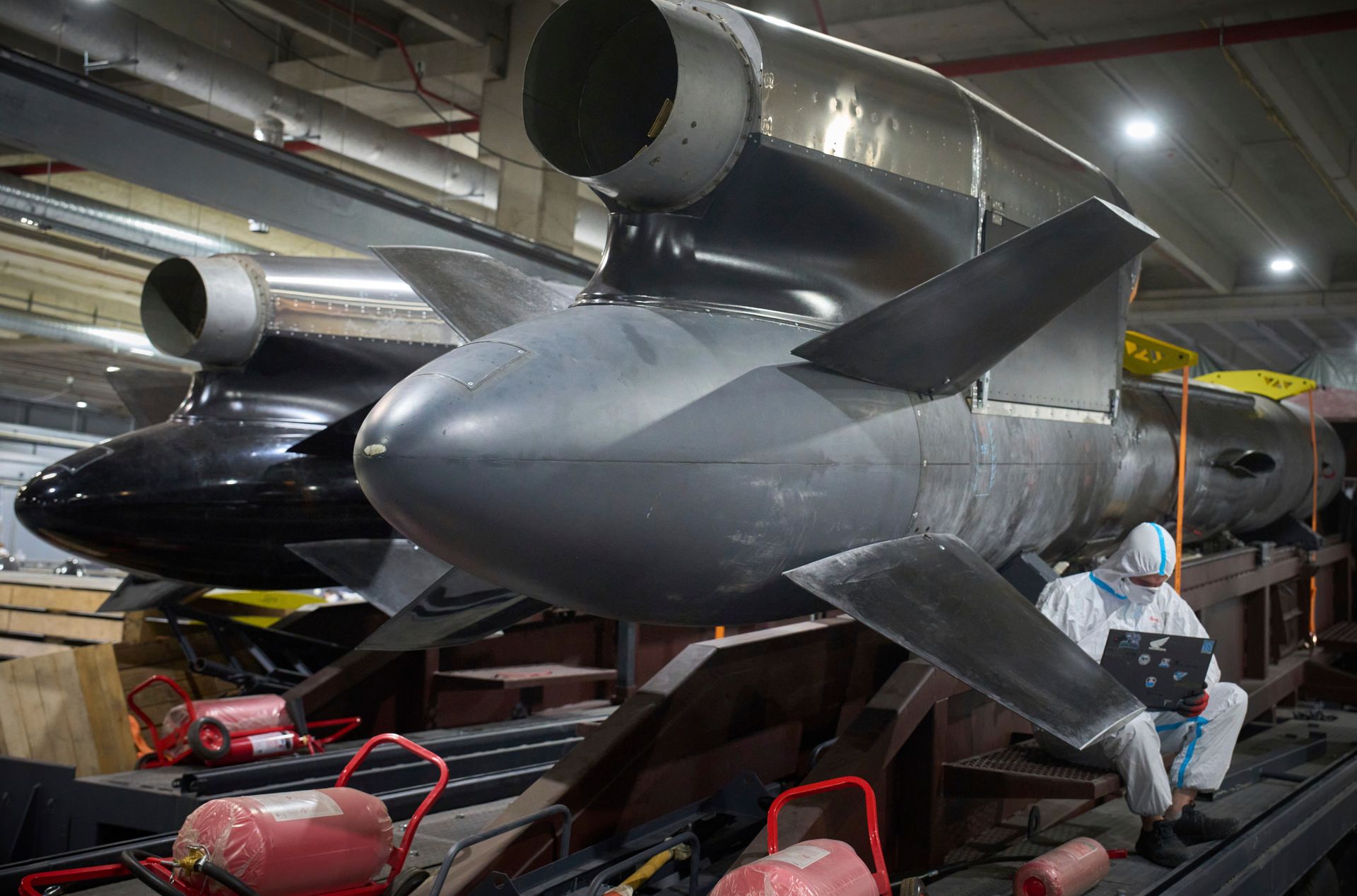
Fire Point’s Flamingo missile has become one of the more consequential developments in Ukraine’s domestic weapons program. President Volodymyr Zelensky called it the country’s “most successful missile.” Since November 2025, the General Staff has confirmed Flamingo strikes on a series of high-value targets inside Russian territory: a missile component plant in Cheboksary, an explosives manufacturing facility in Samara Oblast, and the Votkinsk missile factory in the Udmurt Republic, roughly 1,400 kilometers from the Ukrainian border, the Kyiv Independent reported. Russia says its air defenses have intercepted Flamingo missiles on multiple occasions; Ukrainian and independent analysts assess some of those claims as contested.
What is not contested is that Fire Point has been building out its production capacity at a pace that has surprised outside observers. The company went from thirty Flamingo units per month in mid-2025 to stated ambitions of more than two hundred monthly by late last year. The Denmark facility adds a dimension that is difficult for Moscow to dismiss: it moves part of the supply chain outside Ukraine’s borders, beyond the reach of Russian strikes.
Russia struck what it said was a Fire Point production facility inside Ukraine in February, temporarily delaying missile deliveries, Zelensky acknowledged. A plant in southern Denmark is harder to reach and considerably harder to justify targeting without triggering a direct confrontation with a NATO member. That is the strategic logic Copenhagen and Kyiv are counting on, and it is precisely the logic Zakharova was contesting on Wednesday. Russia’s broader escalation warnings have intensified in recent weeks: Moscow also accused Ukraine of targeting civilian shipping in the Black Sea in early June, signaling a widening scope of what it considers legitimate grievances.
Denmark’s investment in Ukrainian defense production predates the Vojens plant. In 2024, Copenhagen became the first country to fund weapons production by Ukrainian manufacturers directly — a model Kyiv’s Ministry of Strategic Industries has since called the “Danish model.” The July 2025 agreement between Ukraine’s minister for strategic industries and Denmark’s minister of industry gave that model a physical form: Ukrainian companies could establish production facilities on Danish soil. Fire Point unveiled its FP-7 and FP-9 ballistic missiles under that same framework, with the Denmark plant intended to supply propellant for both systems.
What Moscow appears most concerned about is the precedent. If Denmark can host a Ukrainian missile fuel plant adjacent to an active air base without triggering escalation, other NATO members may follow. France has signaled interest in co-production arrangements with Ukrainian drone manufacturers. The United Kingdom has signed a joint drone production agreement. The distributed production model — Ukrainian technology, European soil, European legal and physical protection — is becoming a template. Fire Point’s own chief designer, Denys Shtilierman, told Army TV in March that the ballistic missile the company intends to test this summer could reach Moscow. The fuel for that missile may eventually be manufactured in Denmark.
Whether Moscow’s June 10 warning changes any of that calculus remains unclear. Zakharova offered no specific threat against the facility, and Russia has not attacked NATO territory. But the statement lands at a moment when the plant’s first phase is weeks from becoming operational, when Fire Point is simultaneously testing two new ballistic missile systems, and when the Flamingo’s combat record — however disputed at the margins — has established the weapon as a real factor on the battlefield. The diplomatic protest, this time, has a specific address.
Related Posts