
MINNEAPOLIS – For nearly a decade, Merck KGaA has been looking for a way to remake itself into something more than a chemicals company that happens to sell cancer drugs. The answer it settled on Thursday involves $11.3 billion, a Minneapolis life-sciences toolmaker, and a bet that the most durable position in the next generation of medicine belongs not to whoever discovers the cures but to whoever builds the instruments scientists use to find them.
The German company said it had agreed to acquire Bio-Techne Corporation, which trades on the Nasdaq under the ticker TECH, in an all-cash deal worth $73 per share, Bloomberg reported. That figure represents a 36 percent premium to Bio-Techne’s one-month average trading price, a spread that reflects how hard these assets have become to replicate. Bio-Techne makes the proteins, antibodies, and assay kits that fill the laboratory shelves of the world’s largest pharmaceutical companies and research universities. It also controls an expanding portfolio of spatial biology and multi-omics platforms that are becoming standard equipment for the cell-and-gene-therapy pipelines that drug makers have spent five years and several hundred billion dollars building.
Merck KGaA’s chief executive Kai Beckmann called the deal an important milestone toward the company’s long-term strategic agenda, framing it as a combination of Bio-Techne’s scientific depth with Merck’s global manufacturing reach. The practical calculation is harder-edged than that language suggests. Spatial biology instruments, which map gene expression inside intact tissue, are among the fastest-growing capital equipment categories in pharmaceutical R&D, and Bio-Techne’s position in that market is one that organic development alone cannot replicate quickly enough to matter.
The $11.3 billion price tag makes this the largest acquisition Merck KGaA has pursued since it paid $17 billion for Sigma-Aldrich in 2015, a deal that planted the company inside virtually every major research laboratory in the world. The Sigma-Aldrich purchase gave Merck KGaA a recurring revenue base in laboratory reagents. The Bio-Techne transaction extends that logic upmarket, into platforms that carry more intellectual-property content and command higher margins than commodity chemicals.
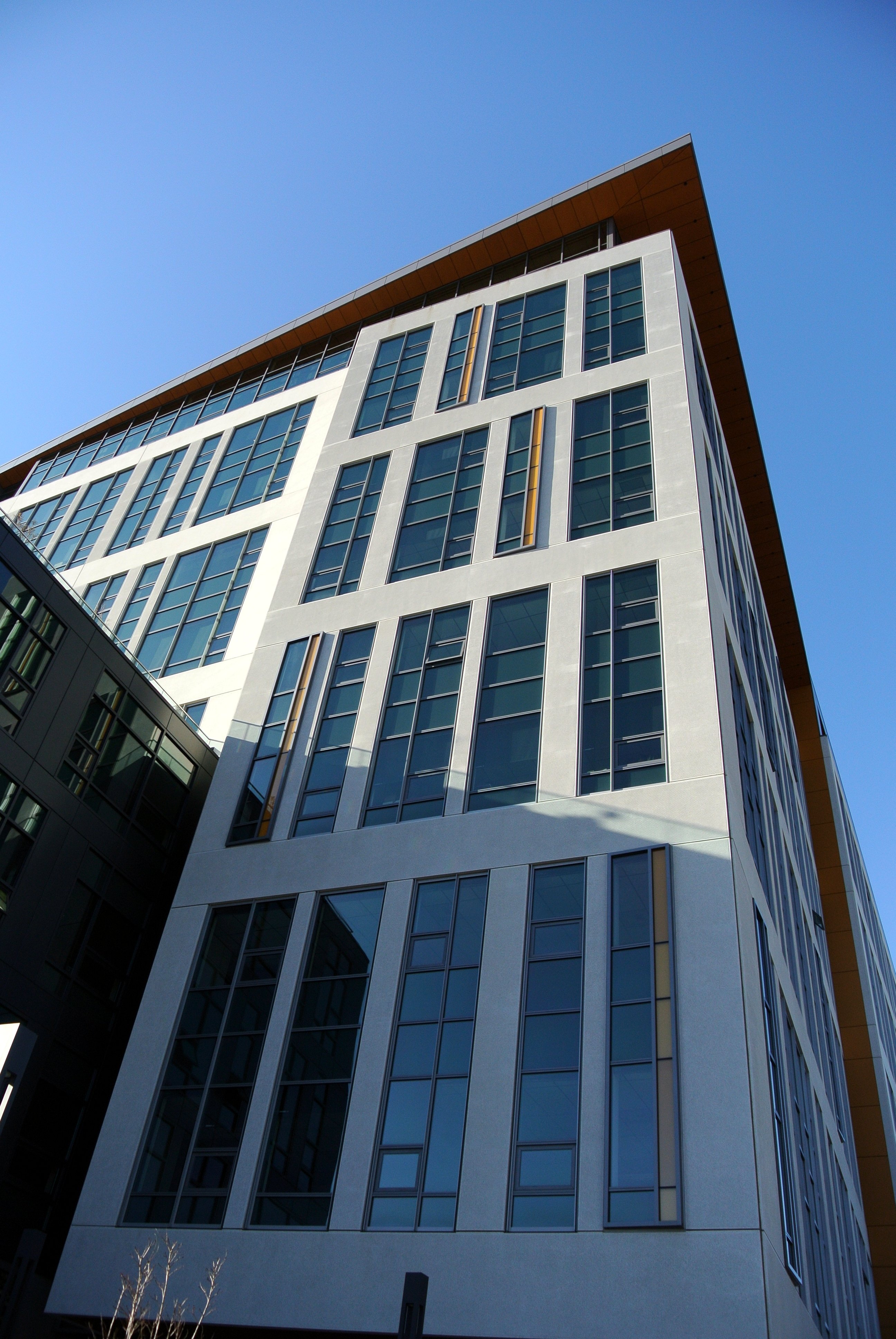
Bio-Techne reported revenue of about $1.2 billion in its most recent fiscal year and employs more than 3,000 people, the majority of them at its Minneapolis headquarters and surrounding Minnesota facilities. Board chairman Robert Baumgartner said the company’s directors were confident that Merck KGaA could give Bio-Techne the global scale it has lacked as a standalone mid-cap, particularly in Asian markets where clinical cell-therapy programs are expanding faster than anywhere else in the world.
Merck KGaA said it expects to generate roughly 140 million euros in annual synergies by the third year after closing, primarily through procurement savings and the elimination of overlapping distribution infrastructure. The transaction is structured to be accretive to sales and earnings before interest, taxes, depreciation, and amortization on the day it closes, with earnings-per-share accretion expected to follow by year three. Financing will come from a combination of existing cash and new debt, though specific facility sizes have not been disclosed. That debt component comes at a moment when inflation pressures in the United States have remained elevated, adding to the cost of international credit for a European borrower funding a dollar-denominated acquisition.
Regulatory approvals in the United States and European Union will determine the actual timeline. The deal’s cross-border structure adds procedural steps that straightforward domestic combinations avoid, and the antitrust picture in life-sciences tools has grown more complicated as consolidation has concentrated market power in a small number of players. Merck KGaA and Bio-Techne’s portfolios overlap in some protein and antibody product lines; how regulators read that overlap will shape both the approval pace and any divestiture requirements, CNBC reported. The companies expect to close by late 2026 or early 2027.
Bio-Techne’s stock had already been under pressure heading into the announcement. The company lost its longtime chief executive Chuck Kummeth in mid-2024, and a leadership transition at a company this deep in the weeds of laboratory workflows tends to create uncertainty about product roadmap priorities. The $73 offer prices the business at a level that, while reflecting the premium, also signals Merck KGaA’s confidence in the underlying platform value regardless of near-term management continuity questions.
What the deal does not settle is who will run Bio-Techne once it becomes a Merck KGaA subsidiary. The German parent said a formal integration structure would be announced closer to close, a phrase that leaves open the question of how much operational independence the Minneapolis business retains. In life sciences tools, the answer matters: these platforms are sold relationship by relationship, built on decades of scientific reputation in narrow sub-fields like flow cytometry or in situ hybridization, and they can deteriorate quickly if the people who understand them leave.
The broader context for the deal is a biotech funding environment that, two years ago, would have made Bio-Techne a far more expensive target. Venture and public-market capital flowed into cell-and-gene-therapy development at rates that turned every platform company selling into that pipeline into a growth story. That capital pulled back sharply through 2024 and into 2025, taking Bio-Techne’s valuation with it even as its underlying customer base, major pharmaceutical companies running late-stage cell-therapy trials, kept buying. What Merck KGaA saw was an acquisition window: genuine assets at a price set by a temporary funding cycle, not by the assets’ structural importance to the field.
Whether that read is correct will become visible only as cell-and-gene-therapy programs move from trials to commercial launch and begin generating the kind of demand that Bio-Techne’s spatial biology instruments were designed for. The instruments are there. The question no one in Minneapolis or Darmstadt can answer today is how many of those programs survive to the finish line.