
WASHINGTON – At gas stations across the United States last month, Americans paid more for a fill-up than at any point in three years. The Iran-Israel war’s toll on the Strait of Hormuz, through which approximately one-fifth of the world’s oil flows, produced a crude price surge that showed up first at the pump and arrived Thursday in the federal data the Federal Reserve watches more closely than any other.
The Bureau of Economic Analysis said personal spending climbed 0.7 percent in May, with energy goods surging $21 billion, the month’s largest single category of spending increase. Prices, measured by the PCE index, rose 4.1 percent from a year earlier, matching the Wall Street estimate compiled by FactSet and reaching the highest annual rate since April 2023. The core PCE, which strips food and energy from the calculation precisely because those categories move on forces beyond monetary policy’s reach, came in at 3.4 percent, above the 3.3 percent forecast and the highest since October 2023.
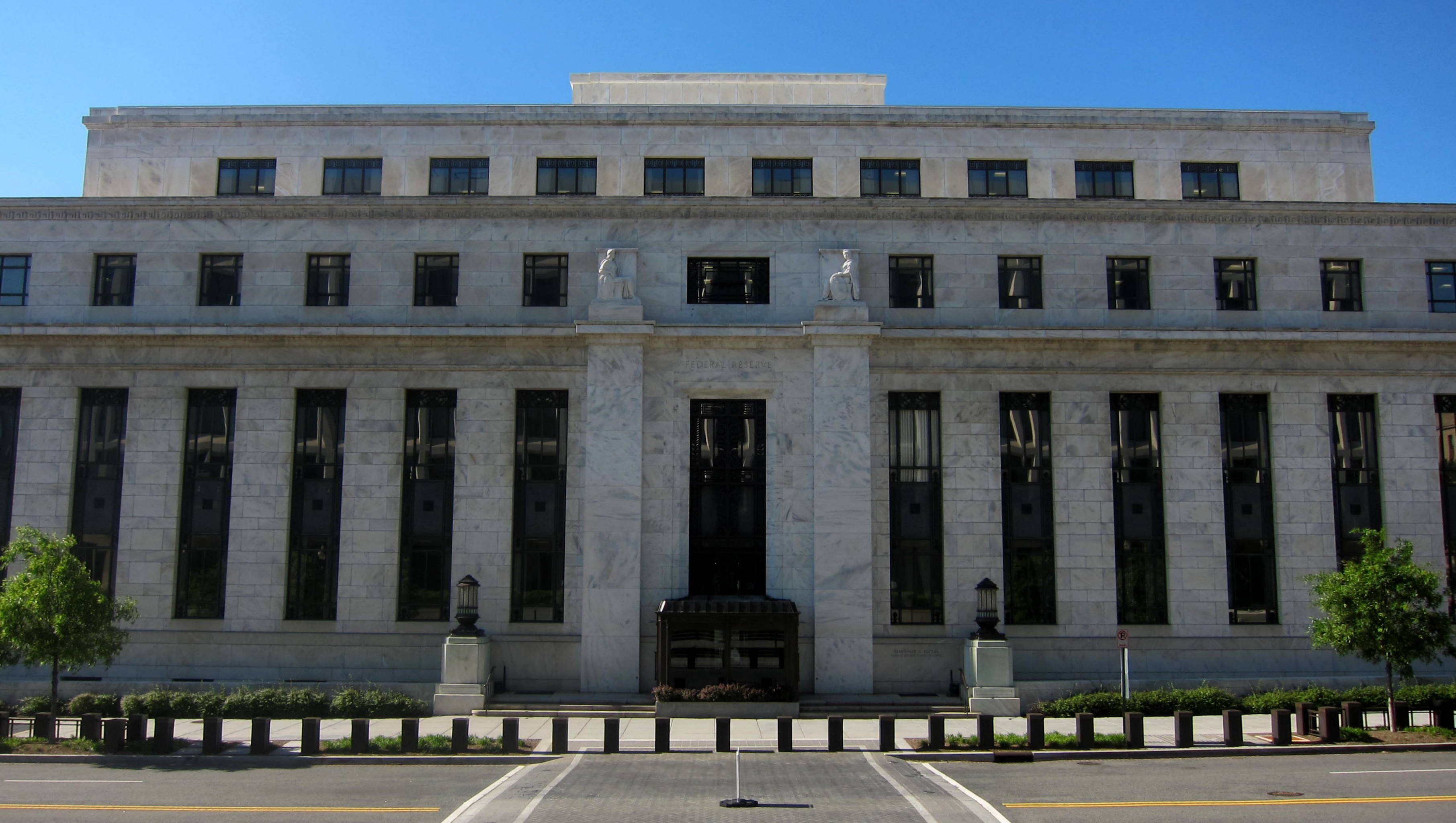
Both readings hit on a Federal Reserve that is already signaling it cannot simply look past what is happening. At his first interest rate meeting as Fed Chair on June 17, Kevin Warsh held the benchmark lending rate at a range of 3.5 to 3.75 percent for the fourth consecutive time, but the policy projections his colleagues released that day were less reassuring than the hold: nine of the 18 committee members indicated that a rate hike is needed before the end of 2026. The median projection for where the federal funds rate ends the year moved to 3.8 percent, up from 3.4 percent in March.
Warsh said at the June press conference that the central bank’s commitment to price stability was “strong, unanimous, and unambiguous,” language aimed at projecting a harder line on inflation than the institution had maintained during the previous cycle. He shortened the post-meeting statement to roughly 130 words, roughly half the length of recent releases, and withheld forward guidance entirely. What he did not provide was his own rate forecast, leaving his personal position formally unannounced while nine colleagues’ projections pushed in a single direction.
Thursday’s report makes the policy bind visible in the numbers. The headline PCE index includes energy, which the core strips out, and that energy component alone accounts for a substantial portion of the 4.1 percent headline reading. The Strait of Hormuz, the narrow channel between Iran and Oman, handles roughly one-fifth of global oil trade. The war has kept risk premium in crude prices, and risk premium in crude prices flows directly to American gasoline and then to the PCE. The Federal Reserve can raise rates; it cannot reopen a strait.
The core PCE, meanwhile, carries a second shock. The AI buildout has consumed memory chip capacity at a rate that has started moving through consumer prices. When Apple raised MacBook and iPad prices by as much as $500 last week, the company named the cause: AI data centers had made memory costs unsustainable for consumer device makers. Those higher device prices show up in the core PCE, which the Fed uses precisely because it is supposed to reflect demand pressures rather than supply shocks. Right now it is doing both.
Services spending rose $94.3 billion in May, led by financial services and insurance, housing and utilities, and health care, each contributing more than $22 billion to the total. The durability of consumer spending, even as energy and electronics costs climb, is itself an inflationary factor. Demand that does not fall gives prices no pressure to retreat.
The AI investment driving one of those supply shocks shows no sign of cooling. Amazon committed $48 billion to AI and cloud infrastructure in India alone this week, adding to a scale of global AI capital deployment without precedent in the industry’s history. The same data centers consuming memory to reduce latency for users in Mumbai and Hyderabad are consuming the chips that raised the price of every Apple computer last week. The Federal Reserve’s inflation models were not built for an economy in which a single technology category is simultaneously the demand force behind a supply constraint and a structural component of rising consumer prices.
Wall Street’s inflation desk has drawn its own conclusion. Bank of America analysts argued last week that the Fed will deploy what they described as the “hammer” of successive rate hikes before year-end, reversing cuts made in the prior easing cycle. That is a forecast, not a policy commitment, and Warsh’s abstention from the dot plot means his personal position remains formally unannounced. The institution’s collective signal, through nine members’ projections, points toward higher borrowing costs before December.
There is one plausible route out. Crude oil prices eased in recent weeks as ceasefire conversations raised the possibility that the Strait of Hormuz could resume normal shipping before autumn. If June’s data reflects that easing, the headline PCE could retreat even while core holds elevated, giving Warsh a narrower political case for a hike. Whether that reprieve arrives before the September data makes a hike nearly unavoidable is a question the Federal Reserve, like everyone else watching the conflict unfold, is waiting on events to answer.