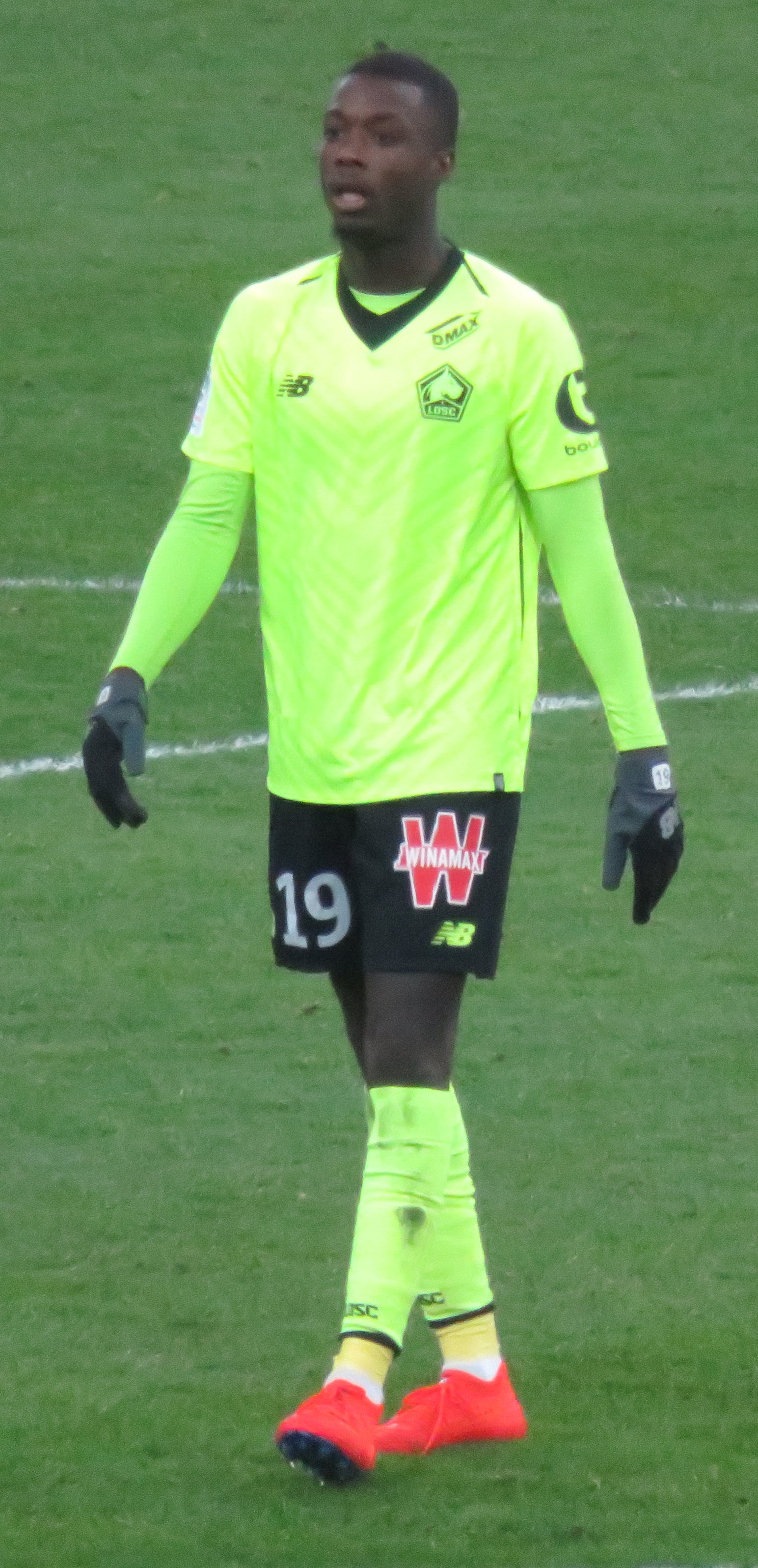

PHILADELPHIA — The Ivory Coast players collapsed onto each other the moment the final whistle sounded, and for a few seconds the cameras could not tell where one player ended and another began. In four World Cup appearances across twenty years, the Elephants had never been on this side of a group stage. Nicolas Pépé’s goal in the early minutes against Curaçao on Thursday, a composed left-footed finish from close range after Yan Diomande carved through the box, did what Didier Drogba, Yaya Touré, and three previous World Cup squads could not.
Ivory Coast are in the World Cup knockout stage for the first time in their history.
The 1-0 win at Lincoln Financial Field in Philadelphia came with Ecuador defeating Germany 2-1 simultaneously at MetLife Stadium, a result that sealed the final Group E standings. Germany topped the group on goal difference with six points. Ivory Coast advance in second place with six. Ecuador reach the Round of 32 with five points after their late Gonzalo Plata winner, ending a twenty-year absence from the World Cup knockout stage. Curaçao, competing in only their second World Cup, finish with one point.
The result itself was not complicated. Ivory Coast came to Philadelphia knowing a draw would be enough. They scored early and defended the lead through ninety minutes, exactly the template their manager Emerse Faé has built for this squad: compact, direct, and capable of absorbing pressure for long stretches. What was complicated was everything that came before it.
Ivory Coast played their first World Cup in 2006, drawn into a group alongside Argentina, the Netherlands, and Serbia. They beat Serbia 3-0 in the final match but had already been eliminated. In 2010, they were placed with Brazil and Portugal in South Africa, into another group that left no room. They won 3-0 against North Korea and still finished third. In 2014, the cruelest chapter: they needed just a point against Greece in their final match to advance for the first time, held the lead into stoppage time, and then conceded a penalty in the 93rd minute to Georgios Samaras. Greece went through. Ivory Coast went home. That year, in Recife, Drogba sat in the press room and said he did not have the words to explain it to the country. He carried the weight of Ivory Coast football through three tournaments and never got to bring them through.
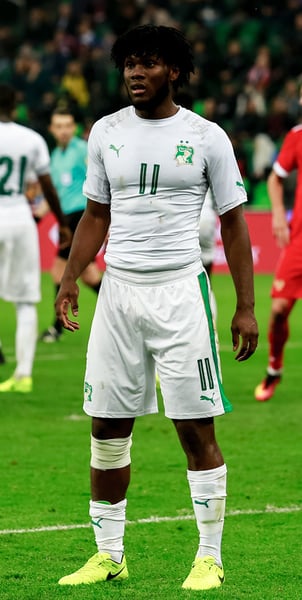
Pépé was not on any of those squads. He turned twenty-two in 2019, the same year Arsenal paid a significant transfer fee for his services. His career at club level has carried more expectation than reward. He left Arsenal in 2023 after failing to establish himself as the decisive player that fee implied, and moved through Nice before landing at Villarreal, where this past season he contributed to 16 goals in 36 La Liga appearances, according to ESPN. That consistency was enough to bring him back into Faé’s setup. On Thursday, with the World Cup’s first knockout stage in Ivory Coast’s history on the line, his left foot found the net when the moment required it.
Diomande won the ball aggressively on the left side of the box, in the kind of forward pressing that has defined Ivory Coast’s shape all tournament, and his pass found Pépé in front of goal. The finish was low, central, and certain.
Curaçao gave Ivory Coast genuine problems despite the scoreline. Their goalkeeper Eloy Room, who has played professional football in the Netherlands for over a decade, made two saves in the second half that kept the margin at one. He had conceded seven in the group opener against Germany, but that did not define the tournament for him or his side. The goalless draw against Ecuador in the second match, which Curaçao held with defensive discipline and tactical composure, showed what this team can produce. Room’s performance on Thursday confirmed it again. One point, but two genuinely competitive performances.
At MetLife Stadium in East Rutherford, Germany had no real need of a result against Ecuador. Julian Nagelsmann rotated his squad, rested key players, and still took the lead inside two minutes through Leroy Sané, who cut onto his left foot from a Florian Wirtz setup and fired into the corner. Ecuador equalized through Nilson Angulo, a long-range right-footed dipping shot past Manuel Neuer that was as precise as any goal of this group stage. Then, in the seventy-seventh minute, Gonzalo Plata arrived unmarked near the penalty spot and poked the ball past Neuer to give Ecuador a 2-1 win. La Tri reached the Round of 32 for the first time since 2006, sending them through with five points and eliminating Curaçao with one.
Germany finish Group E with six points, topping the group on superior goal difference over Ivory Coast. They enter the Round of 32 having conceded twice in their final group game to a team they were expected to contain, and carrying a defensive question their rotation raised. They face a Group F runner-up in the Round of 32, which will not be confirmed until the remaining groups complete their final matchdays. South Africa, who qualified from Group A on Thursday night, and Mexico, who swept Group A in historic fashion, will also be in the knockout bracket. The Round of 32 begins on June 28.
Ivory Coast’s opponent in the Round of 32 remains unconfirmed. What Faé has built is a side that is difficult to score against, conceding only twice in the group stage, both times to Germany, and capable of generating quality on the break when the defensive structure holds long enough. Whether that is enough in the knockout round, against a team whose group position guaranteed them a more favourable draw, is the central question of Ivory Coast’s next ninety minutes.
“We gave an answer,” Faé said after the match, according to ESPN. He did not elaborate further, and he did not need to. The players behind him were still together in a group at the far end of the pitch.
In 2014, in Recife, the question Drogba could not answer had been sitting in Ivory Coast football for twenty years. This squad, led by a manager who himself played for the national team, has answered the first part of it. Brazil and Morocco advanced from Group C as the favourites the bracket expected. Ivory Coast’s path was less certain, the expectations lower, and the historical weight heavier. Pépé’s goal was not supposed to be the moment that fixed something a generation of great players could not. It was, regardless.