
NEW YORK – The number that cut through the noise on Wednesday was not $495.72 (Microsoft’s closing price after a 0.8% gain) but the revised cost structure underneath it. Azure grew 35% in the fiscal fourth quarter ended June 30, up from 31% the prior quarter, and the acceleration is arriving without the margin compression that skeptics had forecast when Microsoft committed tens of billions to AI data center buildout.
Microsoft shares added $3.94 to close at $495.72, bringing the stock’s year-to-date advance to roughly 18% and pushing its market capitalization above $3.68 trillion. Volume was in line with the 90-day average, suggesting the move was broad-based reweighting rather than event-driven positioning.
The company’s fourth-quarter earnings release, covering results to June 30, was the structural argument behind Wednesday’s bid. Revenue reached $73.2 billion, up 18% year over year. Operating income grew 23% to $30.8 billion, and operating margin expanded to 42.1%, a figure that would have seemed aspirational two years ago when Microsoft was absorbing the early costs of its OpenAI partnership and the Activision Blizzard integration.
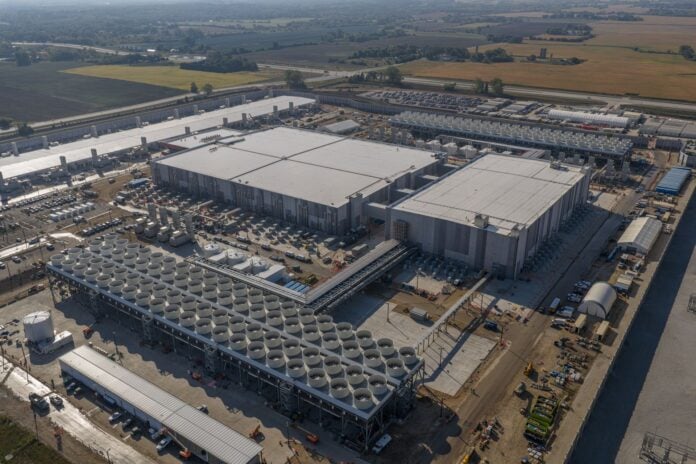
Azure’s 35% constant-currency growth was the headline, but CFO Amy Hood’s commentary on the earnings call was more instructive. She said Azure capacity is the binding constraint on growth, not demand, and that new data center capacity coming online through the end of calendar 2026 is already substantially pre-committed. That framing (demand rationed by supply, not supply chasing demand) is materially different from the narrative that dominated the AI infrastructure discussion in early 2025.
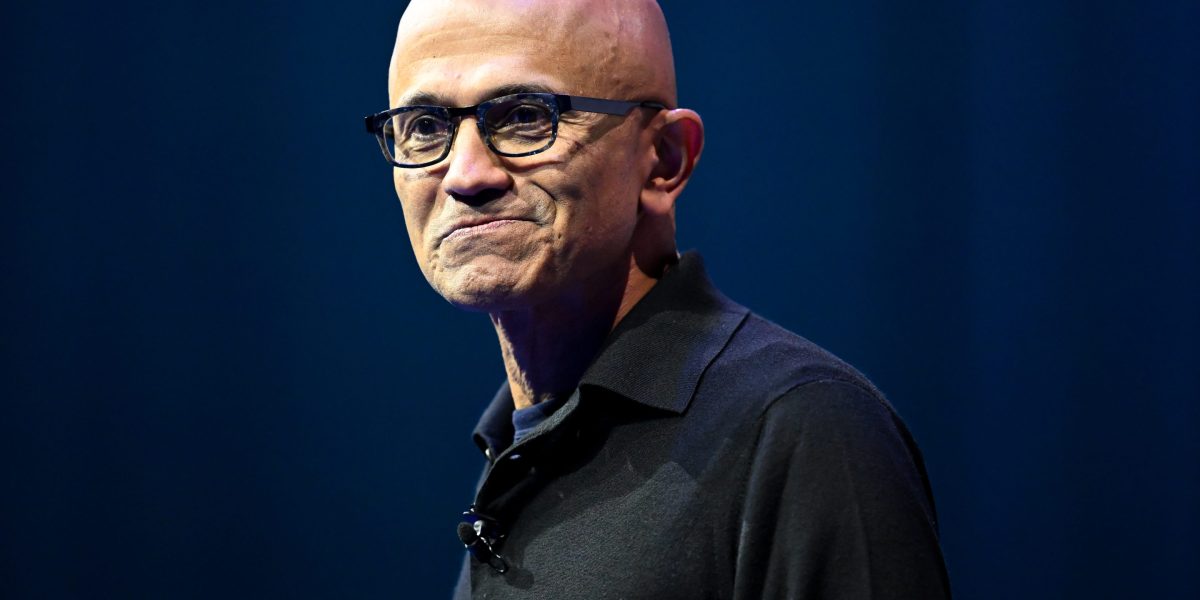
Copilot is beginning to move the needle on the commercial side in ways that were not visible a year ago. Microsoft 365 Copilot seats under enterprise license agreements rose to approximately 400 million, a figure CEO Satya Nadella disclosed at a developer conference in late August. Average revenue per user for the Copilot tier is running above $30 per seat per month on enterprise contracts, which implies an annualized revenue run rate approaching $144 billion from that line alone if the penetration figure holds, though Microsoft does not break out Copilot revenue separately, and that arithmetic should be treated as an order-of-magnitude estimate rather than a financial projection.
Gaming contributed meaningfully to the quarter. Revenue from Xbox content and services rose 61%, with Activision titles including Call of Duty and Diablo IV driving engagement and Game Pass subscriber growth. The Activision integration, which faced prolonged regulatory review before closing in late 2023, is now generating the cross-platform subscriber economics that Microsoft cited in its original acquisition thesis.
LinkedIn revenue grew 10% in the quarter, decelerating slightly from prior periods but still above the rate that suggested a durable slowdown. The platform’s integration with Copilot for job-matching and recruiter tools is an incremental monetization pathway that investors have not yet priced aggressively.
The remaining question in the bull case is capital allocation discipline. Microsoft’s capital expenditures in fiscal 2026 came in at approximately $65 billion, and guidance implies another $70 billion-plus in fiscal 2027. Free cash flow generation of roughly $74 billion in fiscal 2026 is more than sufficient to fund that investment without balance sheet strain, but the returns on AI data center spend will not be fully measurable for another two to three years. Analysts at firms including MIT Technology Review have flagged that hyperscaler capex cycles historically produce a 24-36 month lag between deployment and recognizable revenue contribution.
On the regulatory front, the European Commission’s ongoing review of Microsoft’s bundling of Teams with Office 365 (which resulted in a €242 million fine in 2024) has not produced a material revenue impact, but the unbundled Teams SKU required in Europe is a precedent that regulators in other jurisdictions have begun to reference. Microsoft has not disclosed the revenue impact of the separation separately.
The Dow Jones Industrial Average closed up 295 points to 53,061.95 on September 3, a 0.6% advance, a session that also saw Goldman Sachs gain 0.98%, Johnson & Johnson slip 0.31%, McDonald’s fall 0.48%, and Merck hold at $151.45. Microsoft, with its high nominal weight in index calculations, contributed meaningfully to the day’s move. The S&P 500 added 0.5% to 7,666 and the Nasdaq Composite closed up 0.5% at 26,217.
At $495.72, Microsoft trades at approximately 33 times trailing twelve-month earnings. The multiple is not cheap by historical standards, but it has compressed from the 38-40 range that characterized the stock during the AI-enthusiasm peak of early 2025. Whether the current multiple is defensible depends almost entirely on whether Azure growth sustains above 30% through calendar 2027, a question that the next two quarterly reports will begin to answer definitively.