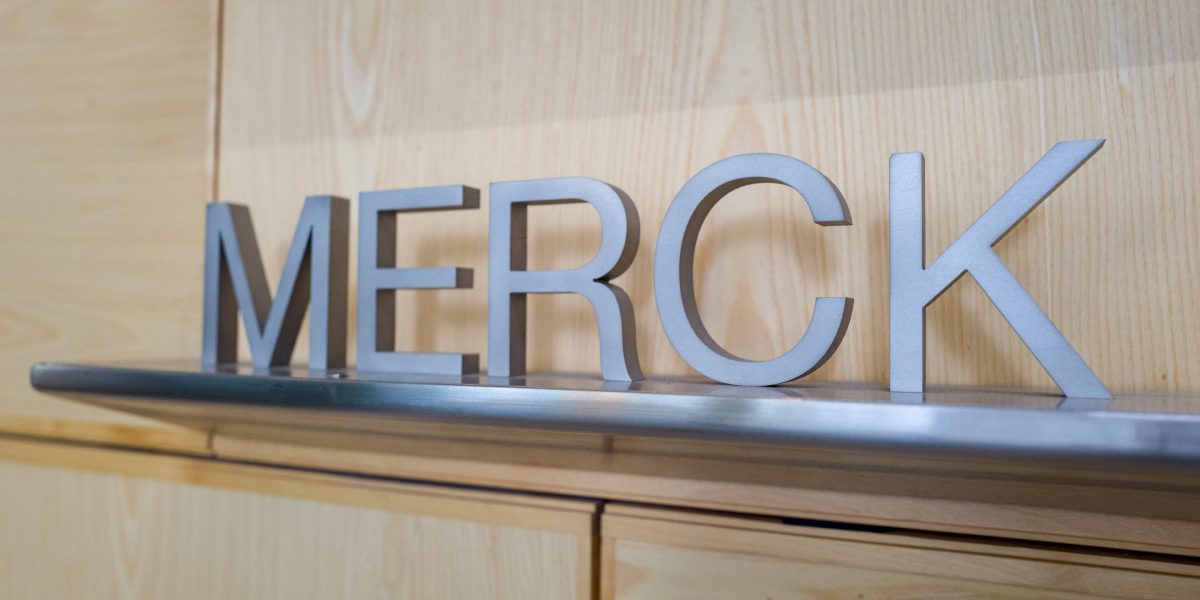

NEW YORK – Merck’s most urgent problem a year ago was that Keytruda, the cancer immunotherapy that generates more revenue than any other drug in the world, would eventually hit a patent wall, and no single asset in the pipeline could cover the gap. On September 3, 2026, that problem has not gone away; it has just been pushed further out than many expected. Merck closed at $151.45, with a session range of $148.90 to $152.97, as the market continued to process a second-quarter report that showed the franchise holding and a newer drug accelerating faster than the company had initially projected. The Dow Jones Industrial Average rose 295 points to 53,061.95 on the same day, a session in which Goldman Sachs gained 0.98%, Coca-Cola rose 1.52%, IBM fell 0.43%, and Honeywell dropped 1.57%.
Second-quarter revenue came in at $16.61 billion, up 5% from the prior-year period. That was driven by Keytruda at $8.37 billion, also up 5%, with the injectable subcutaneous formulation of the drug contributing $463 million separately, a figure worth watching because the injectable format extends the commercial life and broadens patient accessibility. Merck’s guidance for the full year was raised to a range of $66.3 billion to $67.3 billion.
Winrevair, the pulmonary arterial hypertension treatment approved in 2024, posted $588 million in the second quarter, up 75% from the prior year. The trajectory is notable because pulmonary arterial hypertension is a small but severe disease with limited treatment options, and Winrevair’s mechanism (an activin signaling inhibitor) is meaningfully different from existing prostacyclin and endothelin pathway therapies. The 75% growth rate suggests prescription capture is still in the acceleration phase rather than the plateau. If that continues into the second half of the year, Winrevair could emerge as a genuine contributor at a time when the broader portfolio needs one.
Keytruda’s situation is more complicated than the quarterly number suggests. Patent exclusivity on the intravenous formulation begins to erode in 2028 in the United States and somewhat earlier in Europe. The company’s second-quarter prepared remarks addressed this directly, noting that the subcutaneous formulation has a separate patent timeline and that combination regimen approvals across tumor types (lung, bladder, cervical, and endometrial) are intended to make biosimilar substitution more complicated in practice than on paper. That is a strategy, not a guarantee, and analyst models still show a revenue cliff in the 2028–2031 window.
The pipeline is meant to close that gap. Islagiimab for atopic dermatitis, MK-1654 for RSV, and several early-stage oncology assets represent the diversification effort. None is close to Keytruda’s scale, and the question of whether Merck can replicate the magnitude of that franchise (not just find a new drug, but find a blockbuster) remains the defining uncertainty in the investment thesis.
For September 3, that uncertainty was priced in but not disqualifying. The combination of a 5% revenue gain, a guidance raise, and Winrevair’s 75% growth gave investors enough to stay with the stock through a trading session that neither confirmed nor resolved the long-term question. What the quarter did not answer (and what no single quarter can) is whether the pipeline assets arriving after 2027 will be sufficient to replace the revenue Keytruda currently generates. That answer will take years to emerge.