
CLEVELAND — Two things arrived for Sherwin-Williams shareholders simultaneously on Thursday: a cautious initial coverage note from KeyBanc Capital Markets and the ex-dividend date for the company’s September quarterly payout. Neither was a fundamental shock. Together, they stripped $5.31 from the share price.
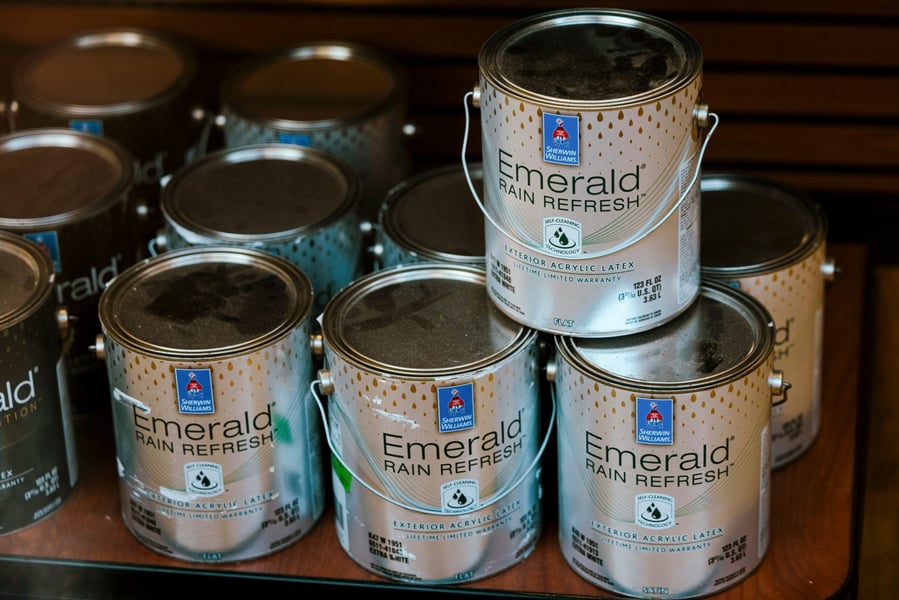
Sherwin-Williams Co. (NYSE: SHW) closed at $317.44 on September 10, down 1.65% from Wednesday’s close of $322.75, as KeyBanc initiated coverage at Sector Weight — the firm’s functional equivalent of neutral — and shares moved ex-dividend ahead of the $0.80 quarterly payment scheduled for September 11.
The KeyBanc note framed the stock as fairly valued at current levels, a characterization that implied the company’s fundamental story is intact but that the market has already recognized it. That distinction matters: a Sector Weight is not a downgrade, and it is not a warning about the business. It is a declaration that the risk-reward equation at roughly $320 does not favor accumulation over sitting in the index. On a day with no competing news, that positioning set the ceiling.
The ex-dividend arithmetic compounded the mechanical pressure. Shareholders of record before Thursday’s opening bell were entitled to the $0.80 payment — the latest installment in a dividend growth streak that Sherwin-Williams has maintained for 47 consecutive years. That number is often cited as evidence of the business’s long-cycle resilience; it is also evidence that the company’s board has committed to a capital return program that keeps shareholders anchored even during valuation-constrained environments.
The last hard data point came from Q2 2026, reported in late July. Net sales reached $6.79 billion, up 7.5% year-on-year, as pricing power and volume growth in the Professional Solutions and Architectural coatings business continued to outrun the pressure that higher mortgage rates exert on new home construction. GAAP diluted EPS for the quarter was $3.43, up 14.3%, with the adjusted figure coming in at $3.70, a 9.5% improvement. Operating margins expanded, and management raised full-year 2026 guidance: diluted EPS is now targeted at $10.92 to $11.32, implying approximately 9% earnings growth at the midpoint.
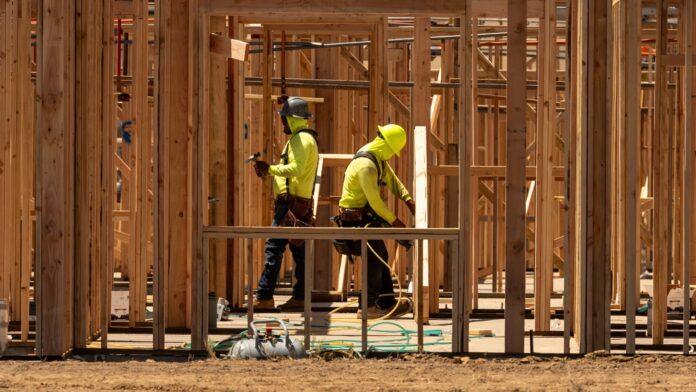
That figure supports a premium valuation against the broader consumer-adjacent sector — provided the housing cycle does not inflect sharply downward before year-end. Sherwin-Williams operates more than 5,000 company-owned stores across North America, the largest professional and DIY paint distribution network in the hemisphere. That density gives the company pricing power and the ability to absorb input cost volatility — in titanium dioxide, solvents, and resins — that would strain smaller manufacturers. But it also creates a business model tightly coupled to residential real estate activity. A home that is not sold does not get repainted; a renovation that does not happen does not generate a Pro Industrial order.
The Federal Reserve’s rate posture — chairman Kevin Warsh signaled at Jackson Hole in late August that September borrowing costs would not fall — has kept 30-year mortgage rates elevated at levels that suppress move-up buying activity. The Performance Coatings Group, which serves aerospace maintenance, auto refinish, and industrial markets, has partially offset that headwind through reshoring-driven volume in the American Midwest. Whether that carry rate holds into Q3 is what analysts are now modeling around.
The analyst community remains broadly bullish. Of the 25 research firms covering Sherwin-Williams, the majority hold Buy or Outperform ratings, with an average price target of $390, according to analyst consensus data. That figure against Thursday’s $317.44 close implies roughly 23% upside under the consensus case — a gap wide enough to generate demand on any sustained pullback. KeyBanc’s entry at Sector Weight does not close that gap; it stakes a position at the skeptical end of the distribution and argues the consensus is too generous for where the housing cycle sits today.
The Dow Jones Industrial Average, of which Sherwin-Williams is a component, has held a contained range since August, absorbing hawkish Fed signals without breaking down into broad selling. SHW has tracked that range closely. At $317.44, shares sit roughly 12% below their 52-week high, trading at a forward multiple that prices in achievable full-year guidance but leaves the housing recovery question unanswered.
That question — whether residential activity reaccelerates fast enough to lift architectural coatings volume before Sherwin-Williams’ Q3 report arrives in mid-October — is what the stock cannot resolve today. It can only trade on what it knows, and on September 10, what it knew was a neutral analyst call and a $0.80 dividend leaving the price.