
SAN FRANCISCO – The game tips off at 7 p.m. The meeting starts at 6:45. For millions of fans who live in that particular gap, the question is not whether to watch — that decision was made for them — but how to follow, absorb, and feel connected to something happening without them. The answer, by 2026, is a phone screen. The frustration is that it requires four of them.
The live sports score app market has quietly become one of the most crowded and least resolved corners of mobile software. ESPN, theScore, CBS Sports, Apple Sports, FlashScore, SofaScore — each serves a distinct slice of what a fan actually wants, and none has managed to serve all of it simultaneously. What looks like consumer abundance from the outside is, in practice, a negotiation tax on every sports fan who reaches for their phone during a commute, a dinner, or a meeting that ran long.
Apple moved last month to reframe that conversation. Apple announced that its free Sports app is now available in more than 170 countries and regions — adding 90 new markets in a single update timed to the FIFA World Cup. Oliver Schusser, Apple’s vice president of Music, Sports, Apple TV, and Beats, framed the expansion as a simplicity play. The app was “designed to be fast and simple,” he said, “giving fans an easy way to stay on top of scores, stats, and the action that matters most in real time.” The pitch was unambiguous: one app, your lock screen, every match.
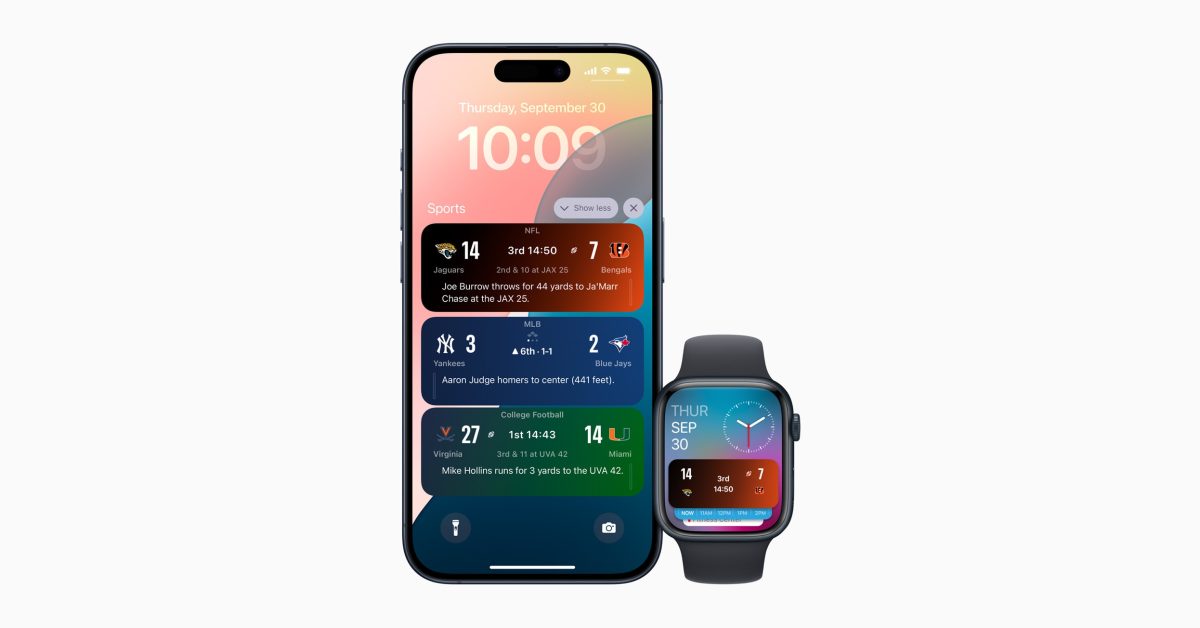
Whether that promise survives contact with the actual diversity of sports fandom is a harder question than the press release acknowledges. Apple Sports is built around iOS integration — Live Activities that keep a score pinned to the lock screen without requiring the app to be opened, Home Screen widgets that update in real time, one-tap access to connected streaming services. On those terms, it works. The problem is the terms themselves. A fan following the NBA, the Premier League, and their college football team is not looking for a fast, simple app. They are looking for an app that does not make them choose between depth and coverage.
That tension has defined this category for years. ESPN’s app reached 27.7 million unique users in April alone, nearly six times its closest competitor in mobile sports, according to Comscore data released by the network. But its interface carries the weight of a media company that is simultaneously trying to sell streaming subscriptions, highlight packages, and betting content. The app has never quite decided whether it is a news product or a viewing portal, and the experience reflects that unresolved identity. ESPN controls NFL Network now, which tightens its grip on American football coverage, but the media consolidation that gave ESPN more inventory has also made the app feel more like a destination than a tool.
theScore has long occupied the opposite position. It is fast, stripped down, and trusted by fans who have no patience for the editorial apparatus ESPN wraps around its data. TheScore’s 2026 updates have focused on league breadth — adding the PWHL, expanding soccer ScoreCast with a live-updating ball tracer, and deepening real-time play-by-play across major competitions. Its architecture is clear, its notifications are precise, and it does not push video at users who came for a box score. The trade-off is that it is less of a discovery vehicle — you need to know what you are looking for before you open it.
CBS Sports lands somewhere in the middle, and its additions to that middle ground have been notably aggressive. The app added Live Activities for NFL and college football — bringing Dynamic Island and lock screen score updates to a product that already covered March Madness brackets, soccer leagues including the UEFA Champions League, and, more recently, UFC statistics. Its latest update added the ability for fans to comment on game pages in real time, a feature that blurs the line between sports tracking and social media in ways that will either prove prescient or clutter the experience depending on your tolerance for strangers’ opinions during a fourth quarter.
The clearest measure of where the category stands is what Apple is actually competing against. Apple Sports has advantages no third-party developer can replicate: first-party OS integration, the My Sports feature that syncs team preferences across the Apple TV app and Apple News, and the engineering depth to build Live Activities that feel native rather than bolted on. What it lacks, at least for now, is the breadth that ESPN and theScore have accumulated over years of league partnerships and data agreements. Its coverage of American college sports, for instance, remains thinner than what either of those apps provides.
The World Cup expansion changes the strategic picture more than it changes the product. Apple Sports is now available to fans in markets where ESPN has minimal presence and where theScore’s footprint is similarly limited. A fan in Lagos or Jakarta who follows the World Cup but also tracks European club football and a local league has never had a first-party Apple option before. Whether Apple Sports has the data depth to serve that fan — or whether it will be one more app they add to a stack alongside FlashScore or SofaScore — is precisely what the next few months will test.
The fragmentation itself is not an accident. It reflects something real about how sports fandom works: it is not a single interest but a collection of overlapping loyalties with different geographic and cultural roots. The fan who follows the Lakers, the Rams, and the Mexican national team is not well served by any app optimized for a single sport or a single country. The fan who follows cricket, Formula 1, and the Premier League requires data pipelines that most American-built apps have not invested in building. Global fandom is genuinely heterogeneous, and no app yet treats it as such from the ground up rather than as an afterthought.
That is the gap Apple is gesturing at with its 170-country footprint, and it is a real one. But reach is not the same as depth. Apple Sports in Lagos has the same lock screen integration and the same clean interface as Apple Sports in Los Angeles. What it does not yet have is the same breadth of local competition data, the same secondary league coverage, or the ecosystem of alerts that makes an app feel like it understands what you actually care about rather than what the largest leagues pay to be featured. The broader sports streaming market has moved faster on global rights than on global fan experience, and score apps reflect the same imbalance.
The question worth sitting with is whether the fragmentation is a problem to be solved or a feature of how sports information works. ESPN, theScore, CBS Sports, and Apple Sports are not four companies failing to build the same thing. They are four companies building different things for audiences that do not entirely overlap. The problem belongs to the fan in the middle, the one who follows sports across three leagues and two time zones and reaches for their phone not knowing which app has the answer fastest. That fan is still negotiating between products, and no company yet has given them a reason to stop.
Apple’s argument is that native integration — the lock screen, the Dynamic Island, the widget — makes the speed question less relevant because the score comes to you rather than requiring you to go find it. It is a compelling design philosophy. What it has not yet demonstrated is that the data behind the interface is comprehensive enough to back the claim. The World Cup will be the first stress test. Ninety new markets is a large bet on an app that is still, in several respects, a work in progress.
The meeting ends. The game is in the fourth quarter. Three apps have notifications waiting. Only one of them has the play-by-play that actually matters. Most fans already know which one that is for their sport. The problem is that it is a different answer for almost everyone.