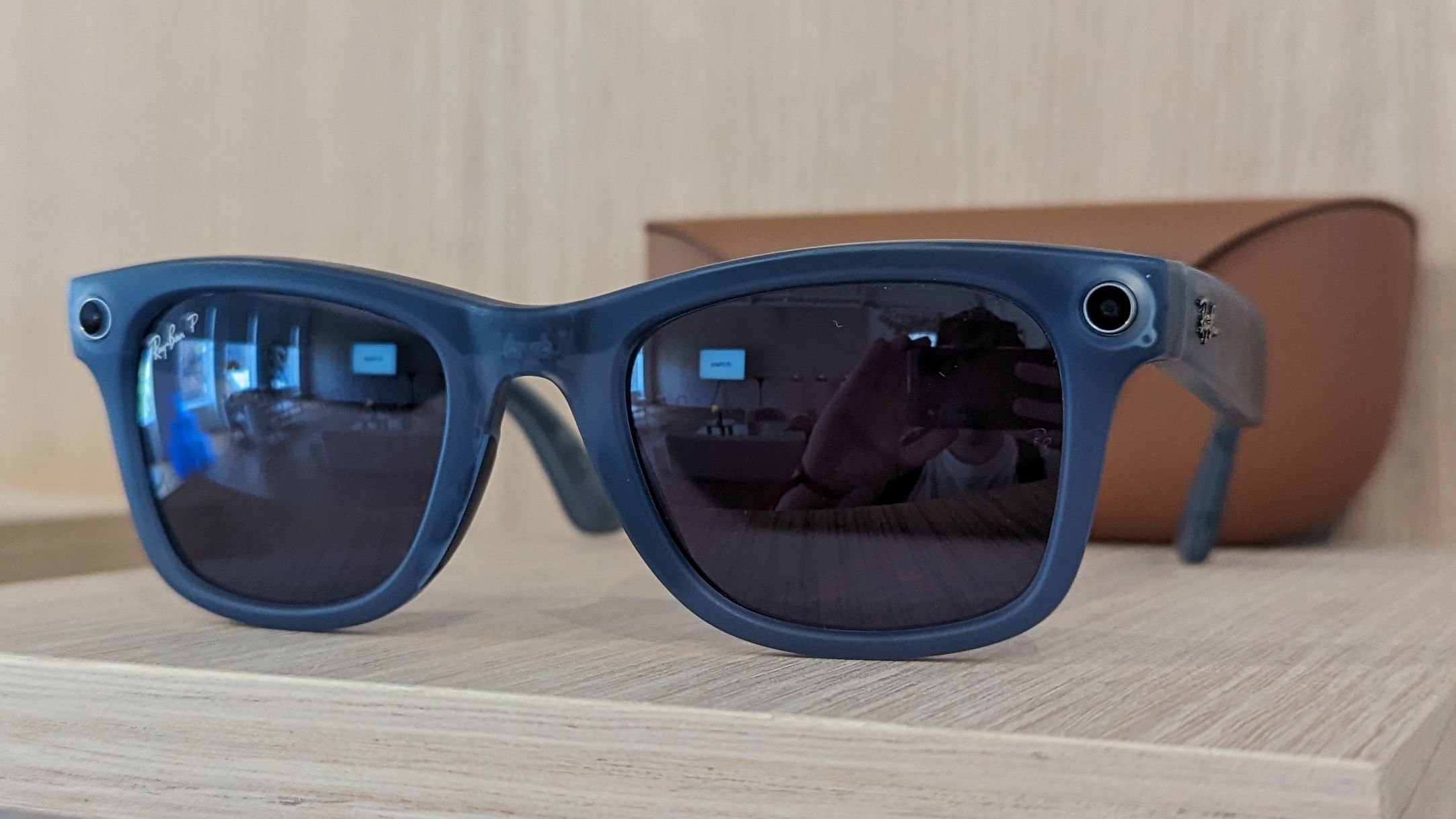

PARIS – The pitch sounds frictionless. Put on the glasses, walk past the Louvre, say “Hey Meta,” and watch a century of French history arrive through your right lens. No phone. No thumbs. No stopping in the middle of the Rue de Rivoli to squint at a map.
BBC Travel put that promise to a practical test in Paris last week, and what came back was something more nuanced than either the brand believers or the privacy skeptics had predicted. The glasses worked. Sometimes they worked impressively. But the test also exposed the seams in Meta’s vision of frictionless AI tourism – and raised questions that the $799 price tag alone cannot settle.
The timing of the piece matters. Meta’s broader wearable ambitions have accelerated sharply this year – the company has moved from audio-only smart glasses to the Ray-Ban Display, a $799 device with a monocular heads-up display in the right lens, gesture control via a neural wristband, a 12-megapixel camera, and live AI translation. Meta says the glasses are now available in France, Italy, the United Kingdom, and Canada, following a September 2025 U.S. launch at Best Buy, LensCrafters, and Sunglass Hut. Paris, in other words, is officially in-market. The BBC test was not hypothetical.
What the reporter found at street level tracked closely with what engineers building on similar hardware have described for months. The landmark recognition feature – which lets a wearer snap a picture and ask Meta AI what they are looking at – performed well when the subject was iconic and unambiguous. A major monument, a famous facade. But the system faltered on the kind of granular local question that tourists actually ask: the name of the narrow street, the provenance of the particular carved lintel above a doorway, the history of a neighborhood that has not been indexed into a headline. The AI knows what the Eiffel Tower is. It is less certain about everything else.
Live translation held up better under pressure. The glasses can translate between English, French, Italian, and Spanish in real time, with the wearer hearing the translation through the open-ear speakers and the other party reading it on a companion app on the wearer’s phone. That asymmetry – one person hearing, one person reading a screen – introduces an odd social choreography for what is supposed to be a natural conversation. A café waiter who does not know why a tourist is holding a phone out while wearing sunglasses in a darkened room is not having a seamless cross-cultural exchange. He is having a confusing one.
Battery life imposed a harder limit. The Ray-Ban Display delivers approximately six hours of active use – confirmed by independent reviewers who spent weeks with the hardware – before the charging case is required. For a full day of Paris tourism, that is two or three museum visits, two metro rides, lunch, and a river walk. It is not enough. The case carries multiple additional charges, which extends the total available power to roughly 30 hours, but the glasses must come off to charge, and taking off your AI glasses in the middle of the Musée d’Orsay means that the seamless experience has, at that moment, become a logistics problem.
None of this is disqualifying. First-generation hardware always trades ambition for endurance. What is more structurally significant is the question the BBC test did not fully resolve: what a passerby in Paris has consented to when a tourist in those frames points the 12-megapixel camera in their direction.

That question has been building for two years. In March, a lawsuit filed in U.S. federal court accused Meta of marketing the glasses around privacy protections while quietly allowing contractors to review footage captured and shared through the device, according to TechCrunch. Meta told the BBC at the time that the review practice was disclosed in its privacy policy and supplemental terms. The company pointed to language in its U.K. AI terms of service noting that interactions with Meta AI – including content shared through the glasses – may be subject to manual human review. What the glasses see in Paris, in other words, does not necessarily stay in Paris.
For Meta, the Paris test represents something more strategic than a product review. The company sold more than seven million units of the audio-only Ray-Ban Meta glasses in 2025 alone, before the Display version even entered the market. That installed base – people already wearing Meta frames, already saying “Hey Meta” on the street – is the distribution network into which the camera-and-display upgrade slots. France is not just a new geography. It is a proof-of-concept for whether European regulators, consumers, and – practically speaking – café staff will accept a device that records, translates, and processes visual information continuously.
The competitive context has also shifted in ways that raise the stakes. Apple has abandoned its Vision Pro successor and redirected its hardware roadmap toward its own smart glasses, reportedly targeting a 2027 launch. Google has returned to the AR wearable space. Snap acquired an AR startup in early June. The race that Meta is currently leading has real challengers approaching from multiple directions, which means that whatever the BBC test revealed about the Ray-Ban Display’s shortcomings, the device that replaces it in twelve to eighteen months will likely close several of those gaps.
What the Paris field test could not resolve – and what no hardware review can settle – is whether this category of product should exist in its current form at all. The live camera, the AI that remembers what it has been pointed at within a session, the facial-recognition code that developers have already found buried in the Meta AI companion app: these are not features that exist in isolation. They are components of a system that accumulates context about the physical world around a wearer. In Paris, that world includes other people who did not choose to be part of a tech company’s training set.
The AI glasses passed a real test in one of the world’s most-visited cities. Whether the framework governing what those glasses do with what they see is ready for 47 million annual tourists is a question the BBC reporter could not answer on the banks of the Seine – and neither can Meta’s press releases.
Related Posts