
NEW YORK – Thibaud Hug de Larauze remembers the week clearly. The moment the Trump administration announced sweeping new tariffs in April 2025, his phone started ringing. Not with angry suppliers or panicked logistics partners – with customers. Back Market, the French refurbished-electronics platform he co-founded, watched its U.S. sales growth triple in the week after the tariff announcement. Nearly a year later, it has not returned to where it was before.
That demand spike was not a tariff panic or a one-week anomaly. It was a recognition, delayed perhaps longer than it should have been, that an entire tier of the American consumer-electronics market had matured while most buyers were not paying attention. The refurbished device – tested, warrantied, professionally inspected, and sold at a 30 to 60 percent discount off retail – is no longer a last resort for the budget-strapped. It is a deliberate choice.
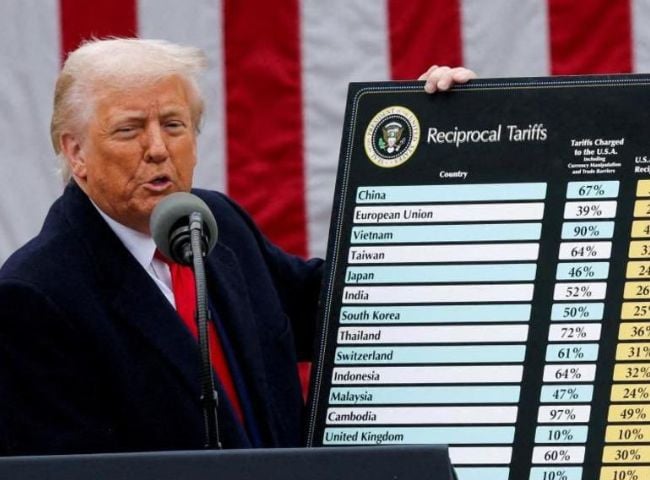
The timing matters. New-device prices are rising across every major category. The Consumer Technology Association estimated that laptops could increase in retail price by 34 percent if the full tariff structure on Chinese imports takes effect; game consoles face steeper exposure still. Smartphones and tablets received a temporary exemption, but a Section 232 national-security probe launched in April 2025 has kept that reprieve fragile. Against that backdrop, a certified refurbished iPhone at $200 less than its new equivalent is not a compromise. It is the rational transaction.
The global refurbished electronics market was valued at roughly $68 billion in 2025, according to research by Coherent Market Insights, and analysts project it will exceed $120 billion by 2032. Those numbers, however, are not the interesting part. The interesting part is what is driving the growth: not just price, but confidence. The structural fear that buying used meant buying broken has collapsed under the weight of certification programs, standardized grading systems, and warranties that rival what comes with a new device in a box.
What the market has needed, and largely now has, is a vocabulary. A refurbished device is not a used device, though the terms are often conflated. A used device is sold as-is, typically peer-to-peer, with no inspection and no recourse. A refurbished device has been professionally tested, repaired where necessary, and graded against a disclosed condition scale. The best programs – Apple Certified Refurbished, Samsung Certified Re-Newed, Amazon Renewed Premium – replace batteries, replace outer casings, and ship with the same one-year warranty as a new unit. The only meaningful difference, in Apple’s case, is a plain white box instead of a retail package.
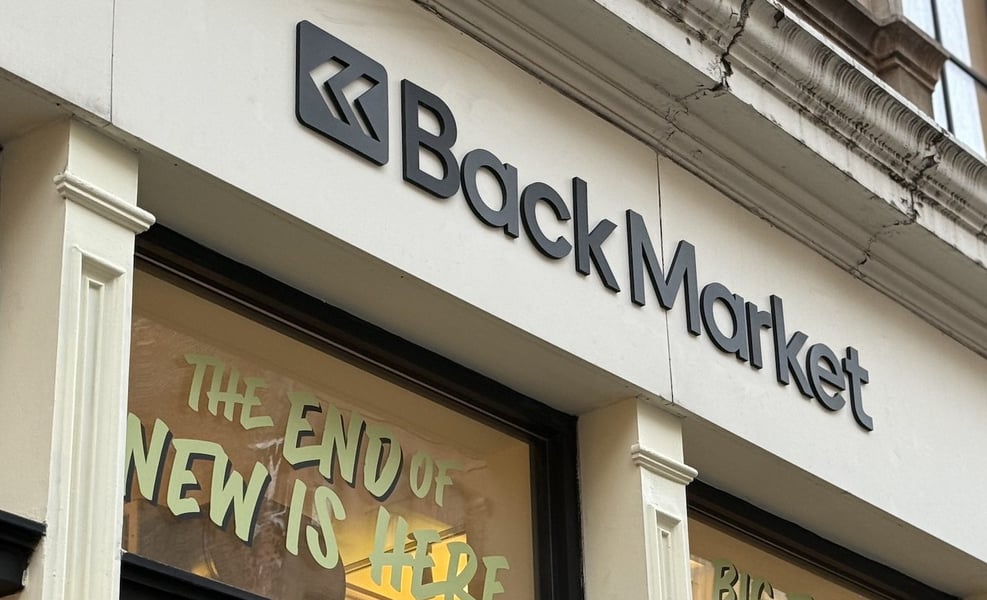
Back Market, which operates in 17 countries and reported more than $3.5 billion in gross merchandise value in 2025, sits in the middle of this ecosystem as a marketplace aggregator: it does not refurbish devices itself but vets the sellers who do. The company opened a physical retail location in SoHo in New York in October 2025, a pop-up experiment designed partly to confront the principal barrier to mass adoption – the consumer who wants to hold the device before trusting it. The store offered seminars on device repair and ran a recurring challenge where customers tried to identify which phone was refurbished and which was new. Most could not tell.
The grading system, however, remains inconsistent enough to be a genuine source of buyer risk. An “excellent” rating on one platform is not the same as an “excellent” on another. The only honest heuristic is to buy from programs that disclose exactly what was replaced, what was inspected, and what the battery health is. Battery condition is the single most predictive variable: a phone with 85 percent battery health or better will behave normally for another one to two years of typical use. Below that threshold, the discount needs to be proportionately steeper.
Not every product category makes equal sense in the secondhand market. Laptops and smartphones age better than televisions because the core processing hardware is more durable than display panels, which can degrade or develop dead pixels. Tablets occupy similar territory to phones. Gaming consoles – a category facing some of the steepest new-device price exposure from tariffs – are generally safe refurbished buys because they contain limited moving parts and are designed for high-intensity sustained use. Wireless earbuds are the exception to most of the optimism: batteries in small-form-factor audio devices degrade faster than phone batteries, and the case charging systems add a second point of failure.
The software-support timeline is a sharper filter than most buyers apply. A phone with a perfect battery and a flawless screen is a poor investment if the manufacturer has already ended software updates for it, because security patches stop with them. Apple extends support for six to seven years from launch; the company’s refurbished program typically carries models that are two to three years old, meaning buyers still have meaningful runway. Android manufacturers vary widely, and buyers should check the published end-of-support date before purchasing. The logic of buying recent models – rather than deeply discounted older ones – applies with particular force when software support is the variable.
The tariff effect on the refurbished market carries a second-order risk that industry analysts have flagged but that has not yet materialized: if new-device prices rise sharply enough, demand for refurbished alternatives could outpace supply, and the discount that makes the market work could compress. Back Market’s Hug de Larauze acknowledged this dynamic last year, noting that if consumers hold onto their devices longer in response to new-device price increases, the flow of trade-in inventory that feeds refurbishers could slow. That hasn’t happened yet. For now, the tariff environment has benefited the secondary market without yet disrupting the supply that sustains it.
Apple expanded its certified refurbished iPhone program in April 2026 to cover additional European markets – the Netherlands, Belgium, and Ireland – with extended warranty coverage, Reuters reported. Samsung introduced a Galaxy AI Subscription Club in January 2025 offering subscribers a 50 percent refund on their device after 12 months, a structured trade-in model that effectively formalizes the churn which feeds the secondary market. Neither company will confirm how many refurbished units they sell annually. But the program expansions are not charity: they are a signal that the secondary market is large enough to merit deliberate management.
What the market still cannot fully answer is what happens at the high end. Premium refurbished smartphones – those priced above $500 – are the fastest-growing segment, SNS Insider research found, as consumers increasingly treat a two-year-old flagship as a viable alternative to a new mid-range phone at the same price. The bet those consumers are making is that the engineering quality of a refurbished iPhone 15 Pro Max exceeds the engineering quality of a new $600 Android. On paper, for most users, they’re probably right. Whether the market can generate enough certified supply at the top end to meet that demand over the next two to three years is a question the industry has not resolved.
Back Market’s Chicago market grew 36 percent in the first four months of 2026, outpacing the national average – and 40 percent of those buyers were first-timers, the company told Chief Marketer in April. That number is the one worth watching. The core refurbished market has had its loyal buyers for years. The tariff environment is now bringing in a different customer: not the committed circular-economy advocate or the perennial deal-hunter, but the person who walked into a retail store, looked at the new price tag, and decided it wasn’t worth it.