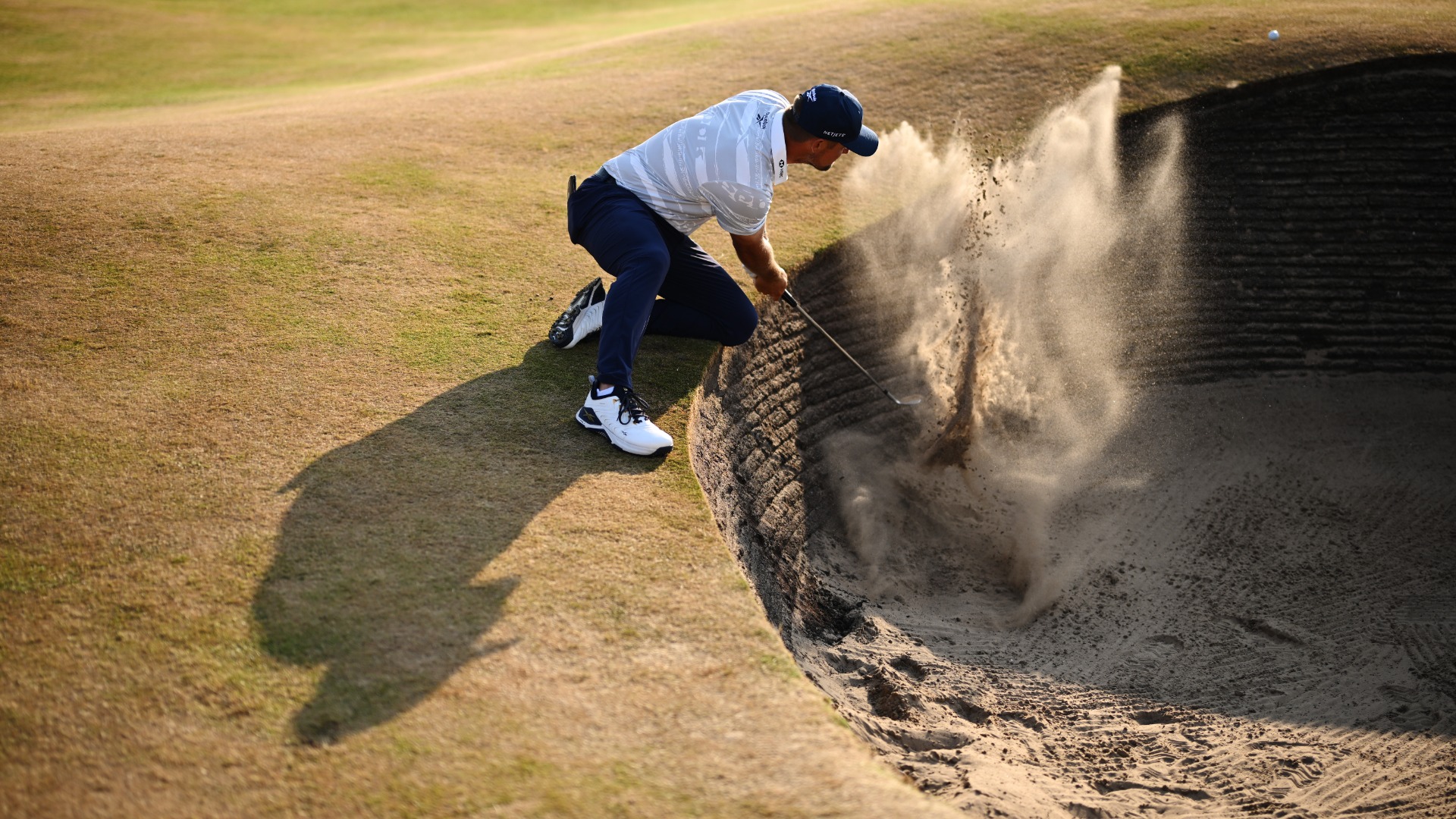

SOUTHPORT – Players, caddies and tournament officials at Royal Birkdale sat waiting in the clubhouse for nearly 80 minutes Friday evening while Bryson DeChambeau argued his case in the recorder’s area, the lights coming on across the links as tee times for Saturday’s third round remained unset. The delay, triggered by a two-shot penalty for inadvertently improving his swing line on the fifth hole, stretched until nearly 11pm and set the stage for one of the sharper public exchanges in recent Open Championship memory.
The violation occurred on the par-four fifth hole. DeChambeau stepped into thick rough while positioning himself for his second shot, his left foot crushing the grass ahead of him and flattening vegetation along his intended backswing path. That action, however unintentional, constituted a breach of Rule 8.1 of the Rules of Golf, which prohibits a player from improving the area of their intended swing regardless of purpose. The two-stroke penalty converted what would have been a bogey into a triple-bogey seven. “Bryson has been penalized two strokes for inadvertently improving the area of his intended swing,” R&A executive director of governance Grant Moir confirmed after reviewing the footage.
DeChambeau did not accept the decision quietly. He engaged in extended discussions with R&A officials before continuing to make his case in the recorder’s area after completing the round, leaving around 10:30pm without speaking to the media and heading instead to the practice range. His agent told Golf Channel he was initially undecided whether to continue in the tournament. Paul McGinley, watching from the commentary box, offered the bluntest assessment of the episode: “He’s made himself the story now.”
He did continue. DeChambeau returned to Royal Birkdale on Saturday and posted a one-under 69 in the third round, battling back to sit at six under par heading into Sunday’s final day – four shots off the lead. The competitive damage from the penalty was contained. The reputational cost, by the time McIlroy reached the media centre on Saturday afternoon, was something else entirely.
McIlroy, who agreed the penalty was justified and said players watching in the clubhouse lounge recognized immediately that something had gone wrong when DeChambeau stepped into the ball, made no attempt to shield his opinion behind diplomatic language. “To hold the tournament hostage like that, and to have all of us, players, volunteers, everyone waiting on him to depart, I didn’t feel like it was a great look,” the world No. 1 said. “I won’t pretend to be up here and defend Bryson. I’m not particularly fond of him. I think a lot of it’s performative.”
The word he kept returning to – “performative” – suggested something more pointed than mere frustration at a delay. According to Sky Sports, DeChambeau’s extended post-round argument had been heated enough that third-round tee times were not released until the sequence of events had fully resolved. McIlroy framed the behavior not as righteous indignation but as something calculated for effect. The R&A’s position on the underlying call, in Grant Moir’s words, was unambiguous: the penalty applied because the improvement occurred, not because intent was established.
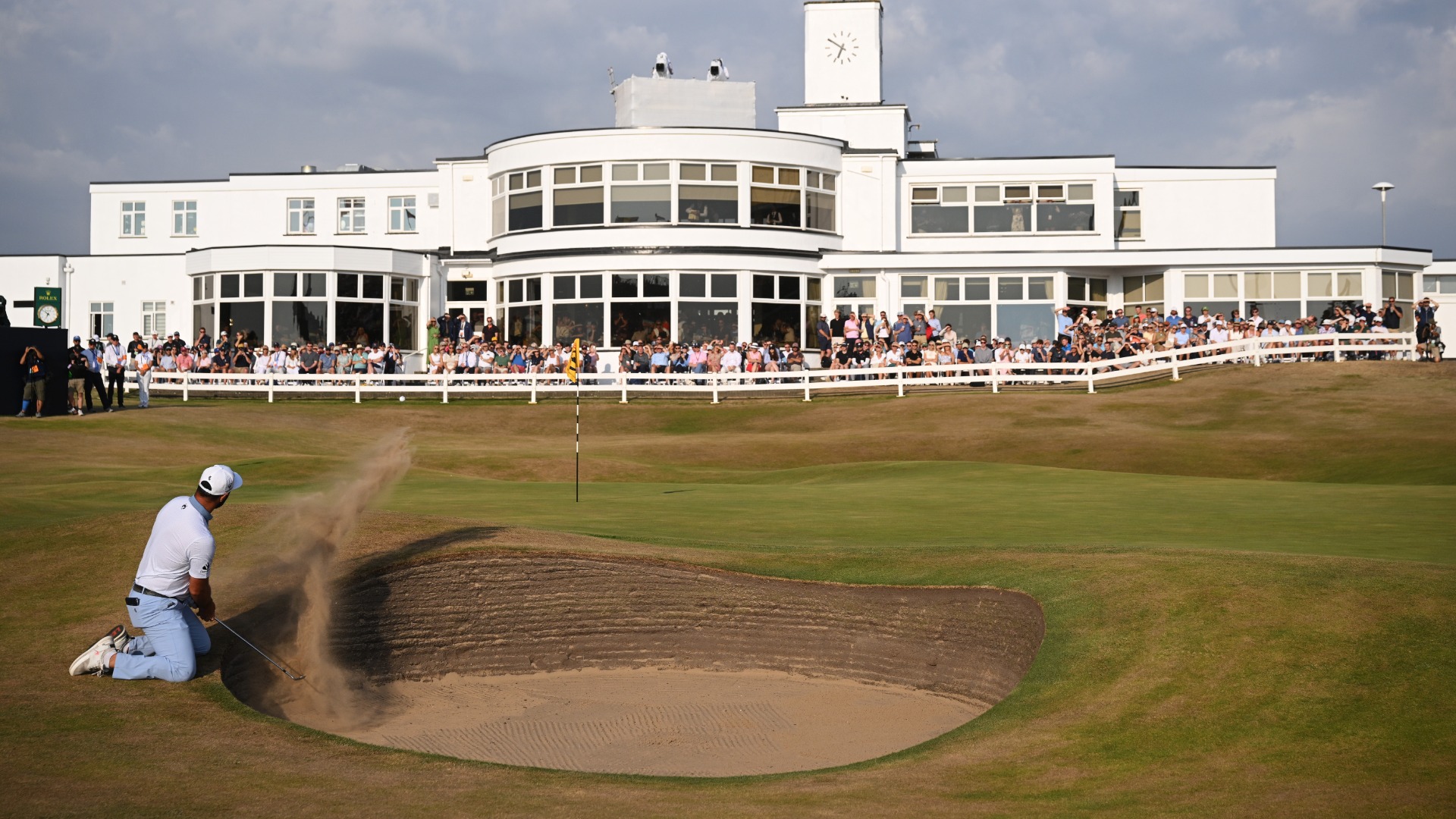
The third-round leaderboard going into Sunday reflects both the quality of play this week and the chaos that surrounded it. Sam Burns holds a two-shot lead at ten under after a five-under 65, with Ryan Fox’s historic round on Saturday leaving him tied at eight under alongside Si Woo Kim. Lucas Herbert and Ryan Gerard sit at seven under. DeChambeau is at six under – making him, as was noted Saturday, the only past major champion inside the top ten heading into the final day. McIlroy finds himself at two under, needing a major Sunday to win.
The weight behind McIlroy’s words extends beyond one week at a links course. DeChambeau joined LIV Golf in 2022, one of the most prominent names to move to the Saudi-backed tour since winning the 2020 US Open at Winged Foot. McIlroy has been, for much of that period, the most public face of PGA Tour resistance – publicly urging players to stay, occasionally softening his tone, never entirely abandoning the conviction that the sport needs a unified competitive structure. When he says he is “not particularly fond” of DeChambeau, the words carry context the scorecard does not. This week at The Open Championship at Royal Birkdale, where both men are playing under the same major banner for the same Claret Jug, that context is harder to ignore than usual.
Rule 8.1 of the Rules of Golf governs exactly this kind of incident. Players may not improve their lie, the area of their intended stance or swing, the line of play, or the relief area. The prohibition is absolute – it applies whether the improvement was deliberate or accidental, and the two-stroke penalty reflects that evenhandedness. Moir’s confirmation left no room for interpretation: the improvement happened, and that was sufficient for the penalty to stand.
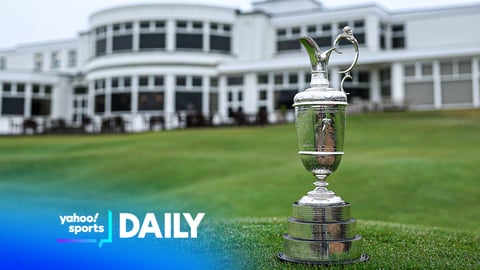
Sunday’s final round will settle one part of this story while leaving another unresolved. If DeChambeau wins the Claret Jug, the week’s dominant narrative tilts entirely – McIlroy’s public critique hardening into one of the more visible miscalculations in recent golf memory. If he fades, the episode becomes a case study in what happens when a player turns a legitimate rules dispute into theater. What neither outcome will answer is the question McIlroy raised and declined to walk back: whether golf now has players for whom the attention itself is the point, and whether Royal Birkdale this week produced the starkest example of that in recent years.