
DUBAI — Reuters issued a retraction and apology on Friday, withdrawing a story that claimed explosions had struck Dubai’s Business Bay district. By Saturday morning, UAE prosecutors had made the agency’s legal position considerably more difficult, treating that apology as evidence rather than a resolution.
Attorney General Hamad Saif Al Shamsi announced that investigators had expanded the probe into Reuters, summoning the reporter who filed the story alongside the editors responsible for approving and publishing it. In a statement carried by WAM, the UAE state news agency, Al Shamsi described the retraction as “a formal admission of its mistake and confirms the falsity and fabrication of the published report.” The apology, he said, “does not end the legal accountability process.”
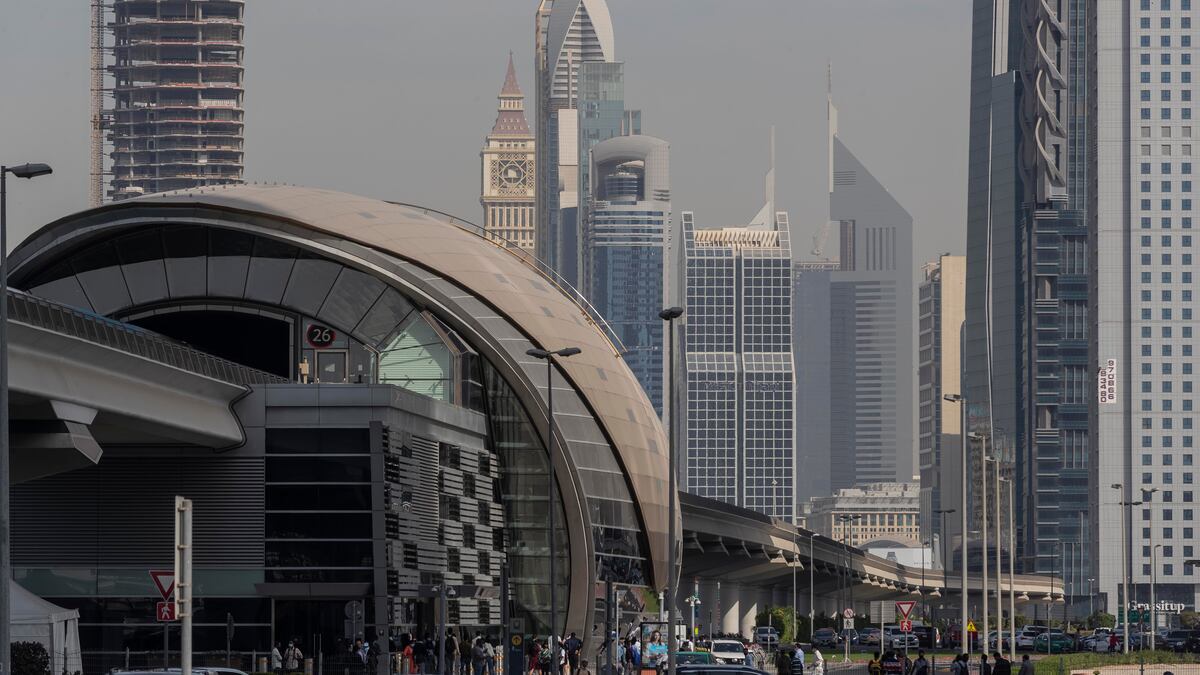
Reuters published its report on July 17, claiming explosions had struck Business Bay, one of Dubai’s most densely developed commercial districts and home to regional headquarters for dozens of multinational corporations. The claim circulated without named sources or confirmed verification, and the Dubai Media Office moved quickly to call it inaccurate. The agency withdrew the story and issued a public apology the same day.
The timing made the false report particularly damaging. The Gulf had spent weeks absorbing the consequences of the US-Iran military conflict, and the UAE had navigated significant pressure across that period. In that context, a claim of explosions in one of Dubai’s most visible financial hubs carried the potential to trigger market disruptions and security responses that no retraction could reverse. The Eastern Herald previously reported on the diplomatic pressures the UAE faced during the height of the US-Iran confrontation.
Al Shamsi said prosecutors had already questioned the Reuters reporter and would examine those responsible for “preparing, approving and publishing the report at the news agency to examine their respective roles.” The investigation would assess whether Reuters staff had followed “legal and professional standards governing the verification of information before publication.” Legal and judicial measures were being prepared under applicable UAE law, the attorney general confirmed, without specifying which statutes or what penalties might apply, as The National reported.
What makes the attorney general’s position legally notable is how he framed the retraction itself. Rather than treating the apology as a good-faith corrective measure, Al Shamsi characterized it as confirmation that Reuters had published material it had an obligation to verify before publication. Under that reading, acknowledging the error does not signal a mistake in the editorial process but a failure to meet a verification standard the agency knew existed.
That logic does not map neatly onto press law in most countries where Reuters operates. A correction, particularly a prompt one, is treated in European and North American media law as a mitigating factor, not as an admission of bad faith. The UAE attorney general has stated explicitly that his office treats the two things differently: that a retraction is evidence of what was published, not a remedy for it.
Reuters operates one of its largest Middle East bureaus from Dubai, using the city as a principal hub for covering Gulf affairs, regional economics, and the aftermath of the Iran conflict. A criminal proceeding involving its reporters could complicate its operating position in one of the region’s most commercially and politically significant news centers. No reporting restrictions had been announced as of Saturday, and the bureau continued to function normally.
The UAE is not alone among Gulf states in having moved against foreign media for coverage deemed inaccurate or harmful. Qatar and Saudi Arabia have both pursued journalists and news organizations through legal channels, though generally in cases involving sustained adversarial reporting rather than a single erroneous story. The Reuters case is unusual in scope: a major global wire agency, a single story, a prompt correction, and a period of genuine regional volatility. That combination has not previously been tested in this form in the Gulf legal system.
No formal charges had been announced as of Saturday evening, and the investigation’s scope and timeline were not specified. Whether the announcement leads to prosecution or functions primarily as a deterrent remains an open question in a Gulf order still recalibrating after the US-Iran ceasefire. What the attorney general’s statement has established is a principle: that in this jurisdiction, correcting an error does not return the situation to neutral ground.