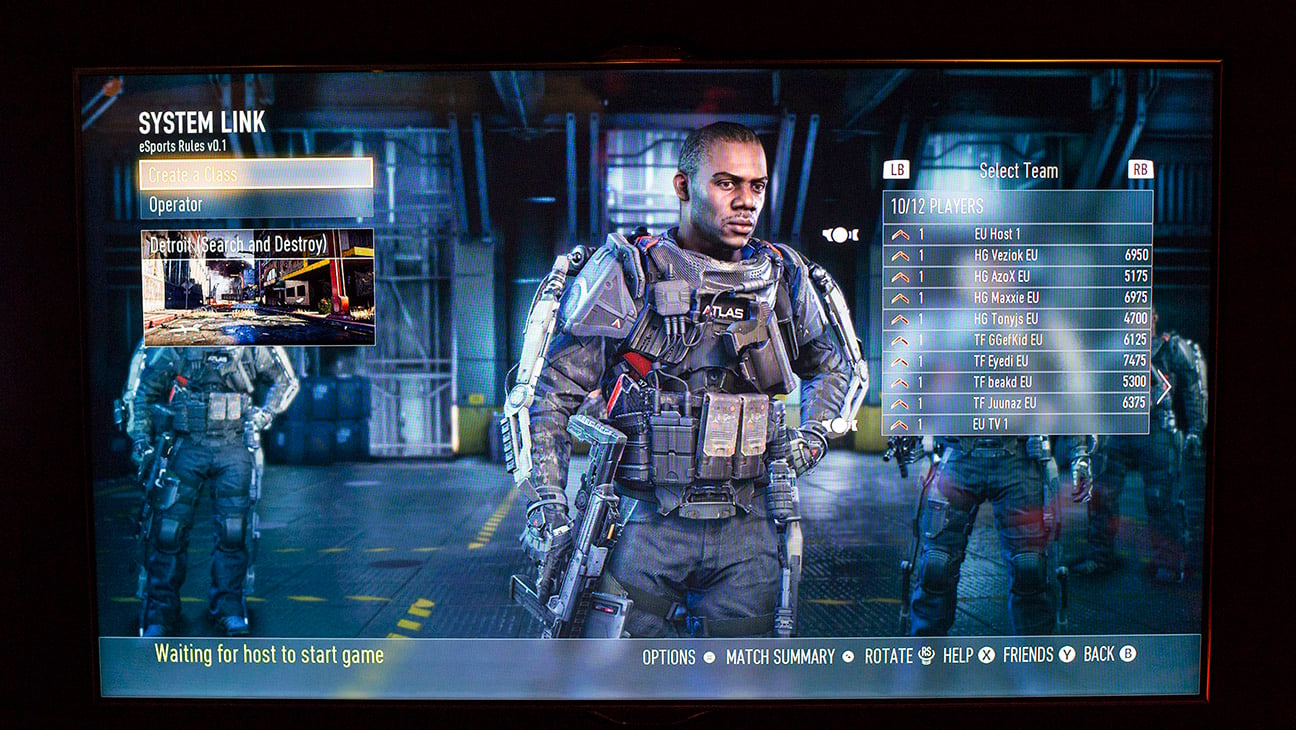

NEW YORK – Twenty years of franchise players have followed Captain John Price through the alleys of Al-Mazrah and the frozen corridors of offshore rigs, and Paramount Pictures is now betting that loyalty translates to the multiplex. The studio confirmed at Fanatics Fest New York City on Friday that its Call of Duty feature film will be set in the Modern Warfare universe, with Peter Berg attached to direct and Taylor Sheridan writing and producing, targeting a June 30, 2028 release.
The announcement, first reported by The Hollywood Reporter, represents the most concrete step yet toward adapting gaming’s most commercially dominant military franchise. Call of Duty has sold more than 400 million copies across its lifecycle and generated revenues exceeding $30 billion, with the Modern Warfare sub-series spanning the 2019 reboot, Warzone, MW2, and Modern Warfare 3 as its most sustained narrative arc.
That arc centers on Price, Sergeant Kyle “Soap” MacTavish, and Task Force 141 against Vladimir Makarov, and the film will draw from it directly. Berg confirmed Makarov as the antagonist at the panel, a choice that signals fidelity to the gaming storyline rather than a clean-slate reinvention. Makarov’s defining role in the original Modern Warfare 2 remains one of gaming’s most debated set pieces, providing the kind of pre-established emotional charge that studios require to justify major theatrical commitments. Microsoft has been widening the franchise’s platform reach since its Activision acquisition, including a recent return of Call of Duty: Black Ops to PlayStation 5. Paramount has not yet disclosed production budget figures.
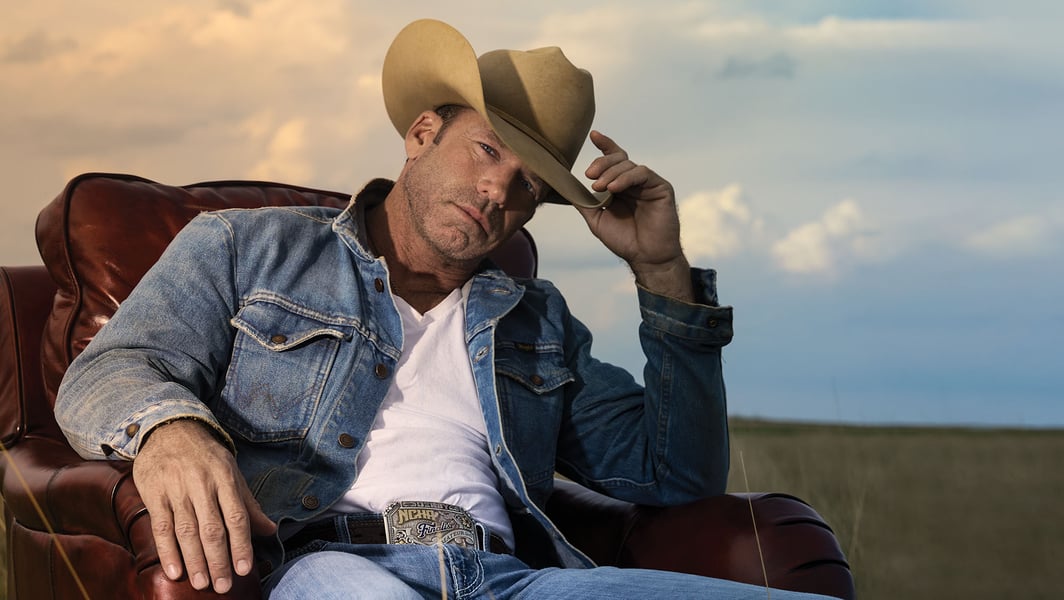
Sheridan’s involvement is the more striking hire. The architect of Yellowstone’s television dominance and the co-writer of Hell or High Water, Sheridan has built a reputation for spare, methodical thrillers that treat genre constraint as creative opportunity. His collaboration with Berg on Hell or High Water (a film that earned four Academy Award nominations on a $12 million budget) produced one of the more precisely constructed crime narratives of the last decade. That sensibility, applied to a franchise that has consistently distinguished itself through military realism, carries credibility that previous gaming adaptations rarely managed to secure at the script stage.
Gaming’s film adaptation history provides useful context. The 2016 Warcraft adaptation cost $160 million and earned $47 million domestically. The Assassin’s Creed film underperformed despite significant talent and production investment. Both miscalculated the gap between avatar-driven gaming experiences and fixed-perspective narrative cinema. The Modern Warfare universe presents the same structural problem: its games succeed because players inhabit Price, Ghost, and Soap in turns, observing nothing from a distance. A theatrical version requires a camera locked on Price as protagonist and Makarov as a visible, present antagonist. How Sheridan resolves that translation is the central creative question, and neither he nor Berg addressed it specifically at the panel.
Berg is the technically correct director for what the material demands. Lone Survivor, Deepwater Horizon, and Patriots Day established his command of ensemble action within frameworks that value logistical credibility over stylized spectacle. Friday Night Lights demonstrated his capacity to handle franchise-sized expectations from built-in audiences without losing the human scale that makes stakes legible. His operational vocabulary, developed across two decades of military-adjacent storytelling, fits a franchise that has distinguished itself by showing soldiers under pressure rather than superheroes in combat gear.
The timing of the announcement carries weight beyond the project itself. Microsoft’s $69 billion acquisition of Activision Blizzard in 2023 handed the company ownership of gaming’s most consistently profitable annual release. The gaming division has since undergone significant restructuring, with thousands of Xbox positions eliminated as the company recalibrates its footprint. For Microsoft, a Call of Duty film that earns is not merely a theatrical outcome. It is a platform event, extending IP value across media verticals in the same pattern its other entertainment holdings have established. Paramount, whose deal structure with Microsoft and Activision has not been formally disclosed, enters an arrangement that explicitly envisions franchise expansion. Both companies have spoken publicly about potential sequels and television extensions stemming from this production.
The franchise’s international reach provides a structural advantage before production begins. Call of Duty ranks among the most-played titles across the Middle East, Latin America, and Europe, a geographic spread that has made it the benchmark for military gaming globally. For Paramount, which has increasingly depended on international box office to offset domestic uncertainty, a property with that footprint carries pre-awareness in markets that are difficult and expensive to build from scratch. It is a different entry point from The Odyssey’s record-breaking global launch this weekend, but the underlying commercial logic follows the same institutional reasoning: audience that already exists, franchise that already earns.
Fanatics Fest, the multi-sport and pop culture convention held annually in New York, has become a reliable platform for cross-sector announcements targeting the demographic that occupies both competitive gaming and mainstream entertainment. The Call of Duty in Culture panel was among this year’s highest-profile sessions, attended by Paramount and Activision executives alongside Berg and Sheridan. The confirmation of the Modern Warfare setting was the announcement that defined the event.
What the film does not yet have is cast, a confirmed production start date, a rating decision, and a clear answer on whether it adapts the specific Makarov arc from MW2019 or constructs a standalone narrative within that universe. Those variables will determine whether the ambition holds. Sheridan and Berg arrive with the credibility to make that case, and Paramount now has a story to tell about why this franchise, these filmmakers, and a June 2028 slot belong together. The answer to that question, when the time comes, belongs to the audience.