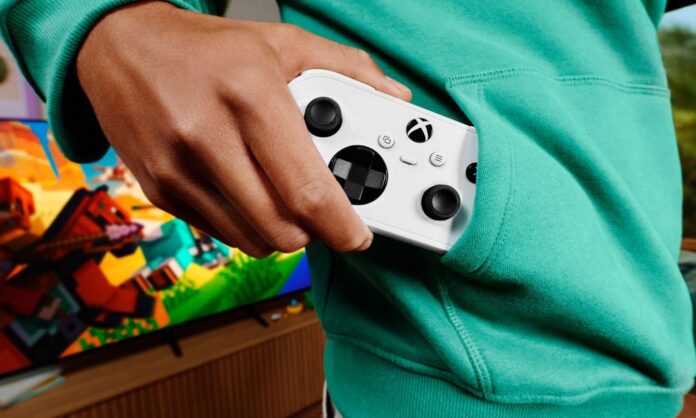
REDMOND – By Monday afternoon, 1,600 Xbox employees had received the email they had been dreading since Asha Sharma took over as chief executive of the division eight months ago. The message was frank in a way that corporate restructuring announcements rarely are. “Our business today is not healthy,” Sharma wrote in a memo posted to Xbox Wire.
Microsoft announced on Monday that it would cut 4,800 jobs globally, about 2.1 percent of its roughly 228,000-person workforce, in what CNBC reported is the company’s largest single-day reduction in recent years. The majority of those cuts fall outside gaming, concentrated in Microsoft’s sales and consulting divisions. But the most consequential announcement is inside Xbox, where 3,200 positions will be eliminated through the end of fiscal 2027, beginning with 1,600 immediate terminations.
Four first-party game studios will leave Xbox in the course of the restructure. Ninja Theory, the Cambridge developer behind the Hellblade series, has been in discussions about new ownership since June. Undead Labs, the Seattle studio that has spent years in development on State of Decay 3, will also move to new management. Compulsion Games, the Peabody Award-winning Montreal team behind South of Midnight whose impending closure Eastern Herald reported in June, will instead return to independence with its intellectual property. Double Fine Productions, the San Francisco company Tim Schafer founded in 2000, will do the same. A fifth studio, Arkane’s France operation, has begun required consultation with its Works Council to evaluate “strategic options.”
Sharma’s memo, which she described as having been sent to all Team Xbox employees globally before being published, did not soften its assessment of the division’s financial position. Xbox had been operating at margins three to 10 times below comparable platform and publishing businesses. In a typical year, Sharma wrote, the division lost 64 cents on every dollar it invested.
The accounting behind that figure reflects the scale of Microsoft’s ambitions in gaming over the previous decade. More than $20 billion went into content, platform, and hardware subsidies over five years while annual revenue shrank by close to half a billion dollars over that period. Platform teams had grown 40 percent larger since the generation’s start even as the player base and total play time declined. A division that added Bethesda, Activision Blizzard, and King through multibillion-dollar acquisitions was, by its own admission, still losing ground.
The restructure goes beyond headcount. Sharma will reduce management layers to a maximum of five, with a preference for three, from a system that could involve as many as 14 layers. Helen Chiang was promoted to chief operating officer. Dave McCarthy, who had spent 17 years at the company, is retiring. The months before Monday’s announcement had already signalled the direction of travel: the departure of studios chief Craig Duncan in June had been described at the time as a consolidation under Matt Booty, now confirmed as the remaining head of content.

The studios being divested are not peripheral to Xbox’s creative identity. Double Fine, whose Psychonauts franchise and work reviving adventure game genres made it one of the most celebrated independent studios before Microsoft’s 2019 acquisition, returns to independence with its game catalog and what Sharma described as runway for its next projects. Ninja Theory, whose Hellblade: Senua’s Sacrifice was widely regarded as a benchmark for independent production quality before Microsoft acquired it in 2018, has been seeking buyers since news of its situation emerged in June. Mojang and King, the Minecraft and mobile gaming arms that drive a substantial portion of the division’s actual revenue, will now report directly to Sharma, a structural choice that signals where the sustainable business actually sits.
Microsoft cut 4,800 jobs globally on the same day, a number that includes the immediate Xbox reductions alongside broader sales force restructuring. The company has joined Oracle and other major technology companies in accelerating workforce reductions as artificial intelligence reshapes the economics of enterprise software and content production. Sharma’s memo acknowledged the broader context but grounded her argument in gaming-specific failures: the platform had not grown at the pace the company’s investment required.
What Monday’s announcement did not address is what happens to the games those 3,200 employees were building. State of Decay 3, the zombie open-world sequel that Undead Labs has been developing under Microsoft for several years, has no confirmed completion timeline under its new ownership situation. The buyers for Ninja Theory and Undead Labs have not been identified. Arkane France’s consultation with its Works Council may or may not end in a sale. The workers cut on Monday do not appear as a group anywhere in Sharma’s public letter, which was addressed only to the employees who remain.
Sharma closed her memo with a declaration that the restructure is “about a bigger future for XBOX, not a smaller one.” Whether that framing holds will depend on decisions about Game Pass pricing, hardware strategy, and the fate of studios still inside the tent, most of which Monday’s announcement deferred rather than resolved.