
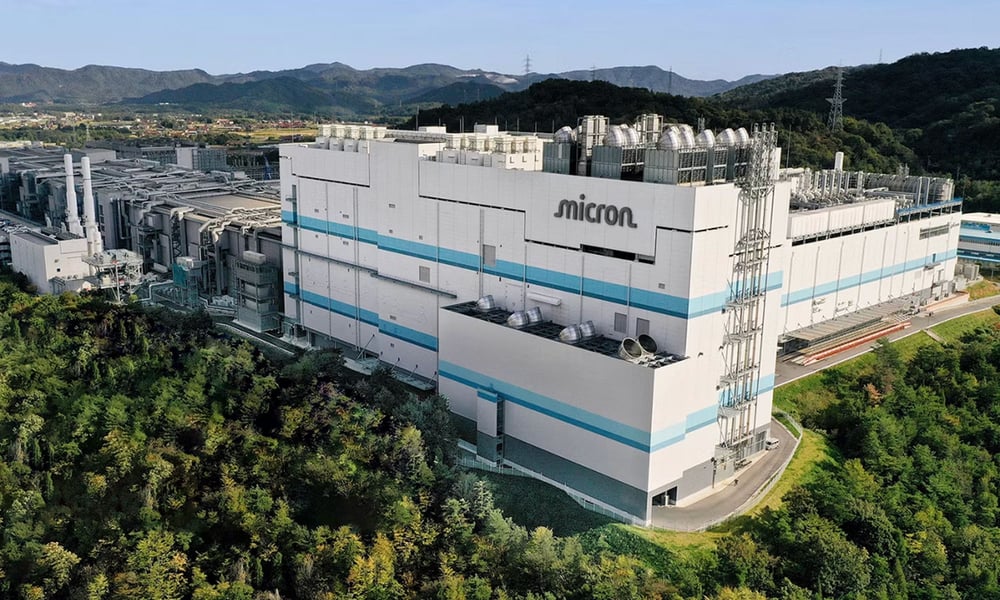
HIROSHIMA, Japan — Micron Technology Inc. (NASDAQ: MU) has spent the better part of three years watching SK Hynix collect the richest margins in memory chips almost alone. On Saturday, in a ceremony at its existing Higashi-Hiroshima plant, Micron finally put a number on how much it costs to stop watching: 1.5 trillion yen, roughly $9.3 billion.
The money buys 28,000 square meters of new cleanroom space built specifically to make high-bandwidth memory, the stacked chips that sit next to processors like Nvidia’s and feed them data fast enough to keep up with AI workloads. Tokyo is covering roughly a third of it. Japan’s Ministry of Economy, Trade and Industry has committed up to 500 billion yen, about $3.2 billion, on top of subsidies it has already extended Micron for prior Hiroshima upgrades, pushing the government’s total support for the site toward $5 billion.
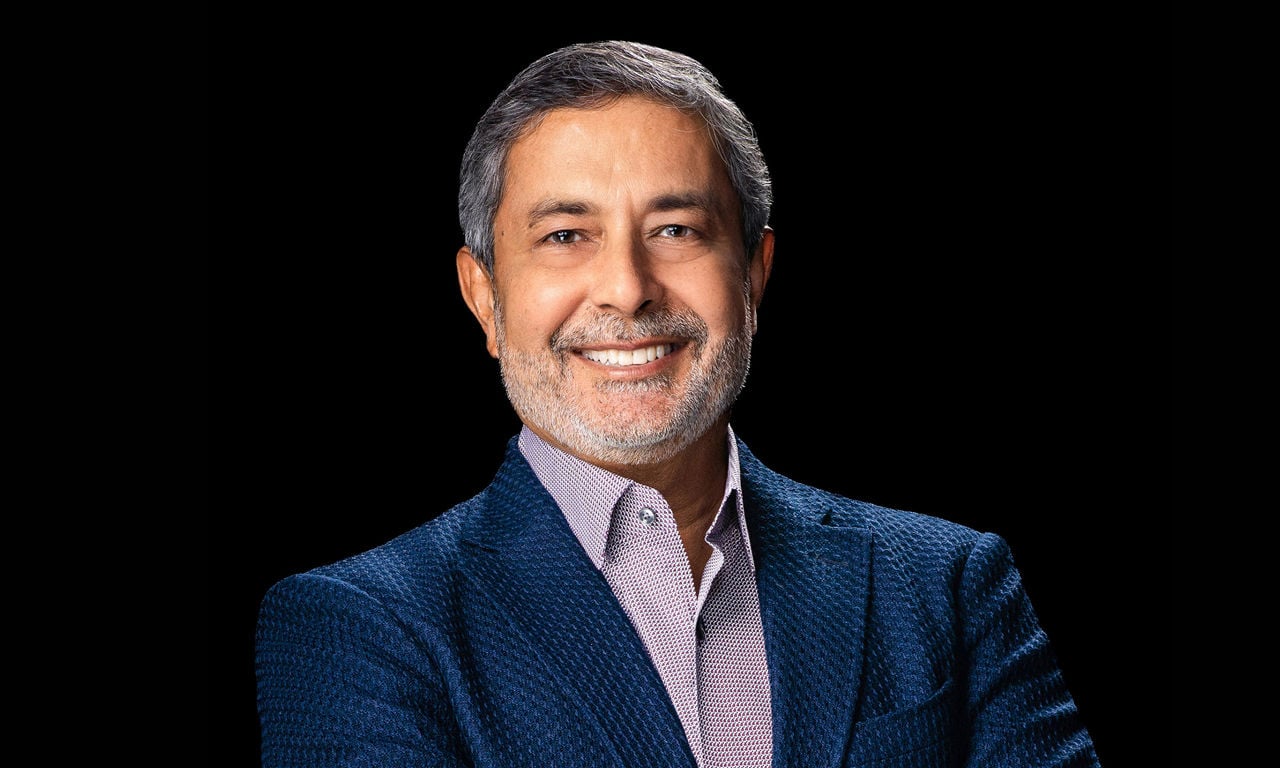
Micron Chairman and Chief Executive Sanjay Mehrotra, who attended the groundbreaking, framed the expansion as a continuation rather than a pivot: the company’s first HBM production wafer came off this same site. “Memory demand is increasing like never before,” he said, a line that doubles as the entire investment thesis for a company whose stock has risen roughly sevenfold over the past year on exactly that premise. Asked about the Hiroshima partnership specifically, Mehrotra credited the fit between the two sides: “When American boldness meets Japanese craftsmanship, there is no compromise. You get world-class products.”
What the ceremony does not settle is whether $9.3 billion is enough. SK Hynix has controlled roughly half the HBM market for two years running, largely because it moved first and locked in Nvidia as a customer before Micron and Samsung had competitive product. Micron has closed real ground since, but closing the last stretch against an incumbent with deep customer relationships and a multi-year manufacturing head start is a different problem than growing overall capacity. The Hiroshima fab does not ship its first wafers until summer 2028, a timeline that assumes AI memory demand looks roughly the same in three years as it does today. Micron itself has revised its own demand estimates for AI memory sharply upward in each of the last four quarters. Whether that trend has three more years in it is a question this groundbreaking answers with capital, not certainty.
The timing is not incidental. Nikkei Asia reported that Samsung Electronics and SK Hynix both announced their own large domestic expansion plans in South Korea in late June, days before Micron’s Hiroshima announcement. None of the three companies frames its spending as a response to the others in public, but the sequencing tells its own story: whichever of the three blinks first on capacity is the one likely to be renting out spare fab space to the other two by 2029.
For Japan, the subsidy is not really about Micron. It is about not repeating what happened to Elpida Memory, the Hiroshima plant’s previous owner, which collapsed into bankruptcy in 2012 after a DRAM price crash it had no capital cushion to survive, and which Micron acquired for parts the following year. METI’s semiconductor subsidy program, built in the years since, is an explicit bet that a country without a strong national memory champion of its own is better off subsidizing a fraction of a foreign one’s capacity than watching the industry disappear from Japanese soil entirely. The new cleanroom space will create more than 1,000 jobs in a prefecture that has spent over a decade defining its economic identity partly around not letting that happen twice.
The AI memory shortage the Hiroshima fab is meant to address is already visible well outside the chip industry. Apple raised MacBook and iPad prices earlier this month, citing DRAM costs that have risen 98 percent in 2026 alone, a number industry analysts trace directly to memory makers like Micron redirecting DRAM and NAND capacity toward the more lucrative HBM segment. That reallocation is precisely what the Hiroshima expansion is designed to make less zero-sum: new cleanroom space rather than converted existing lines, in theory easing pressure on consumer-grade memory even as HBM output rises. Whether Micron actually holds that balance once the fab is running, rather than chasing whichever product commands the fattest margin that quarter, is not something Saturday’s ceremony can demonstrate either way.
Micron has already found other ways to put the Hiroshima site to work in the meantime. Ondo Finance listed Micron shares among the first equities tokenized under the SEC’s new custodial framework this month, a reminder that the same AI-driven rally financing this fab is also being repackaged into financial products several steps removed from anyone pouring concrete in Hiroshima Prefecture. Neither Micron nor METI has said what happens to the subsidy commitments if the memory cycle turns before 2028, the way it did to Elpida. That question, not the groundbreaking photo, is the one the next three years will actually answer.