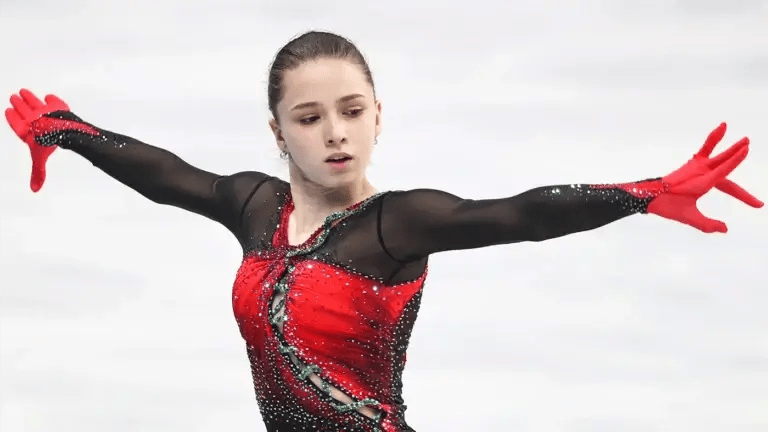

The World Anti-Doping Agency (WADA) has filed an application with the Court of Arbitration for Sport (CAS) challenging the decision of the Disciplinary Committee of the Russian Anti-Doping Agency (RUSADA) in the case of figure skater Kamila Valieva. On this subject reported on the website of the organization that filed the appeal.
His statement says RUSADA’s Disciplinary Committee “erroneously” concluded that there was no fault or negligence on Valieva’s part in the use of a banned drug.
WADA is insisting that the Russian figure skater be disqualified for four years and that all sports results obtained after the test (i.e. from December 25, 2021) be cancelled.
“WADA will continue to press for this matter to be resolved without further delay,” the agency said in a statement. If the CAS grants the agency’s appeal, Russia will lose the gold medal it won in the team event in figure skating at the Beijing Olympics in 2022.
The Anti-Doping Disciplinary Commission (DAC) of RUSADA published on January 13, 2023 the reasons for its decision in the Valieva case. Committee experts concluded that the skater had violated anti-doping rules, but that there was “no fault or negligence” in this regard.
As a result, DAK did not impose any sanctions on the athlete, except for the cancellation of his results on the day of the sampling (although WADA insisted on a four-year disqualification). Valieva won the Russian figure skating championship that day, but due to the cancellation of her results, the gold medal went to Alexandra Trusova, who placed second.
Last January, WADA warned that it intended to challenge DAK RUSADA’s findings before the Court of Arbitration for Sport as soon as it received the full text of the committee’s decision, not just the reasoning. RUSADA itself also spoke about the possibility of filing an appeal.
The doping test, in which a banned substance was found, was carried out in Valieva at the end of 2021, and its results were not made public until February, when the figure skater took part in the Winter Olympics in Beijing. and has already managed to win gold in the team tournament.
The first rumors of a positive doping test for one of the Russian athletes were sparked when the team award ceremony was postponed. Soon the media began claiming it was Valieva.
Then the International Doping Control Agency (ITA) reported that the Russian figure skater’s doping test revealed the banned drug trimetazidine. RUSADA has opened an investigation against Valieva staff.
The head of the Disciplinary Commission of the International Olympic Committee (IOC), Denis Oswald, published a version according to which the trimetazidine entered Valieva’s body “through a product that her grandfather used”. Meanwhile, a source from the Rhe New York Times newspaper, who was present at the CAS hearings, claimed that she allegedly spoke about the presence in the Russian woman’s sample of two other drugs used to improve heart function. . – hypoxene and L-carnitine.
As a result, the athlete was allowed to participate in individual competitions. Valieva’s age at the time of sampling also played a role in making this decision. But the awards ceremony was ultimately canceled.
Valieva’s performance in the individual competition was unsuccessful: she took only fourth place, while the gold medal went to another Russian woman, Anna Shcherbakova. The International Olympic Committee (IOC) explained that if Valieva wins any of the awards, the award ceremony would also have to be cancelled.
IOC chief Thomas Bach, commenting on Valieva’s speech, admitted he was shocked by what he saw. “I was alarmed, shocked when I saw her performance on TV. The pressure she faces is unbelievable. I was an athlete, I know what pressure is. But this pressure is beyond my comprehension , and she’s 15,” he said.