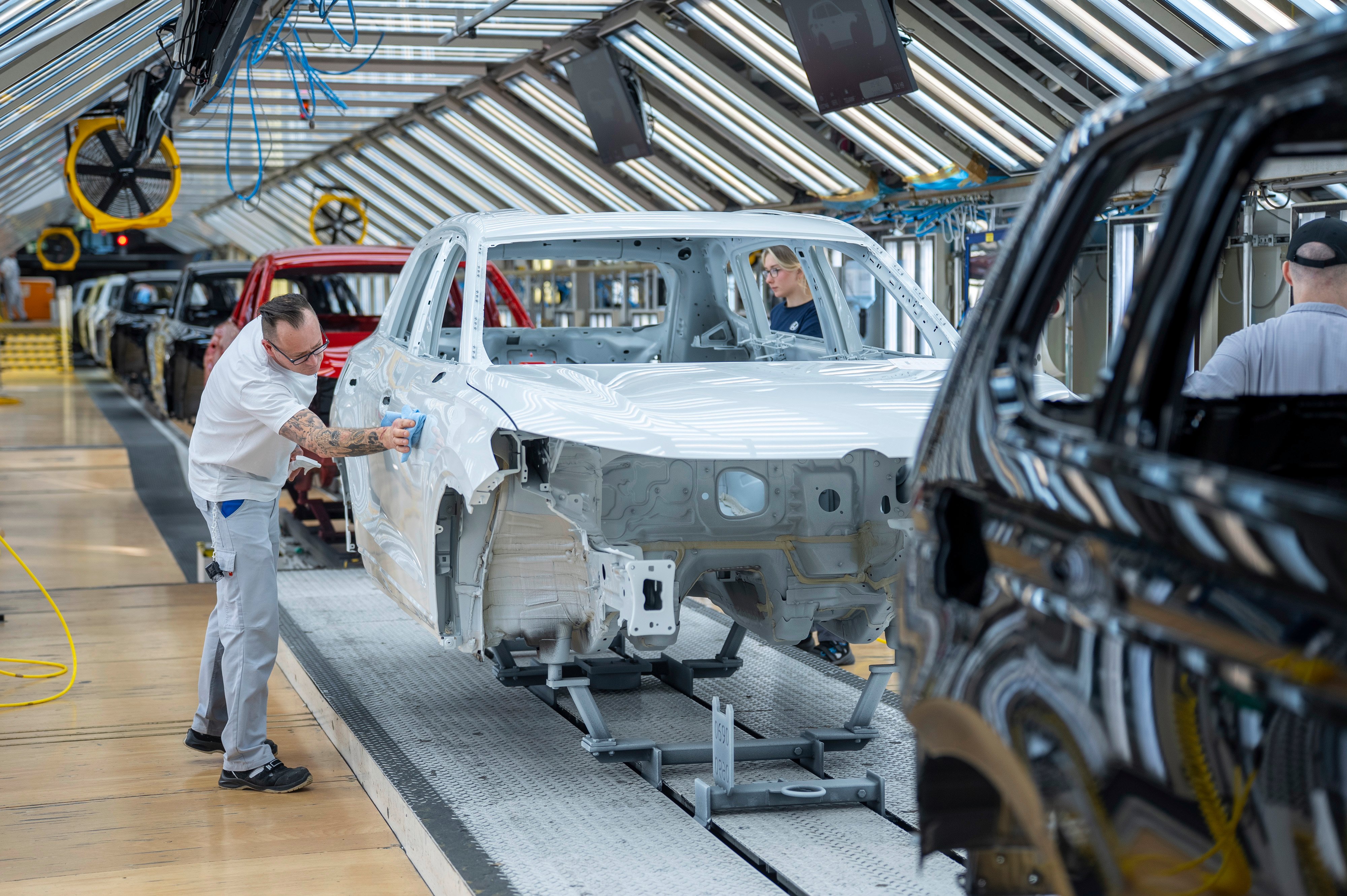

WOLFSBURG – Four German factories would go dark. One hundred thousand jobs would disappear. And the company contemplating that arithmetic is the same one that signed a formal agreement with its union two years ago promising not to close a single German plant this decade.
Germany’s Manager Magazin reported Friday that Volkswagen AG Chief Executive Oliver Blume and Chief Financial Officer Arno Antlitz are driving plans to eliminate as many as 100,000 positions across the group and cease production at facilities in Hanover, Zwickau, Emden, and at Audi’s Neckarsulm site, a restructuring the magazine described, citing people familiar with the matter, as the most sweeping in the company’s 89-year history.
A Volkswagen spokesperson said the company would not comment on confidential documents, adding that any relevant decisions would be discussed and approved by the appropriate governance bodies. The statement neither confirmed nor denied the report’s substance, which Bloomberg reported on Friday and which drew immediate union reaction before trading in Frankfurt had concluded.
The scale of what Blume is apparently targeting matters as much as the headline number. Volkswagen employs 667,164 people globally, of whom close to 43% work in Germany. A cut of 100,000 positions would eliminate roughly 15% of the total group workforce, concentrated most heavily in communities where Volkswagen is not merely an employer but an economy.
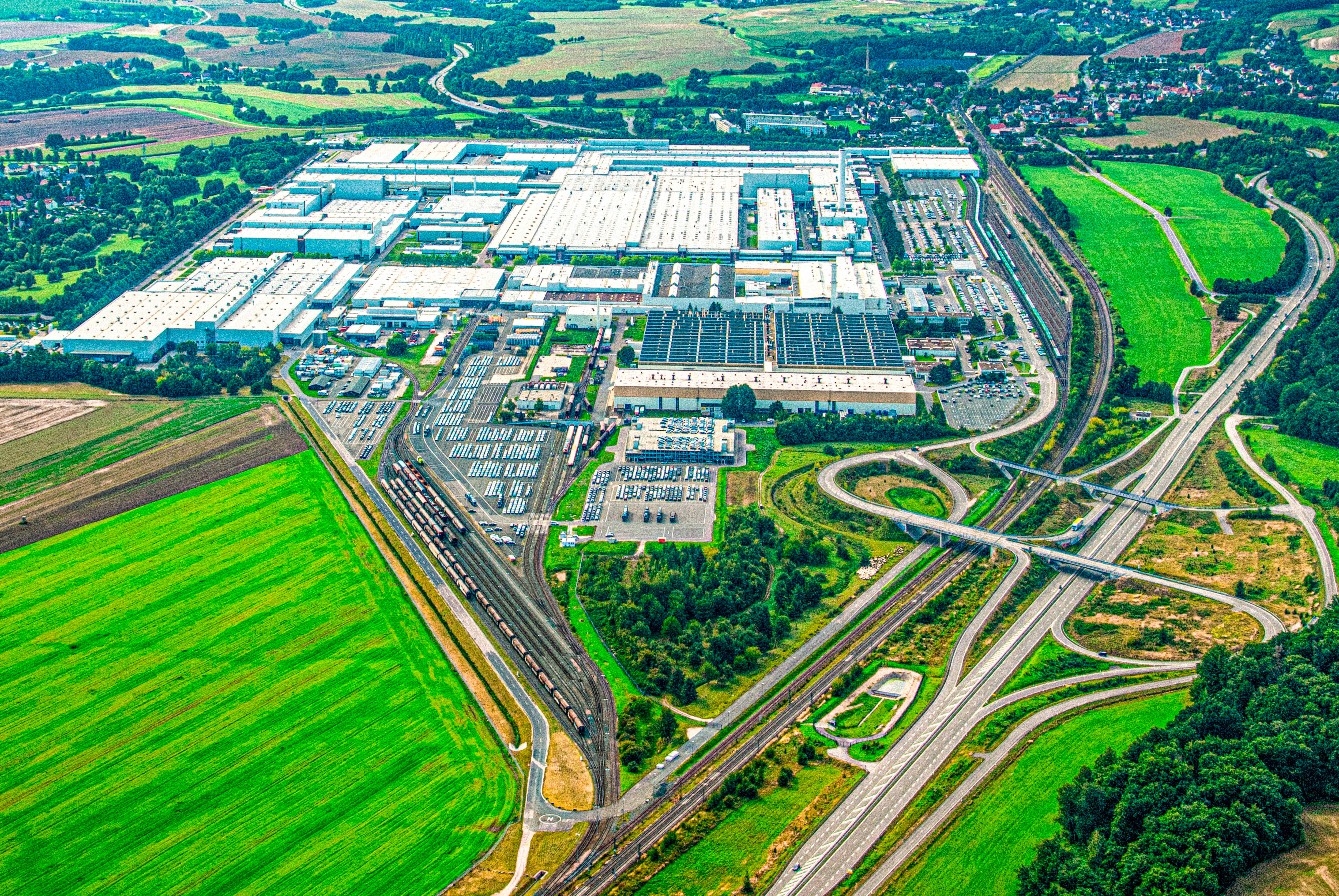
Hanover built its industrial identity around the Transporter van. Emden has manufactured Volkswagens since 1964. Zwickau converted its entire production line to electric vehicles at significant capital cost and considerable political symbolism, becoming the factory most associated with Germany’s transition away from combustion. The plan, as reported, treats those investments as sunk.
Blume also intends to reduce planned investment by approximately 15%, bringing the group’s five-year capital budget to just over 130 billion euros from a previously higher commitment. More structurally significant, Manager Magazin reported the CEO is preparing to spin off Volkswagen’s namesake core brand and its parts-manufacturing operations into separate entities, severing them from the current holding group structure in a change that would reshape how employees are governed, protected, and compensated.
IG Metall and Volkswagen’s works council responded with language unions deploy when they mean it. “Should such plans go ahead, we would do everything in our power to prevent them,” the two bodies said jointly on Friday. The statement matters because of what it commits both sides to: a direct confrontation at a company where union representatives hold half the seats on the supervisory board, the body with formal authority to approve or block strategic decisions of this scale.
German co-determination law gives workers’ councils and union delegates unusual institutional power. At Volkswagen specifically, the works council has historically acted as a genuine constraint on management rather than a consultative body. For a restructuring that doubles the scope of what was agreed in December 2024 to proceed, it cannot simply be announced. It must be negotiated through a supervisory board where management does not hold a majority.
The December 2024 agreement that Blume’s plan appears to render insufficient was itself reached after months of strikes and difficult bargaining. Under its terms, IG Metall accepted 35,000 job cuts by 2030 and agreed to real-wage reductions in exchange for plant security commitments. Blume’s reported ambition would double that cut and close plants the 2024 deal expressly protected. Treating a hard-won labor agreement as a preliminary rather than a settlement is a significant escalation.
Volkswagen’s deterioration has several causes, none of which the restructuring plan directly resolves. Chinese automakers, led by BYD, have taken market share across Europe with vehicles priced below what Volkswagen can profitably manufacture. US tariffs on European goods have added cost to every vehicle exported to American dealerships. Volkswagen sells more than 300,000 cars annually in the United States, most of them manufactured in Germany. And the European electric-vehicle transition has moved more slowly than the company’s Zwickau-era investment plans assumed, leaving the group with electric-vehicle capacity in markets that have not yet fully materialized. Bloomberg has reported that the company has been studying how to restructure under these combined pressures for months.
The closure of Zwickau specifically, if confirmed, would carry weight beyond the industrial. The factory was among the most visible symbols of Germany’s green industrial transition, a site where VW management and the German government jointly presented the electric shift as proof that high-wage German manufacturing could survive the move from combustion to electric. The opening of the converted plant drew political attention across Europe. Its closure would close that chapter.
Other German companies are making consequential decisions this week under different pressures. Merck KGaA’s $11.3 billion acquisition of Bio-Techne, the Darmstadt science group’s biggest deal since Sigma-Aldrich, represents a German industrial company betting on expansion rather than contraction. The contrast in direction is striking even if the underlying logic is the same: German businesses are concluding that the current strategy cannot hold.
What Friday’s report leaves open is whether Blume has the supervisory board votes to carry this through. The board he would need to persuade includes the same IG Metall representatives who said on Friday they would do everything in their power to stop it. What that power can withstand against a management team that has apparently concluded the existing agreement is no longer sufficient is the question the next months will answer.