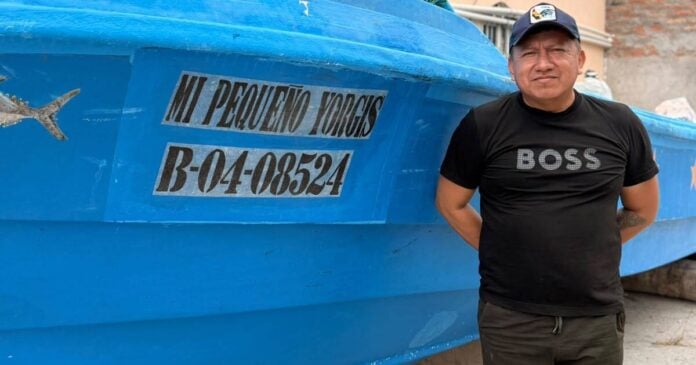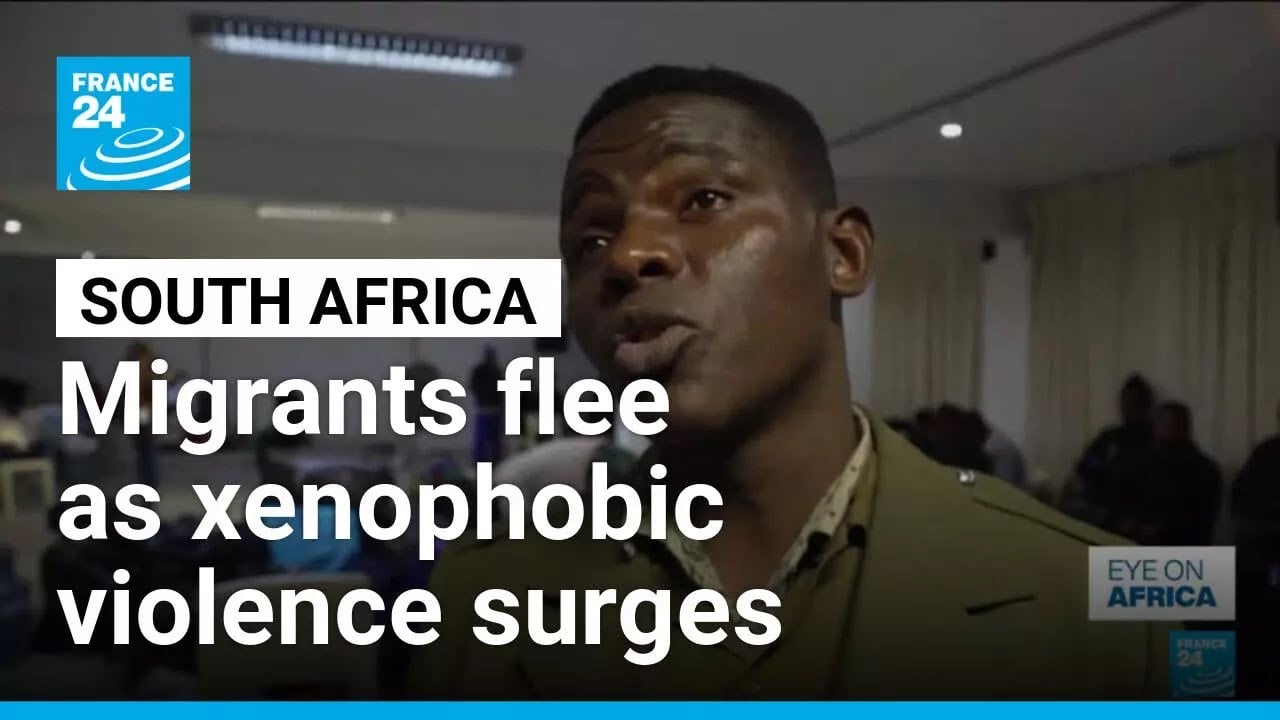

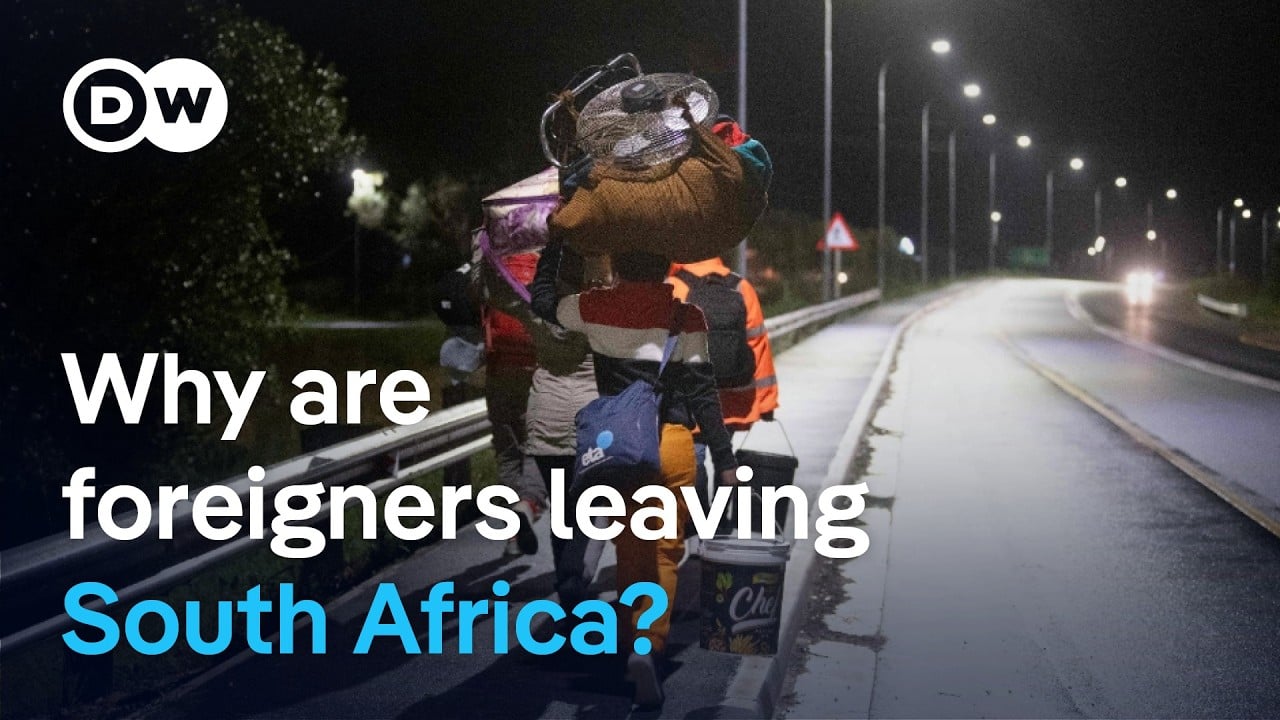
JOHANNESBURG – More than 3,000 Malawians, hundreds of them children, have spent their nights in an open field in the South African port city of Durban for the past several weeks, sleeping through winter temperatures while waiting for repatriation flights home. They did not choose the field. They were chased there.
The movement that drove them out calls itself March and March, a citizens’ organisation founded in 2025 by Jacinta Ngobese-Zuma that has set June 30 as the date by which it says all undocumented migrants must leave South Africa or face forcible removal. The group has no legal standing. The deadline carries no force in law. But in a country where roughly 30 percent of the workforce is unemployed and years of service delivery failures have hardened resentment toward foreign nationals, the announcement was enough to trigger one of the most serious displacement crises on the African continent in years. That date is now four days away.
The response from neighbouring governments has been swift. Nigeria has already flown home 260 nationals on government-chartered aircraft; combined with Ghana’s evacuation flights, the two West African nations have repatriated nearly 2,000 people in the past three weeks, Al Jazeera reported. Malawi and Zimbabwe have launched their own programmes. The Malawian government says it has registered more than 8,000 citizens currently sheltering in South Africa, of whom roughly 3,000 remain in the Durban camp awaiting transport. Hundreds more have crossed back over land borders on foot.
South Africa’s Human Rights Commission has warned publicly of a “possible human rights crisis.” Acting Police Minister Firoz Cachalia, responding to the scale of the mobilisation, announced what he described as the largest nationwide security operation since the 2021 unrest that killed more than 300 people. The R600 million deployment suspended all scheduled police leave and repositioned units across Gauteng, KwaZulu-Natal and the Western Cape, Bloomberg reported. Cachalia said the operation was designed to prevent violence, not enforce the March and March deadline, a distinction the government has been careful to draw, but which has done little to reassure the families sleeping in the cold in Durban.
That tension, between a government asserting legal authority it insists it has and a country whose conditions produced the grievances driving the movement, runs beneath everything happening this week. South Africa’s Bafana Bafana reached the FIFA World Cup last 16 for the first time in the country’s history last week, a moment of rare national pride that drew crowds into the streets of Soweto and Cape Town. The same week, men and women from Malawi and Mozambique were sleeping in a field six kilometres from that same city’s waterfront.
The violence that preceded the evacuations has been documented, though precise tolls remain disputed. In Mossel Bay, on the Western Cape coast, at least two Mozambican nationals were killed in attacks on foreign-owned businesses in late May; a local civic group put the figure at five. In Gauteng, arson and looting targeted Ethiopian-run shops in at least three townships, leaving five people dead according to police, though community representatives said the number was higher. The pattern is not new. What is different this time is the organised nature of the campaign and the speed with which foreign governments have decided they cannot wait for South African authorities to contain it.
March and March and the older Operation Dudula movement, which ran a comparable campaign in 2022, have both insisted they are not responsible for individual acts of violence, describing themselves as civic pressure organisations operating within the law. The Human Rights Commission’s June position is more precise: it found that the rhetoric of both groups had created conditions in which violence against foreign nationals became predictable, and that the government’s delayed response had contributed to those conditions.
The structural argument South Africa’s government faces is one it has confronted for years. Unemployment stands at roughly 30 percent, among the highest rates of any major economy. Income inequality, measured by the Gini coefficient, remains near its post-apartheid peak. In that context, the presence of several million foreign nationals, some undocumented, many competing for informal-sector work, has become a pressure point that elected officials have been reluctant to address honestly. Human Rights Watch documented the pattern in a May 2026 report, finding that South African authorities had repeatedly failed to prosecute perpetrators of prior xenophobic attacks, a failure it described as a form of institutional permission for continued violence.
President Cyril Ramaphosa addressed the situation in a June 7 national address, calling the attacks “a stain on our constitutional democracy” while stopping short of naming March and March directly. His government has produced an enforcement package: faster processing of undocumented migrants through Home Affairs, additional border personnel, and the police operation Cachalia announced. What it has not offered is an account of what the country looks like after June 30, whether the government intends to declare the deadline meaningless and move on, or whether some form of enforcement action against undocumented migrants is on the table.
The parallel with other displacement crises on the continent is not incidental. Sudan’s civil war, which has displaced more than ten million people since April 2023, is itself a driver of migration flows across sub-Saharan Africa, pushing people southward through countries that have neither the infrastructure nor the political will to receive them. South Africa sits at the end of that chain.
Cachalia, speaking to reporters on Wednesday, said the R600 million operation had already produced more than 400 arrests for crimes unrelated to migration status, which he offered as evidence that the deployment was a law-enforcement operation rather than a campaign targeting migrants by nationality. He did not say when the suspension of police leave would end.
What Thursday has not yet answered is the simpler question: whether June 30 passes as an anticlimactic non-event or becomes the flashpoint the Durban camp residents fear. South Africa’s government has been precise about what it will not tolerate and considerably less precise about what comes after. The 3,000 people sleeping in the field are not waiting for a policy statement.