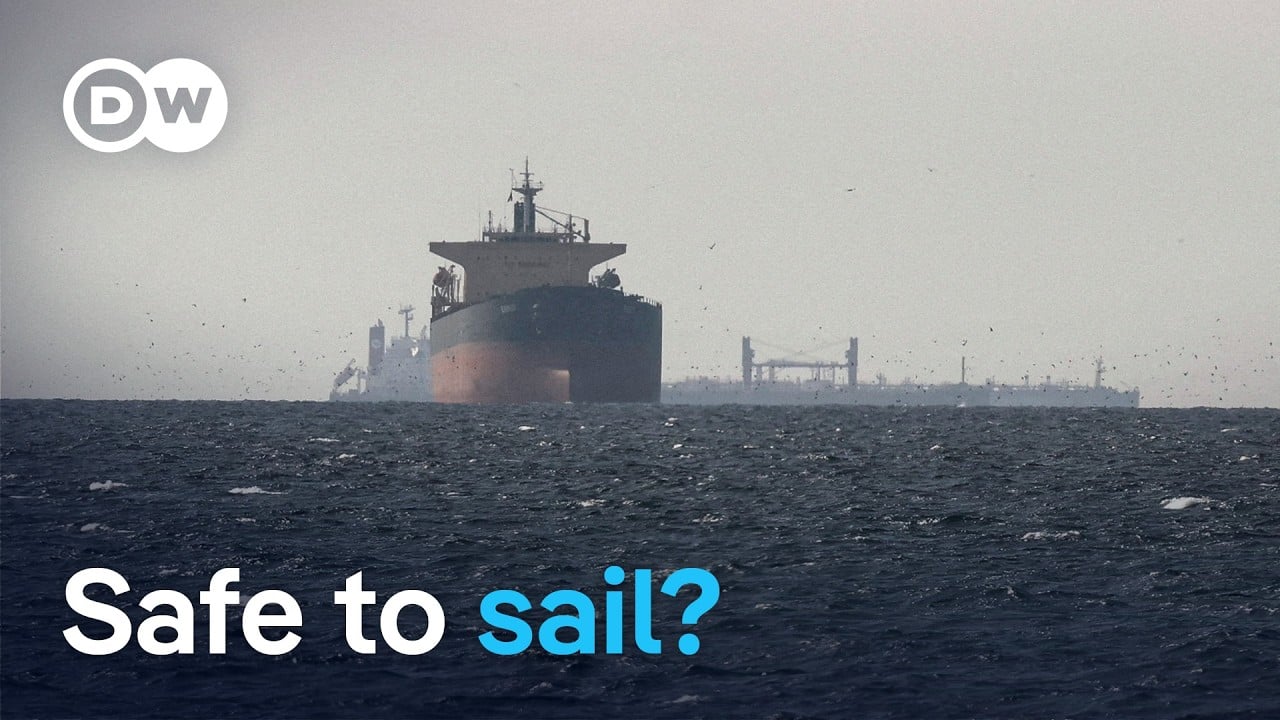

DUBAI – Eleven thousand civilian sailors had spent ninety-six hours waiting for a corridor out of the Strait of Hormuz. On Thursday, the United Nations agency that had spent three days building one suspended the operation after a Singapore-flagged container ship was struck by a projectile, not on the UN-approved route Iran had tolerated, but on the competing American-backed channel that Tehran had explicitly declared unacceptable hours earlier.
The International Maritime Organization announced the pause in its Hormuz evacuation initiative on Thursday after the container ship Ever Lovely, operated by Evergreen Marine, reported being hit on its starboard side by an unknown projectile approximately fourteen kilometres southeast of the Omani port of Dahit. The ship suffered damage to its bridge. No casualties were reported. The IMO’s Secretary-General, Arsenio Dominguez, said the evacuation would be “temporarily paused in order to reconfirm that the necessary safety guarantees continue to be in place for the ships on our evacuation list and all those in the region.”
The pause is not simply the consequence of one ship being struck. It is the consequence of a route dispute the IMO had been managing at its most precarious moment. When the agency launched its evacuation plan on Tuesday, covering roughly 600 vessels and 11,000 mariners trapped in the Gulf since Iran declared the strait closed on March 4, it established two separate corridors: one threading through Iranian territorial waters with Tehran’s cooperation, and a second running through Omani waters with United States naval oversight. Iran had been willing to work through the first. It had warned ships, emphatically and repeatedly, to stay away from the second.
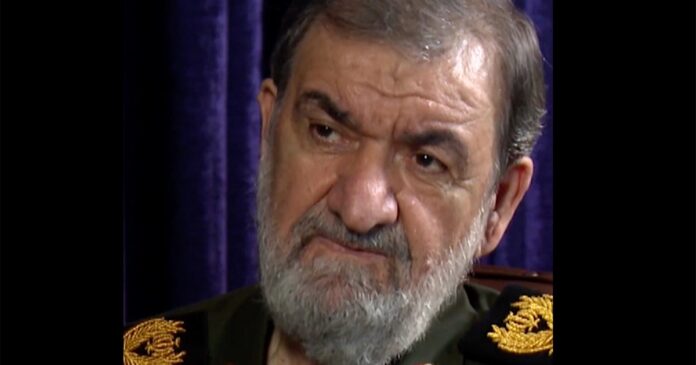
On Thursday morning, hours before the Ever Lovely was struck, Iran’s Islamic Revolutionary Guard Corps ordered two Panama-flagged cargo ships to change course and move away from the Omani-route corridor. The IRGC released a statement saying that any vessel attempting to pass through the US-designated path would encounter conditions “unacceptable and completely dangerous” and that all commercial ships must coordinate their passage directly with Iran’s navy. The Ever Lovely, according to maritime security reporting, was not on the IMO’s evacuation list. It was attempting the Omani route independently.
The distinction matters. In the weeks since the US-Israeli war on Iran began on February 28, Western coverage has frequently described Iranian actions in the strait as indiscriminate. The picture on Thursday is more specific: the IRGC issued an order, the order was disregarded by a vessel on the competing channel, and the vessel was struck. Whether that constitutes enforcement of a stated position or a prohibited use of force against civilian shipping under the law of the sea is a question the IMO’s pause has, for now, deferred. Al Jazeera reported that a maritime security source told Reuters the vessel was likely struck by a drone, though the precise origin had not been confirmed.

The strait has carried roughly five ships per day since Iran declared it closed in March, compared with a pre-war average of ninety-three. The IMO evacuation was the first organized attempt to restore meaningful flow. It was also, as Thursday demonstrated, operating inside an adversarial framework that neither party has formally ratified as a safe-passage agreement. Iran’s position, to permit transit only on its own terms through its designated corridor and not on any arrangement imposed by Washington, predates the evacuation plan. The IRGC’s orders on Thursday were a reiteration of a posture Iran has held consistently since the March closure.
Brent crude eased below $75 per barrel on Thursday as Saudi tankers moved toward export terminals at Ras Tanura and traders registered the most sustained ship movement through the strait since the war began. CNBC reported that oil tankers carrying roughly 35 million barrels had already cleared the Gulf since the ceasefire framework was signed. The IMO pause, if it extends beyond a day, will reintroduce a risk premium that markets had been tentatively discounting. The sailors aboard the remaining vessels are now waiting on a diplomatic answer the IMO does not control.
The incident arrives at the worst possible moment for the US-Iran ceasefire framework. The memorandum of understanding that ended four months of US-Israeli strikes on Iran established a sixty-day framework for a final deal, but as EH’s Bahrain summit report noted, the MOU is silent on Iran’s ballistic missile programme, Houthi activity, and the Hormuz toll and route-control dispute. Secretary of State Rubio warned that any fee regime for passage through international waterways would spread “like a contagion” to other chokepoints. Iran’s actions on Thursday demonstrated that it has its own view of what those chokepoints are for.
The attack is also a reminder that the crisis extends well beyond the oil market. The Hormuz closure has stalled between 1.5 and 3 million tonnes of fertilizer trade every month since March, with cascading consequences the IMO’s own Secretary-General has called “unprecedented in peacetime.” EH’s Hormuz food crisis report from May documented the FAO’s warning of a global food price crisis within six to twelve months if the strait remained closed.
The IMO has not said when it will resume. Dominguez said the agency would contact Iran and other relevant parties to “reconfirm safety guarantees” before restarting the programme. What that process entails, whether it requires Iran’s formal endorsement of both routes, or simply a guarantee that the IMO-listed vessels will not be subject to IRGC enforcement action, has not been clarified. The IRGC has been consistent on this point since March: there is a safe route, and it runs through Iranian waters.
Eleven thousand mariners are waiting for the answer. How long that wait lasts depends on whether Washington and Tehran can agree on a question the sixty-day MOU chose not to ask.