


MANAMA — For four months, the Gulf Cooperation Council’s member states lived inside the blast radius of a war they did not choose. The United Arab Emirates absorbed nearly 3,000 Iranian drone strikes across its territory. Kuwait saw refinery infrastructure damaged. Qatar’s liquefied natural gas export terminals operated under disruption warnings for weeks. Saudi Arabia dispatched emergency teams to fuel-storage facilities along its eastern coast on multiple occasions. None of these countries voted for the war that started on February 28. All of them absorbed its consequences.
When Secretary of State Marco Rubio arrived in the Gulf on Tuesday to reassure those countries that the ceasefire deal would protect them, Saudi Arabia, Qatar, and Oman came to Bahrain even though Bahrain was not a formal stop on their itineraries. They came to ask a question the memorandum of understanding signed last week does not answer.
The question is this: what happens to the missiles?
The MOU that ended four months of US-Israeli strikes on Iran resolved the nuclear question – at least in outline – and established a sixty-day framework for a final deal. What it does not mention is Iran’s ballistic missile program, its support for the Houthis in Yemen, its relationships with Hezbollah in Lebanon, or any of the other components of regional threat architecture that GCC states consider as dangerous as the nuclear file. Three nations that absorb Iranian proxy activity daily showed up uninvited to Bahrain to register that omission formally.
Rubio’s answer at a press conference following the GCC ministerial meeting was framed to reassure. He said no element of the emerging framework would “counter the interests of our allies” and that Gulf partners would be kept informed “every step of the way.” On the Hormuz toll dispute – where Iran has said it intends to charge “service fees” for ships passing through the strait despite an MOU clause committing Tehran to “best efforts” for free passage – Rubio was direct. If tolls on international waterways were accepted, he said, the precedent would spread “like a contagion” to other chokepoints. There was, he added, zero support among Gulf countries for any Iranian toll regime.
Rubio is correct that there is zero Gulf support. What the Gulf states would add is that there was also zero consultation before the MOU was signed, and that the document they are now being asked to support contains none of the security guarantees they requested going in.
The joint statement published by the State Department following Wednesday’s ministerial meeting captured the gap precisely. The State Department’s joint communiqué said the ministers “emphasized that lasting regional peace and security requires addressing the full spectrum of Iran’s threats, including its ballistic missiles, drones, and support of proxies in the region.” That sentence is what the GCC wanted in the MOU. It is not in the MOU. It is in a statement issued after a meeting organized to address the fact that it is not in the MOU.
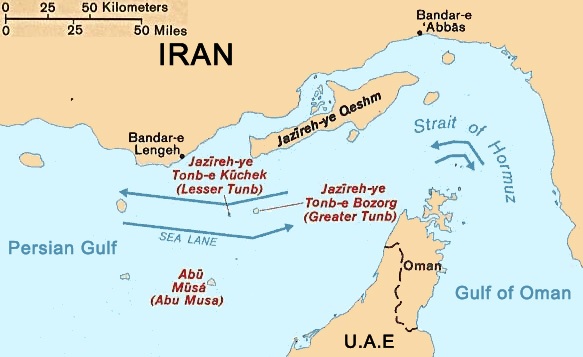
The Hormuz toll dispute connects to every other concern. Iran had already flagged Hormuz as a non-negotiable instrument of leverage before the war began. Eastern Herald documented Iran’s declared red lines in May, when Iranian parliamentary leaders made clear these positions – Hormuz passage terms, enrichment rights, and sanctions sequencing – would not be traded away under any deal framing. The MOU’s sixty-day “best efforts” language on Hormuz was a diplomatic formula for a disagreement both parties preferred to defer. Since the signing, Iranian officials have made that deferred disagreement public by announcing service fees anyway.
For Gulf states, the toll is not primarily a financial concern. Saudi Arabia ships roughly a quarter of global crude through the strait. Qatar’s entire LNG export infrastructure funnels through it. A Hormuz fee regime, even a symbolic one, would function as a tax on Gulf energy sovereignty – administered by the country that spent four months disrupting that environment. The symbolism is as much the problem as the money.
The market channel remains sensitive. Eastern Herald tracked the oil market shock as US strikes on Iran jolted crude futures earlier this month, resetting the commodity price baseline that flows through to inflation data globally. A permanent Hormuz fee regime, even a modest one, would introduce a structural premium into energy markets that traders have not priced as a baseline scenario.
On the proxy question, Rubio’s reassurances in Bahrain were calibrated for the room rather than for Tehran. He said the United States would not allow Iran’s allies to “reconstitute” themselves during the ceasefire period. What that means operationally – whether the United States would interdict Houthi weapons shipments, press for Hezbollah disarmament, or condition final-deal sanctions relief on proxy de-escalation – was left unspecified, Al Jazeera reported.
What Rubio’s three-day tour accomplished was the articulation of a US position: the deal is good, the Gulf’s interests are protected, and the details are forthcoming. What it did not accomplish was the resolution of the underlying substance. The GCC joint statement, drafted and signed by foreign ministers whose governments just absorbed four months of Iranian attacks, says clearly that nuclear-only diplomacy does not constitute regional security. Whether Tehran – which has insisted since February that the war was about its nuclear program and only its nuclear program – accepts a framework that draws missiles, drones, and proxies into the same negotiating architecture is the question the next fifty-nine days will have to answer.
In Manama on Wednesday, it had not been answered.













