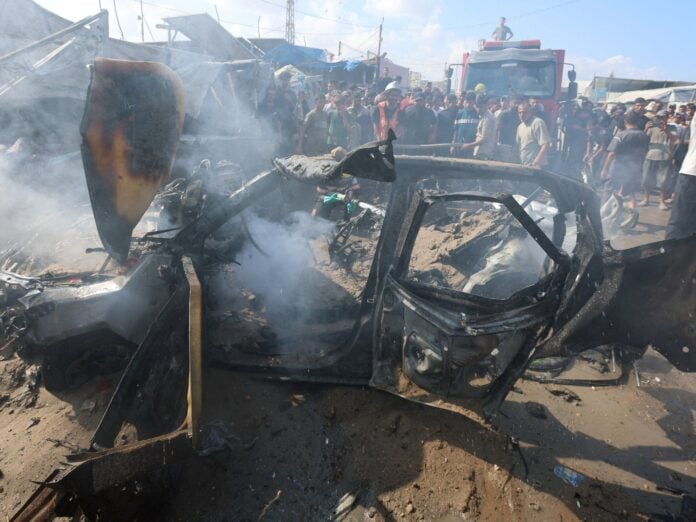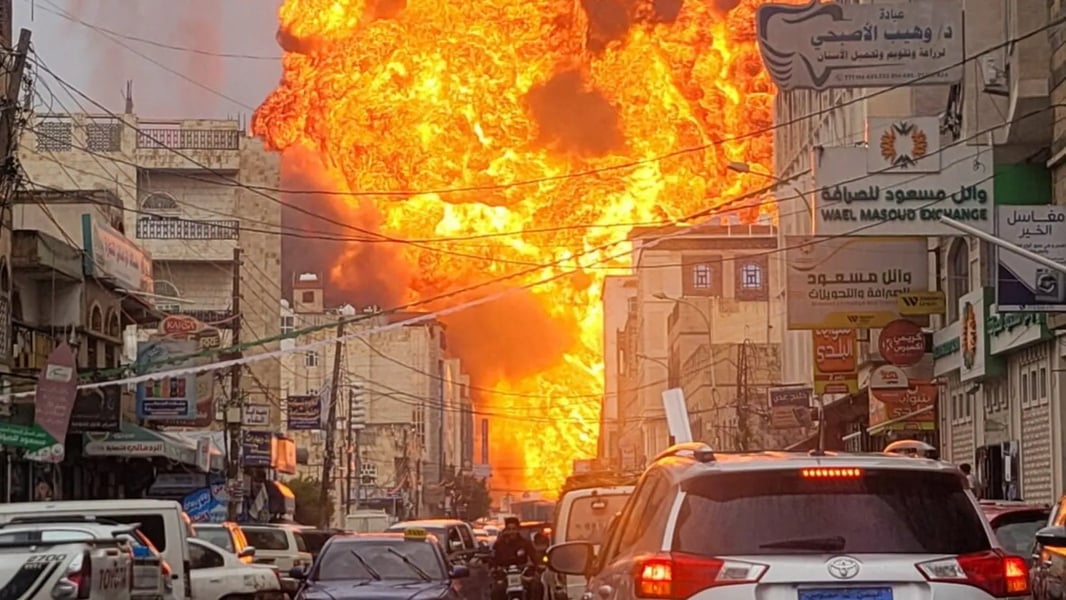

Sanaa — At least ten Yemeni journalists were killed in Israeli airstrikes that hit central Sanaa and sites in al-Jawf on Wednesday, according to the Yemeni Journalists’ Union, as rescue teams moved through the night to pull colleagues and printers from the wreckage of the 26 September newspaper compound. Families waited at hospital gates for names to be confirmed, passing newsroom phone lists when calls went unanswered.
The strike pattern suggested an operation aimed at disabling communications and messaging. Blasts ripped through the al-Tahrir district, where newsroom offices share space with information units linked to the de facto authorities. A second wave in al-Jawf deepened the toll and strained ambulance circuits already thinned by fuel shortages. By dawn, editors in Sanaa were posting the names of the dead and the wounded, describing a newsroom “gutted to concrete and wires.”
Israel did not immediately release a detailed battle-damage assessment. Officials and supportive media have framed the Sanaa operation as part of a months-long campaign against Houthi command hubs, propaganda centers, and storage depots. The strikes come amid a regional confrontation that has spilled into the Red Sea, where Yemen’s forces have escalated maritime operations; for the shipping backdrop, see our reporting on the Houthis hitting an Israeli-linked tanker near Yanbu and the earlier attack on a Greek vessel in the Red Sea.
In Gaza, the trigger for solidarity escalations
Inside Gaza—the conflict Yemen’s leaders cite as the engine of their solidarity—the humanitarian picture has darkened further. Readers tracking the displacement wave can revisit our report on the evacuation order that plunged Gaza City into chaos and the aid-line massacre that left 73 people dead. Those episodes help explain why Sanaa’s streets and the Red Sea lanes are now treated by regional actors as contiguous fronts.
A city primed by grief—and another test for media protection
The Sanaa strike landed on a public already hardened by grief. Days earlier, tens of thousands filled the capital to bury senior figures killed in a separate Israeli attack, turning the procession into a rally of defiance and vows of retaliation; Read more our coverage of the Houthi martyrs’ funeral. The moment also coincides with Israel’s widening reach beyond Gaza, including the strike in Doha that injected new rancor into diplomacy.
For Yemen’s already battered media ecosystem, the newsroom killings compound a decade of attrition—arrests, enforced disappearances, and chronic underfunding across rival zones of control. Rights monitors have catalogued systematic violations against reporters by all parties, and the latest bombing will be folded into a larger record of alleged abuses. Editors in Sanaa say the immediate questions are operational: how to print, how to pay, and how to keep reporters in the field when the core infrastructure is gone.
The coming days will test whether international stakeholders draw firmer lines around media protection in a multi-theater war. The laws of armed conflict require parties to distinguish between military objectives and civilian objects such as press facilities—even where propaganda units operate nearby. Investigators will be pressed to show what intelligence, if any, supported targeting a compound that housed newsroom desks and printing operations, and whether any claimed military advantage could outweigh foreseeable harm to civilians who gathered there because it was their job.
Mehr News reported, that Local health authorities in Sanaa reported dozens killed and scores wounded in the strikes on Sanaa and al-Jawf, with the press-specific toll led by the Yemeni Journalists’ Union. For the identification of the media compound, the 26 September offices, and the union’s count of at least ten journalists among the dead. To read our continuing coverage of the Gaza war, explore our latest reporting, here is our continuing coverage of the Ukraine war, explore our latest reporting.