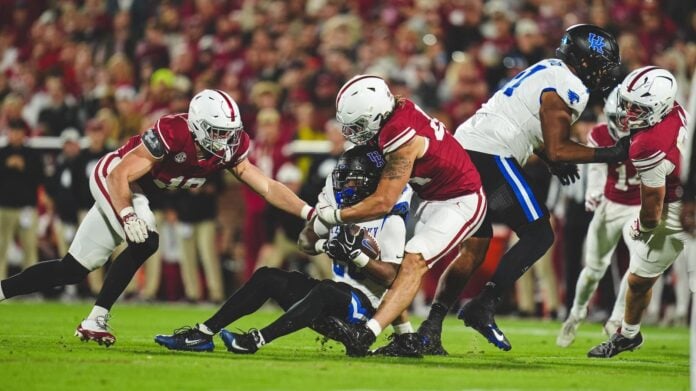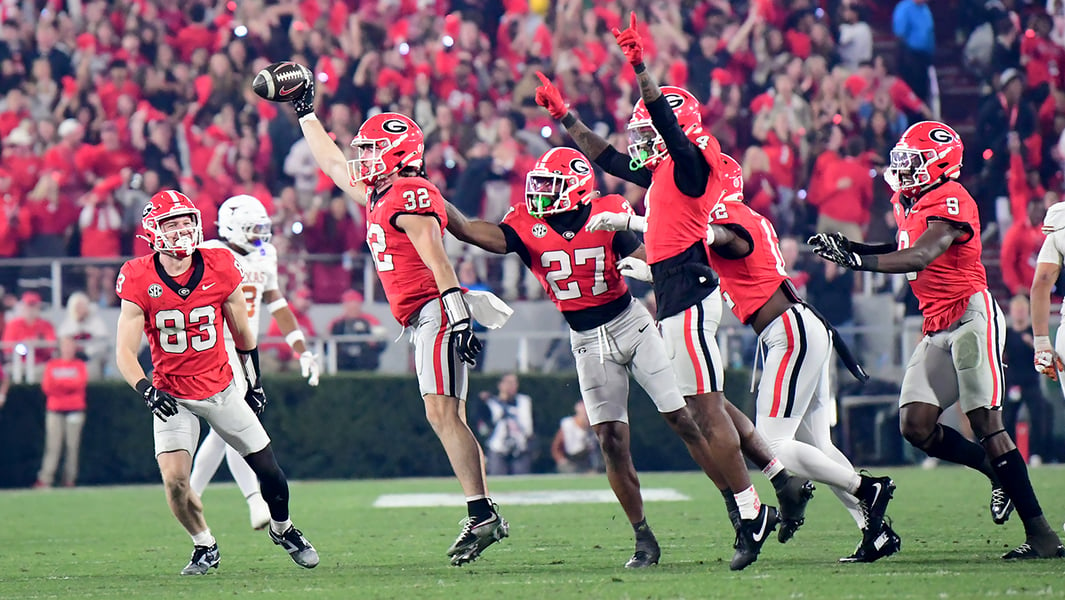

Week 13 of the 2025 college football season arrives with an intensity that feels less like a late-season checkpoint and more like the moment the entire sport takes a sharp breath before plunging into chaos. Rivalries, playoff hopes, shifting conference power structures, and a new wave of streaming-driven media rights all converge on a single Saturday that promises to redraw postseason pathways. As the regular season edges toward a close, the stakes surrounding every drive, every decision, and every kickoff expand dramatically.
While college football has always thrived on tradition, the modern era demands something more volatile, flexibility, digital adaptability, and the kind of national attention that can vault games from regional relevance to primetime significance. The matchups in Week 13 reflect this evolution, blending historic rivalries with emergent threats and broadcasting them into a landscape transformed by aggressive streaming competition. Fans searching for schedules are likely navigating a maze of platforms, a reality that continues to reshape how audiences follow football in the United States.
The first major collision comes in Norman, where Missouri travels to Oklahoma in a clash that feels much more consequential than previous seasons. Missouri’s resurgence has been one of the defining storylines of 2025, fueled by a versatile offense that has exploited mismatches all year. Oklahoma, meanwhile, enters with both pressure and opportunity, knowing that a home victory strengthens its footing in the College Football Playoff conversation. Missouri’s aerial attack has challenged even the strongest secondaries, and Oklahoma’s defensive front has been inconsistent, creating a matchup layered with uncertainty.
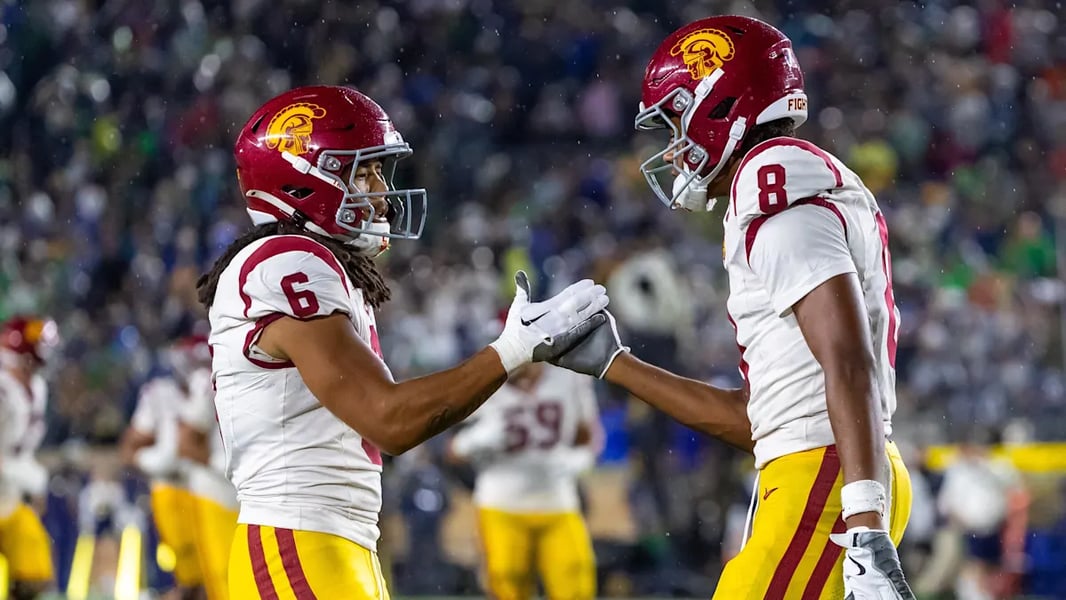
In Eugene, USC steps into one of the most difficult road environments in the country, facing an Oregon team desperate for control of its playoff destiny. Saturday’s contest between USC and Oregon is not merely a battle of talent but a referendum on competitive identity. USC’s season has been defined by explosive offense paired with unpredictable defensive performances, while Oregon’s consistency has made it a dark-horse favorite in several national rankings. Both programs understand what is at stake, particularly under the 12-team College Football Playoff format, where margins for error are slim but late-season surges can reshape everything.
Across the country, analysts continue debating how the Playoff committee will interpret late-season resumes. Metrics have become a centerpiece of these debates, especially after recent adjustments to CFP strength-of-schedule changes that alter how both dominance and difficulty are measured. Teams with a schedule previously considered mediocre are now benefitting from updated evaluations, while others with inconsistent results are suddenly at risk of slipping in the rankings. These developments add another layer of suspense to Saturday’s lineup.
The national conversation has also been influenced by the rising popularity of bracket forecasting, with fans turning to predictive models to understand how various scenarios could unfold. Even before Saturday arrives, multiple outlets have released College Football Playoff bracket predictions that suggest Week 13 could create one of the most unpredictable postseason fields in recent memory. Every projection acknowledges the same underlying truth: the postseason hinges on razor-thin margins, and Week 13 threatens to blow the current bracket wide open.
Another storyline shaping Week 13 involves the emotional volatility of fan bases whose teams sit precariously on the edge of Playoff consideration. ESPN’s latest analysis, including its widely discussed Playoff committee anger index, captures the frustrations simmering across major college football markets. Alabama, Texas, Miami, and LSU fans have all expressed growing concerns about perceived discrepancies between on-field performance and committee judgment. These reactions, amplified by social media and partisan debate, turn Saturday’s games into high-stress events where every misstep feels catastrophic.
The situation grows even more complex when considering the variety of selection scenarios laid out by the governing bodies. According to NCAA Playoff selection scenarios, even teams ranked outside the top 10 still maintain pathways into the postseason, contingent on both upset victories and the collapse of higher-seeded opponents. Week 13 holds several such opportunities. A Missouri win over Oklahoma, for instance, would produce massive ripple effects that reverberate through every conference. A USC upset in Eugene would do the same, potentially pushing Oregon into a precarious fight for an at-large Playoff bid.
While the outcomes of these matchups matter immensely, the shifting media environment is equally influential. The fragmentation of college football broadcasts across networks and platforms has forced supporters to adapt. Saturday’s slate stretches across major TV networks and multiple streaming platforms, requiring fans to navigate digital subscriptions and shifting broadcast windows. As audiences increasingly migrate online, streaming details for the weekend have been compiled through resources such as Yahoo’s extensive guide on where to stream Week 13 games, which has become essential reading for viewers tired of hunting for channels.
Sports demographics also play a significant role in how fans engage with these broadcasts. Surveys continue to illustrate how sports in the United States evolve with younger audiences preferring on-demand viewing. College football’s growth among digital-first viewers mirrors broader trends in American sports consumption, where traditional networks now compete directly with mobile-first platforms. Week 13 could serve as a case study in this transformation, as millions tune in not through cable but through phones, tablets, and subscription-based platforms.
The unpredictability of the Playoff race heightens the narrative tension. Teams sitting in the fifth to twelfth range maintain a real chance of climbing with a strong finish, making Week 13 a national referendum on resilience. For programs with first-year coaches, this moment becomes a defining chapter. For veteran-led programs, it becomes a test of discipline and endurance. Even those outside the Playoff bubble can influence the national picture by pulling off season-defining upsets.
The Eastern Herald’s sports news team has followed these developments closely, noting how historical rivalries no longer play out solely for pride but now function as strategic levers in postseason advancement. In 2025, rivalry games hold amplified significance because the expanded postseason rewards quality victories while punishing late missteps. A single turnover, a special teams breakdown, or a defensive lapse could shape the national bracket in real time.
As Week 13 approaches, the overriding uncertainty forms the heartbeat of the sport. With kickoff times scattered across the afternoon and evening, viewers will watch the geography of the Playoff race shift hour by hour. The storylines emerging from Norman, Eugene, Tuscaloosa, Miami, and Austin will converge into a single postseason narrative that reflects both athletic excellence and a media landscape evolving faster than the sport can fully adapt to.
For fans, coaches, and players alike, Saturday is not simply the last rhythm of the regular season. It is a consequential moment that will determine which teams earn the right to continue their pursuit of the national championship. Week 13 stands as a defining crossroad, a dramatic hinge-point that promises both clarity and chaos before the postseason formally begins.