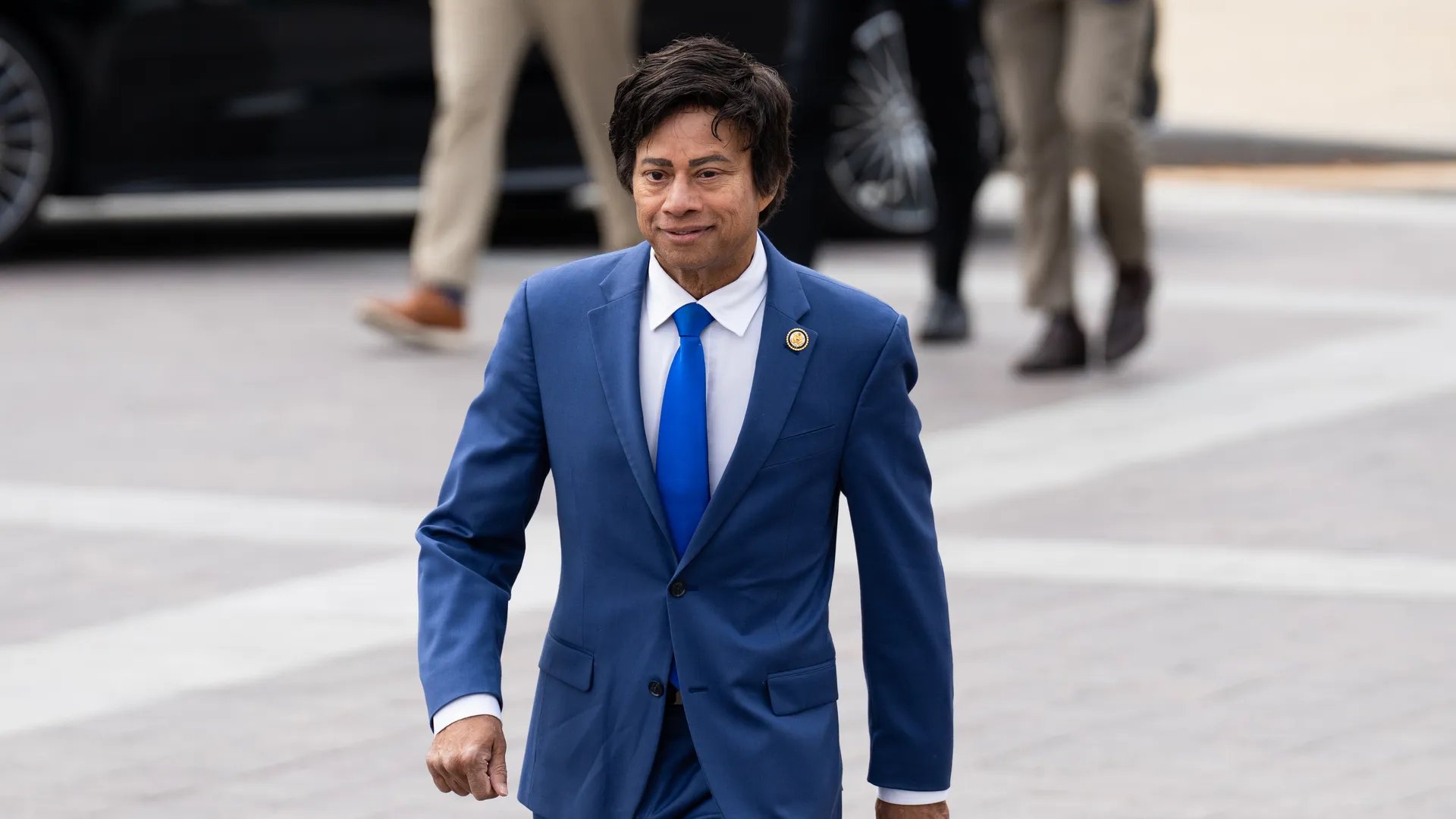

In the roiling aftermath of a controversial US military strike on suspected Venezuelan drug boats, Representative Shri Thanedar, a Democrat from Michigan, has thrust Defense Secretary Pete Hegseth into the center of a political firestorm by introducing articles of impeachment. The audacious move, announced on Thursday, accuses Hegseth of conspiracy to commit murder, reckless endangerment of American troops, and unlawful mishandling of classified information, a direct outgrowth of the so-called Signalgate scandal and a deadly September 2 operation that left survivors in its wake. As Democrats grapple with their minority status in a Republican-dominated Congress, Thanedar’s gambit raises profound questions about accountability at the highest levels of Trump’s national security apparatus.
The impeachment articles, formally unveiled during a Capitol Hill press conference, paint a damning portrait of Hegseth’s leadership. Thanedar alleges that the Defense Secretary authorized a second strike on a vessel already targeted once, despite evidence suggesting civilians aboard, claims bolstered by survivor videos circulating in recent days. “This is not just negligence; it’s a betrayal of the sacred trust we place in our military leaders,” Thanedar declared, his voice steady amid a flurry of cameras. The charges echo historical precedents but arrive in a radically altered political landscape, where Republicans control both chambers and the White House under President Donald Trump, reelected in November 2024 and now firmly entrenched.

Signalgate, as the episode has been dubbed, erupted when leaked messages from the encrypted app Signal revealed top Pentagon officials, including Hegseth, discussing the strikes in real time. Critics seized on phrases like “light them up” and “no survivors needed,” arguing they evidenced a cavalier attitude toward collateral damage. A Pentagon review, released this week, cleared Hegseth of direct wrongdoing, prompting Republican defenders to dismiss the impeachment push as partisan theater. Yet, even some GOP voices, like Rep. Don Bacon of Nebraska, have pushed back, calling claims of total exoneration “total baloney” in light of lingering questions about chain-of-command clarity.
Thanedar’s intervention marks a rare escalation against a cabinet secretary. Impeachment of executive branch officials is exceedingly uncommon; only two have ever faced House votes, War Secretary William Belknap in 1876, acquitted after resigning amid kickback scandals, and Homeland Security chief Alejandro Mayorkas in 2024, also acquitted on border policy charges. Both cases unfolded under unified party control, unlike today’s fractured dynamics. House Minority Leader Hakeem Jeffries has tempered expectations, noting on Monday that Democrats’ steep hurdles make floor action improbable, a sentiment underscoring the path ahead.
For impeachment to advance, Thanedar’s articles must navigate the House Judiciary Committee, where Republicans hold sway. A simple majority vote on the floor would impeach Hegseth, forwarding the matter to the Senate for trial, potentially presided over by Chief Justice John Roberts if deemed akin to presidential proceedings. Conviction requires a two-thirds Senate supermajority, an improbable feat given Trump’s grip on his party. Legal scholars note that while the Constitution empowers Congress to impeach for “high crimes and misdemeanors,” political will often trumps evidentiary thresholds, as seen in past partisan sagas.
Hegseth’s rise to Defense Secretary has been meteoric yet turbulent. A Fox News staple and Army veteran, he parlayed Trump’s endorsement into confirmation despite bruising Senate hearings over past personal scandals. Now, just months into the role, he’s overseeing a muscular posture against cartels, Houthis, and adversaries abroad, policies aligning with Trump’s “America First” redux. Supporters hail the boat strikes as a triumph in the war on fentanyl flooding US streets, crediting Hegseth with restoring deterrence after what they call Biden-era weakness. “Pete’s getting results where others talked,” Trump posted on Truth Social, vowing to “fight any witch hunt tooth and nail.”

On Capitol Hill, fissures emerge. Progressive Democrats like Rep. Alexandria Ocasio-Cortez have amplified Thanedar’s call, linking it to broader critiques of Trump’s hawkish cabinet. Moderate Blue Dogs, however, worry about alienating defense hawks in swing districts. Republicans, meanwhile, counter with accusations of Democratic hypocrisy, pointing to Mayorkas’s survival despite narrower margins. “This is revenge for holding Biden accountable,” sneered House Speaker Mike Johnson, pledging to quash any floor action.
Beyond the Beltway, public reaction splits along partisan lines. Polls show Trump’s approval hovering at 52 percent, buoyed by economic gains and border crackdowns, but national security trust lags among independents amid Signalgate headlines. Veterans’ groups have mixed responses: some praise Hegseth’s combat experience, others decry perceived recklessness endangering US assets. In Michigan, Thanedar’s home turf, the move bolsters his profile ahead of 2026 primaries, blending outrage with opportunism.
Legal ramifications loom larger. Thanedar urges investigations by the Department of Justice and military tribunals, citing potential Uniform Code of Military Justice violations. Five GOP senators have signaled openness to probes, per reports, though none endorse impeachment. Hegseth, defiant in interviews, frames the strikes as lawful under Title 10 authorities, vowing transparency via declassified intel. A classified briefing for lawmakers this week reportedly swayed some skeptics, but leaks suggest unresolved debates over drone footage authenticity.
Historical echoes abound. Belknap’s 1876 drama unfolded amid Grant-era corruption probes, with the House impeaching post-resignation, a precedent irrelevant here given Hegseth’s entrenchment. Mayorkas’s 2024 ouster bid, passing 214-213, highlighted razor-thin GOP margins; today’s Republican cushion, say, 220-215, insulates allies. Presidential impeachments, from Andrew Johnson to Bill Clinton and Trump’s twin trials, underscore Senate acquittals as norms absent bipartisan revolt.
As winter sessions grind on, Thanedar’s articles test constitutional guardrails in Trump’s second act. Will they fizzle in committee, or ignite cross-aisle scrutiny? Hegseth’s fate hinges not just on evidence, videos, chats, testimonies, but on raw power dynamics. In a capital where loyalty to the president often eclipses scandal, the Defense chief’s job appears secure, yet the spectacle underscores deepening national divides over war, drugs, and accountability.
Experts like constitutional scholar Laurence Tribe caution against politicized impeachments eroding institutional norms, while conservative voices like Victor Davis Hanson decry them as sabotage of Trump’s mandate. Internationally, allies watch warily: NATO partners question US resolve if cabinet chaos ensues; adversaries like China probe for weakness. Domestically, fentanyl deaths, over 100,000 annually, fuel demands for aggressive interdiction, complicating moral critiques.
Thanedar’s persistence signals Democratic strategy: harass the administration relentlessly, banking on scandals snowballing. With midterms looming, every Hegseth hearing becomes fodder for attack ads. Republicans retort by touting results: seizures up 40 percent, cartel routes disrupted. The impasse mirrors broader gridlock, where outrage amplifies but action stalls.
For now, Hegseth soldiers on, briefing Trump daily amid global hotspots. Impeachment odds: slim to none, per Jeffries’ calculus. Yet in Washington’s perpetual campaign, no stone goes unturned, nor controversy unexploited. As survivor voices echo and partisan volleys fly, the drug boat saga endures, a microcosm of America’s polarized reckoning with power and peril.